Client Success Story
BIM Collaboration Delivers Striking Mountain
Retreat
The Up Studio, USA
Twisted Ridge, USA, The Up Studio, theupstudio.com
Summary
Designed by The Up Studio, Twisted Ridge is a contemporary family home set in the mountains outside Hudson, New York.
Integrated BIM collaboration was central to the project, with disciplines from interior designers to structural engineers all working within the shared Archicad model. In this way, the engineers could inform design decisions in real-time, and clashes were resolved immediately.
Once the project moved on-site, the architects used the Archicad model as a communication tool for every site visit.
The BIM model helped the contractor to understand and interrogate the design, ensuring a fast and efficient construction process, while BIMx helped to solve construction challenges in situ.
The Practice
A Fresh Approach
Based in New York City, The Up Studio is a growing architecture, interior and brand design practice, specializing in contemporary design. With a focus on bespoke residential projects, The Up Studio designs in Archicad from start to finish, using integrated collaborative BIM to work closely with designers, engineers and consultants within the live 3D model, to achieve the optimal creative and technical workflow. Read more about the practice and why it switched to Archicad here.
Project: Twisted Ridge
Project Location: Hudson Valley, New York, USA
Firm: The Up Studio
Project Type: Residential
Project size: 353 sqm / 3,800 sqft
Year of Completion: 2024
Software used: Graphisoft Archicad, Graphisoft BIMx, Twinmotion

As we began using Archicad it was clear we had found a tool made for designers.
John Patrick Winberry, Founding Partner and Architect, The Up Studio
Photo ©Julian Bracero
Watch here to find out how the Up Studio has embedded Archicad within its practice to streamline and clarify its workflow
Interested in learning how Archicad can streamline your workflows and increase efficiency?
The Project
A Mountain Retreat
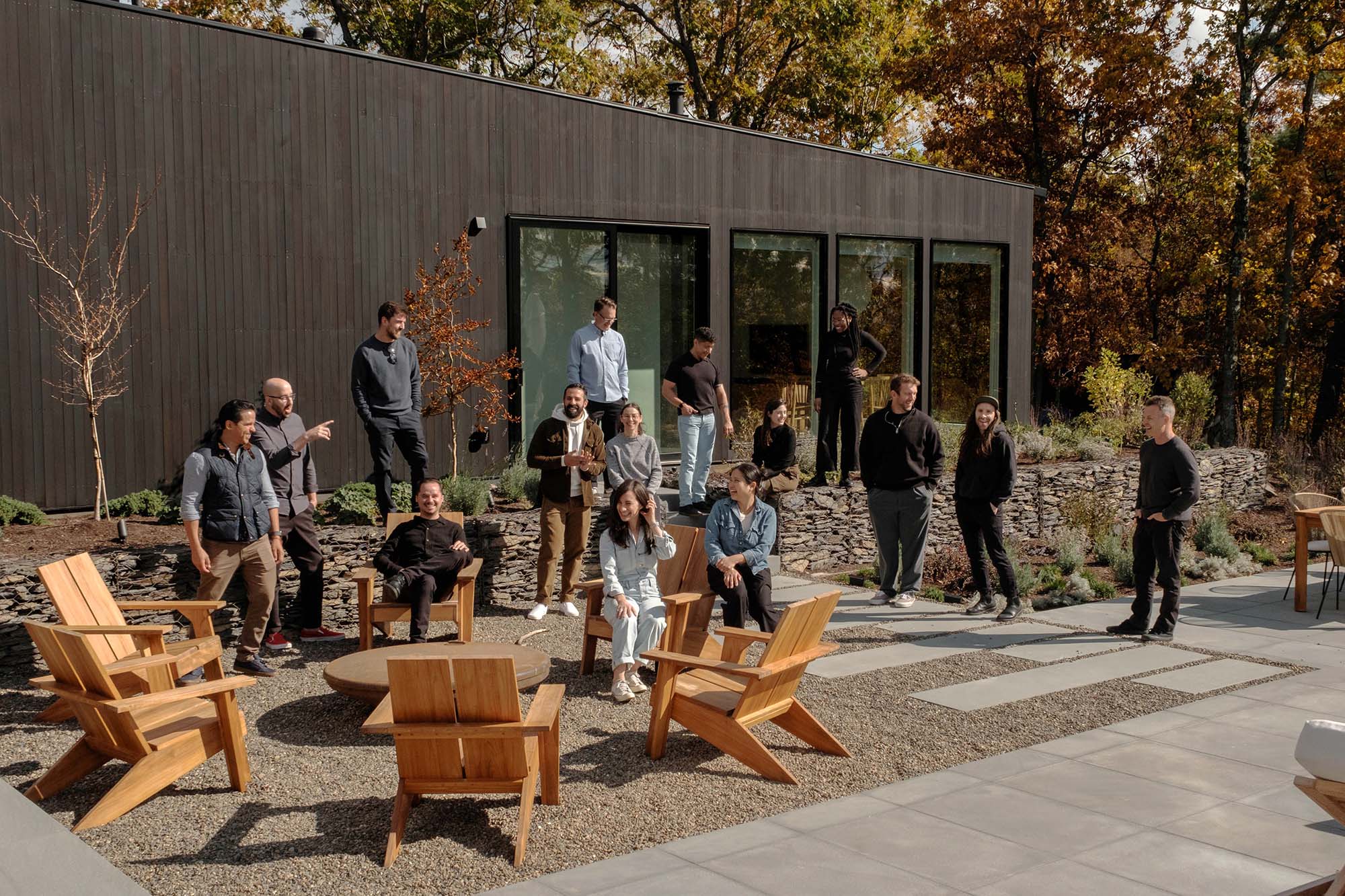
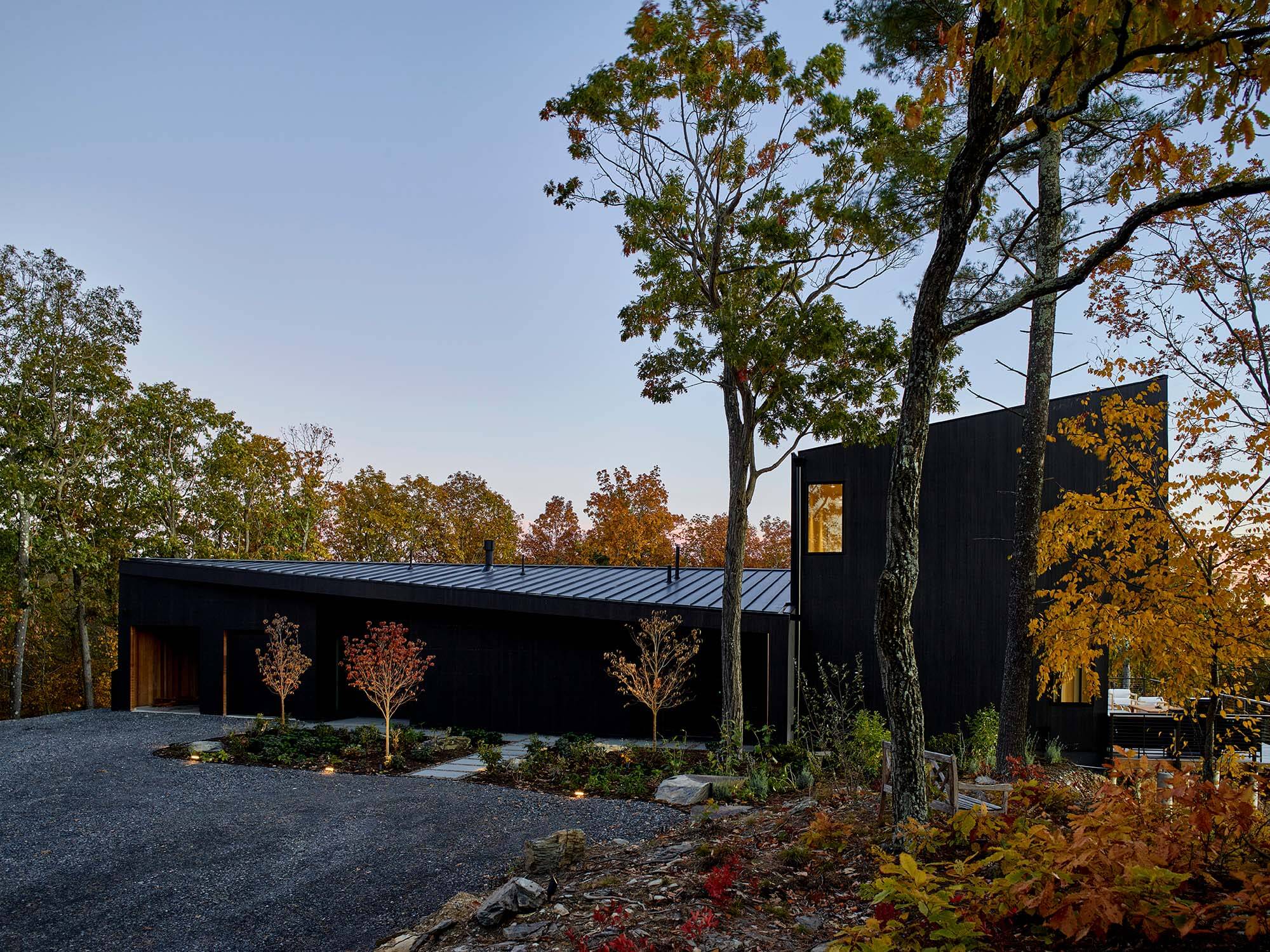
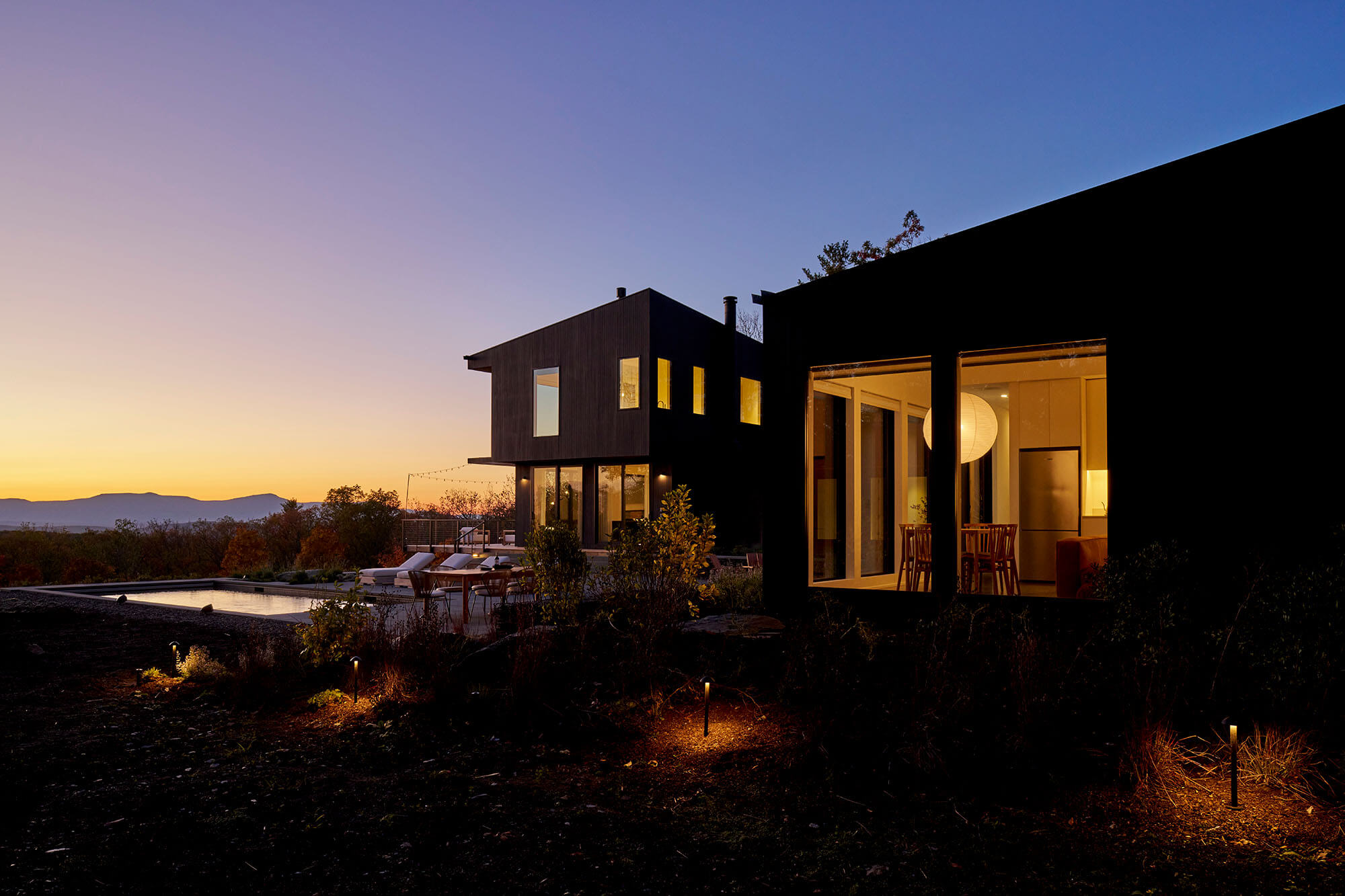
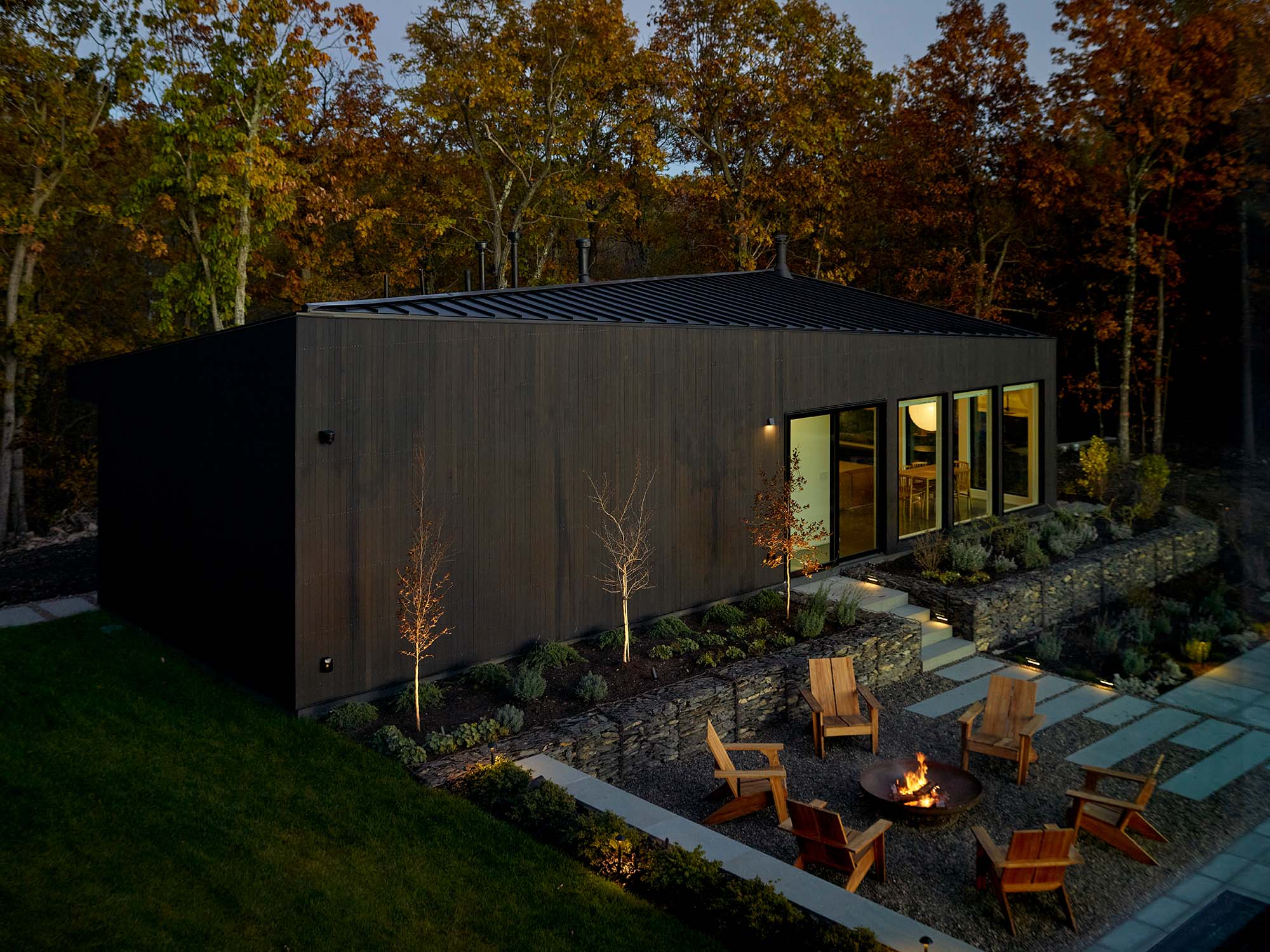
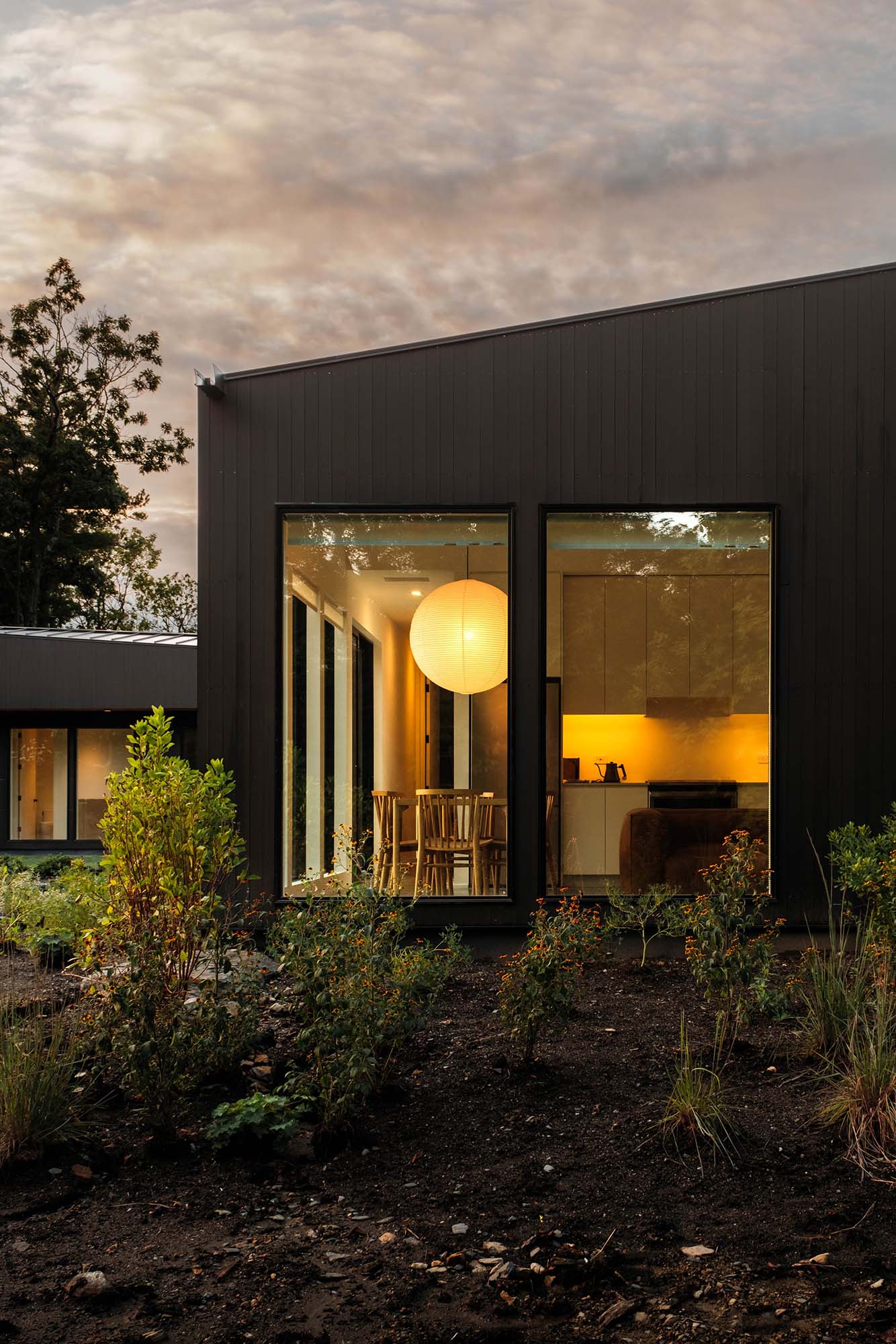
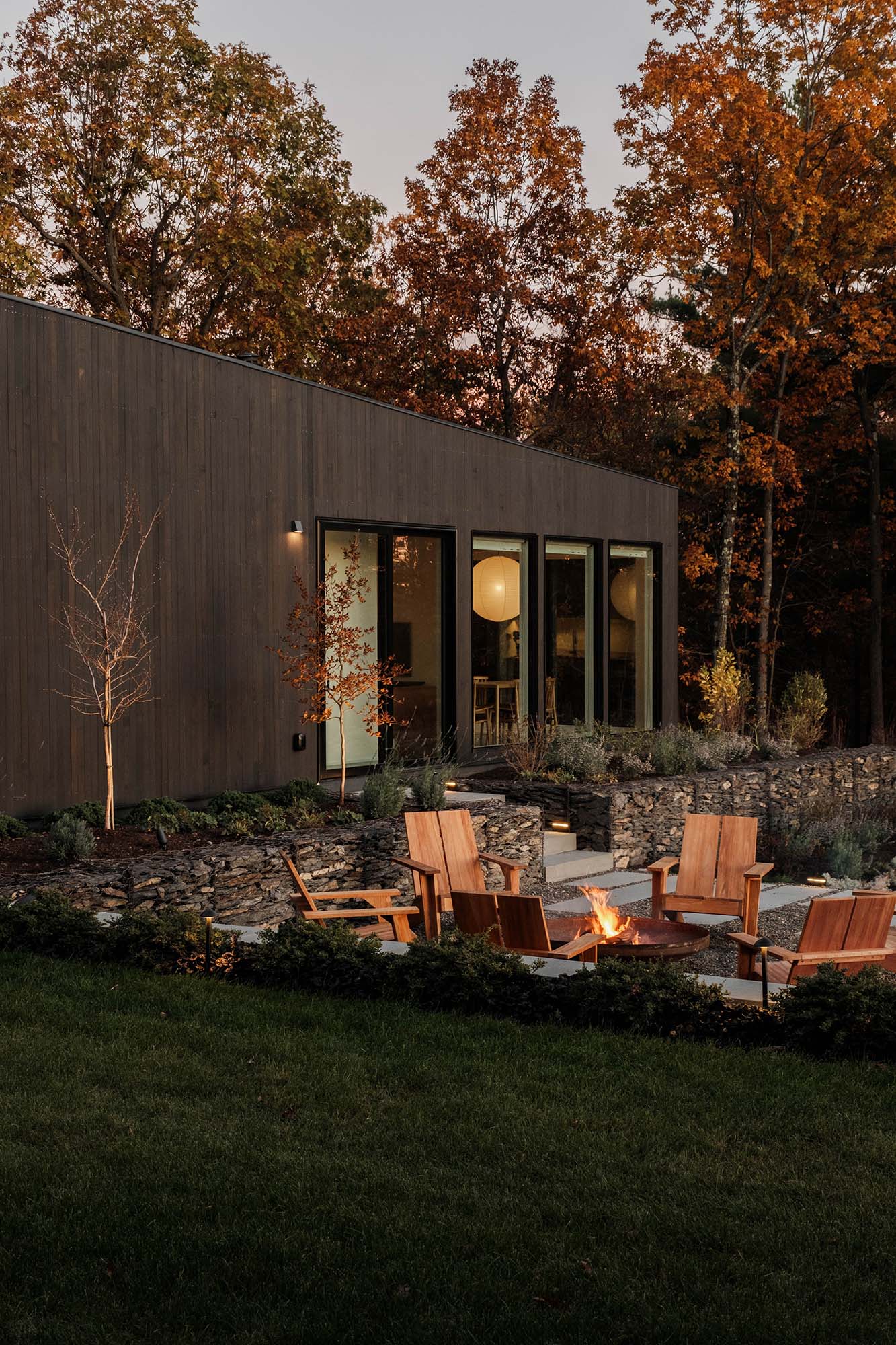
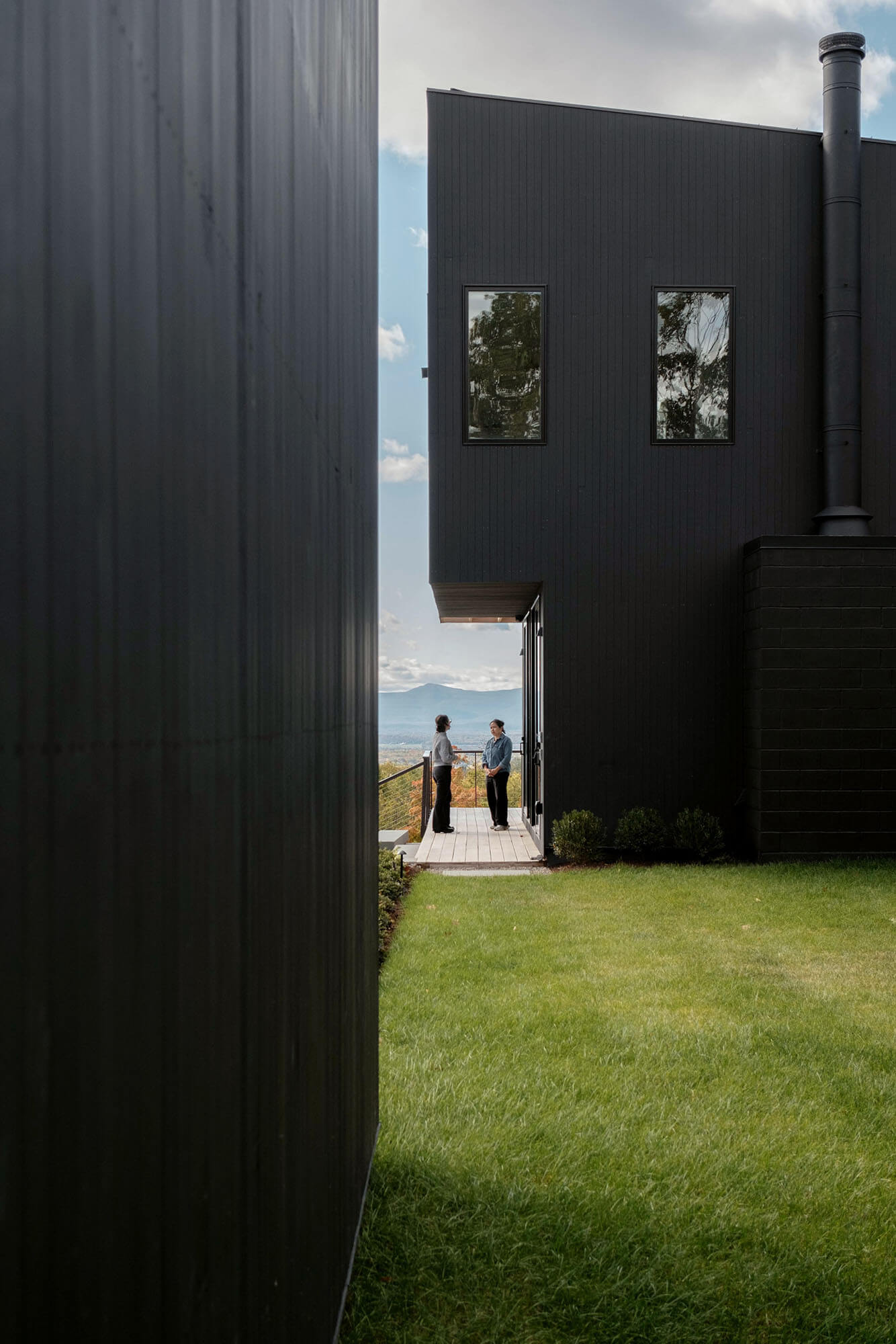
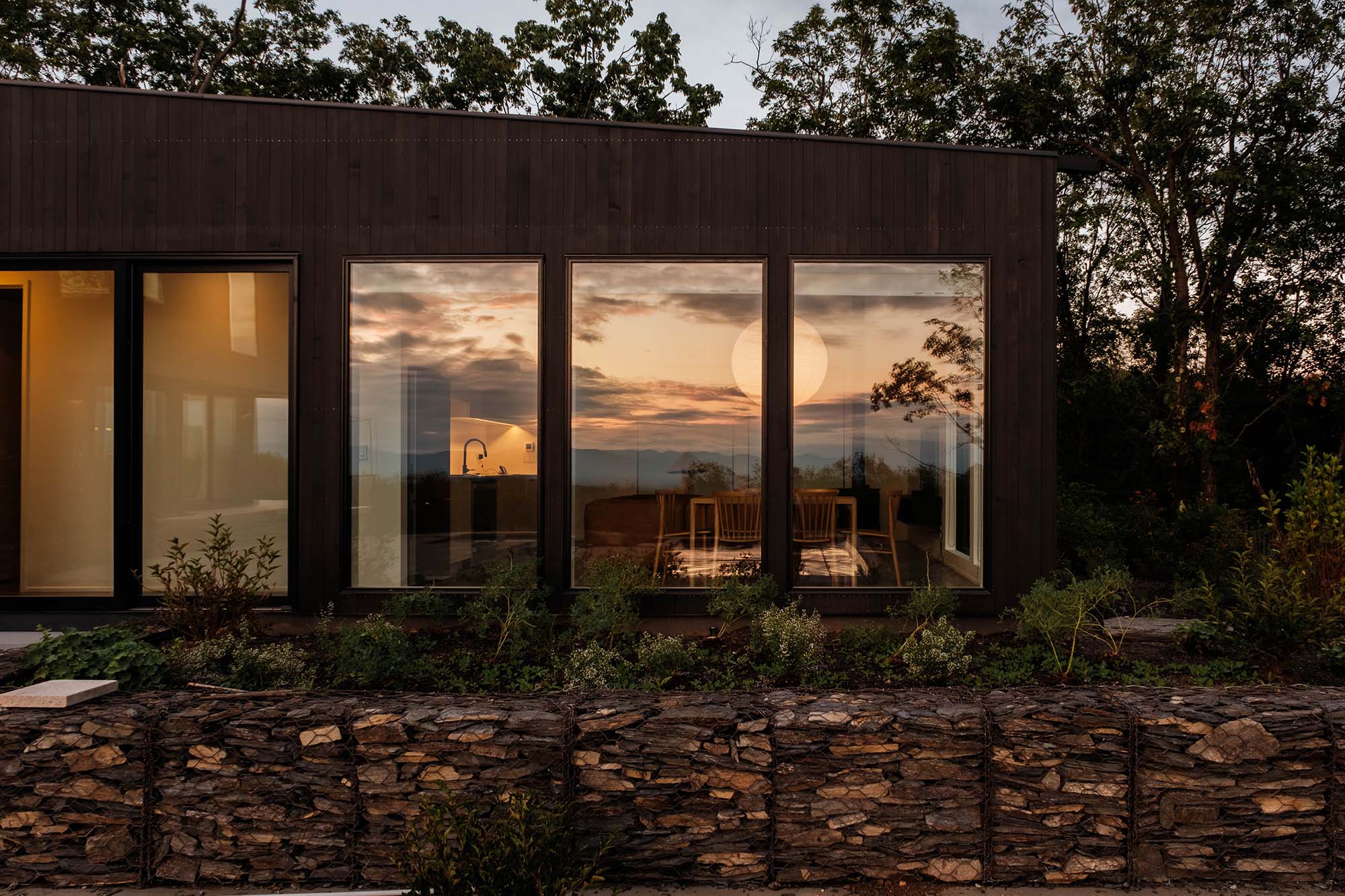
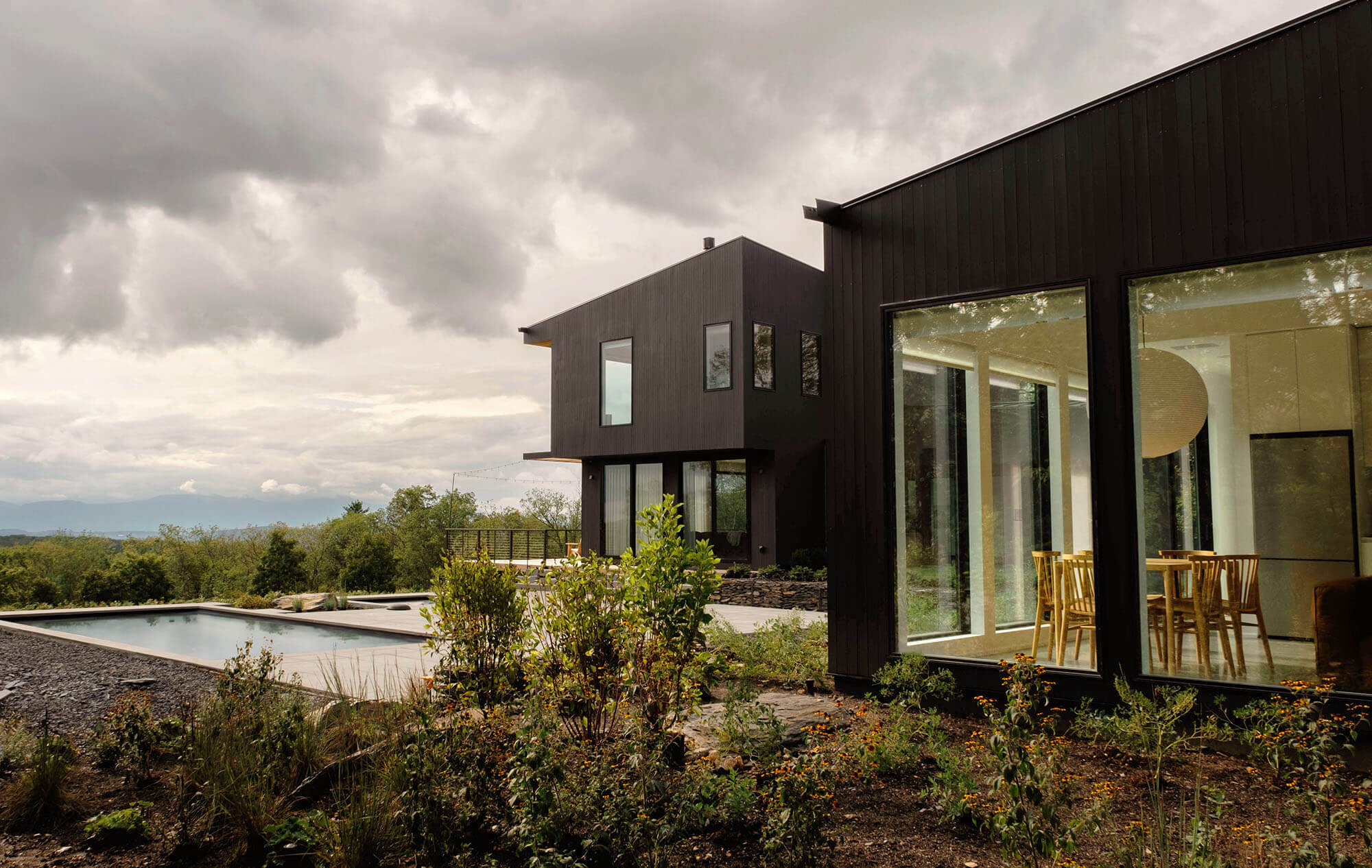
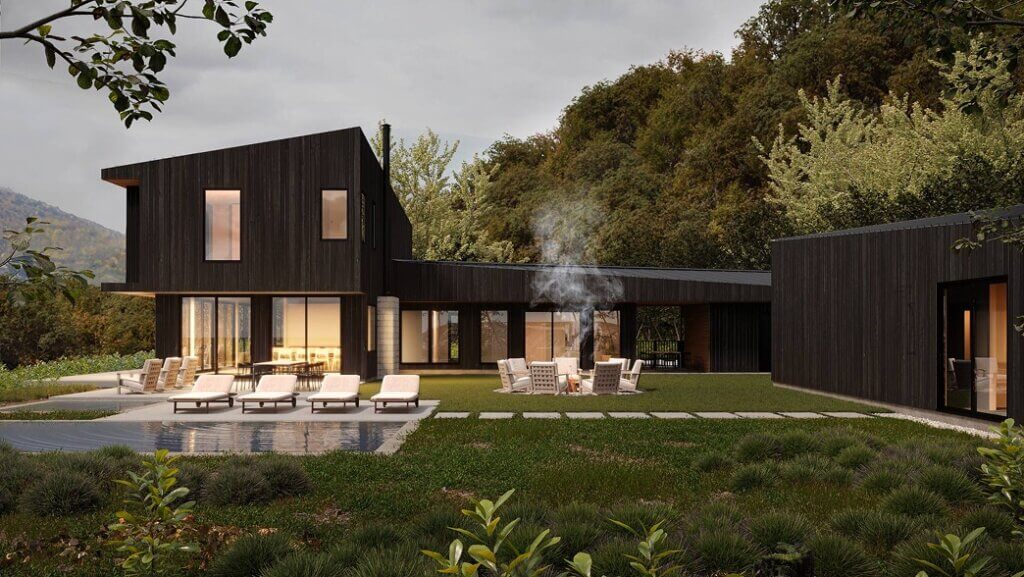
Twisted Ridge is a modern mountain retreat set in the hills just outside Hudson, New York. A spacious family residence with a separate guest house, the black cedar-clad home delivers a tranquil escape surrounded by nature.
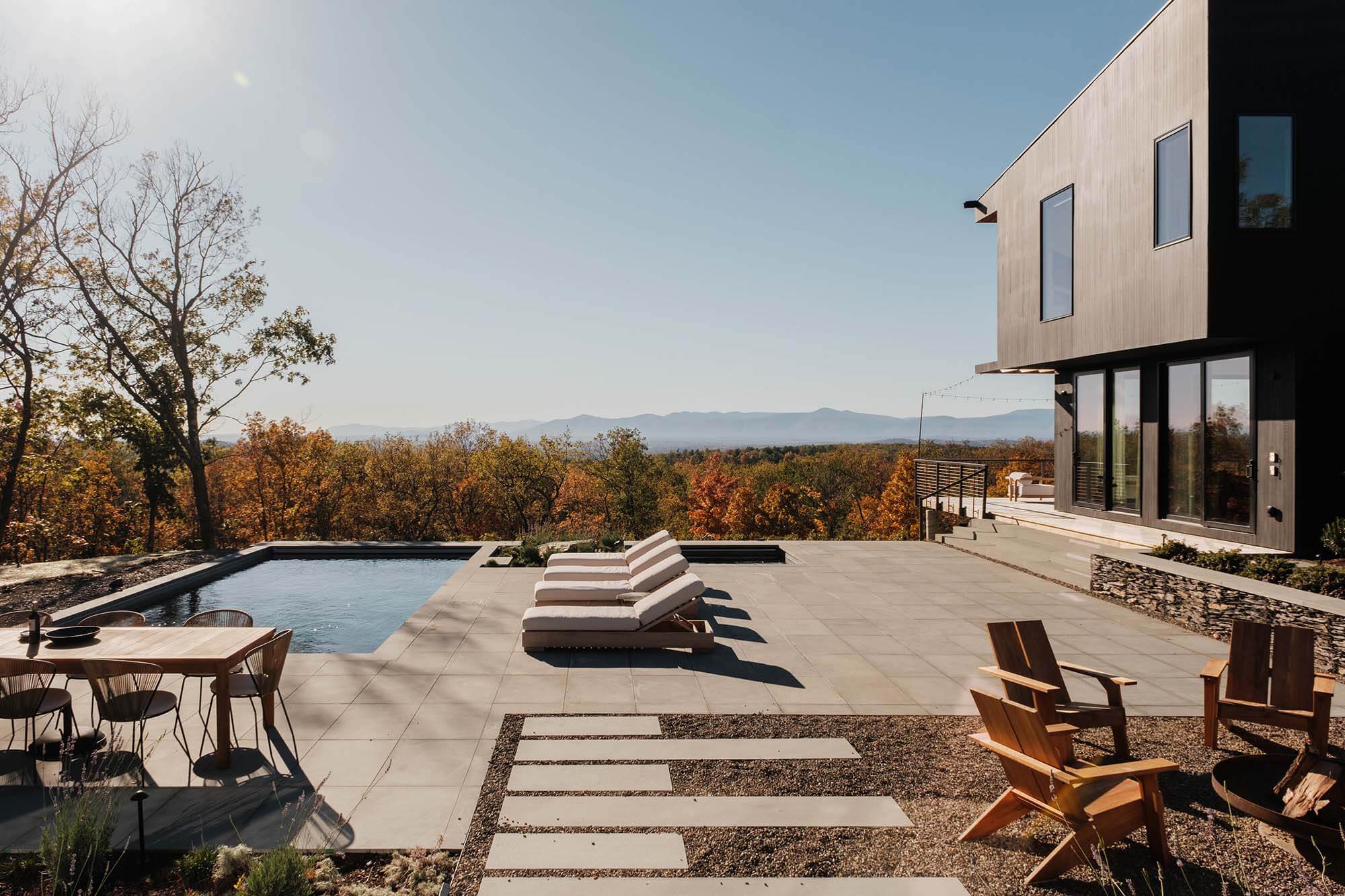
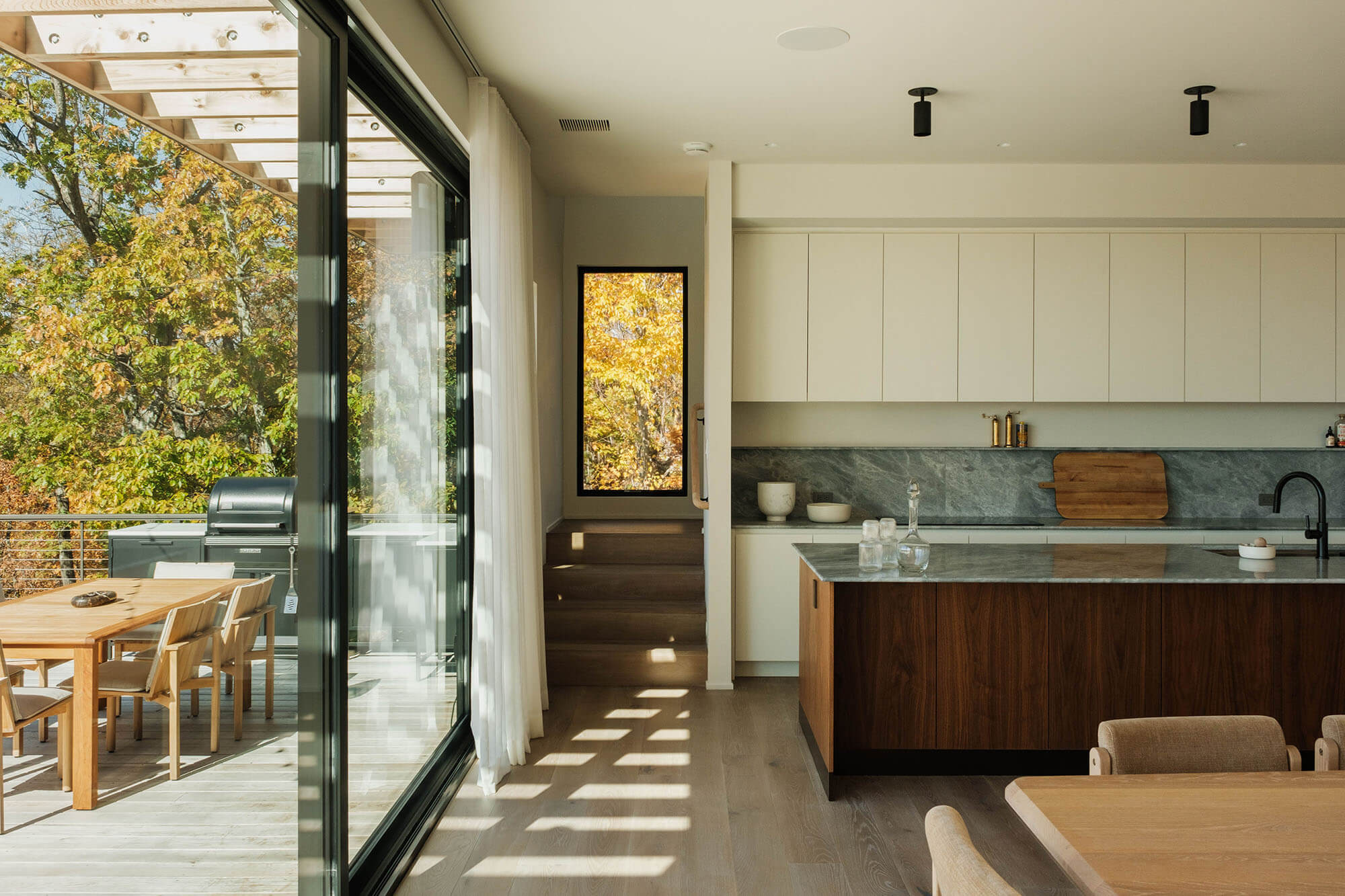
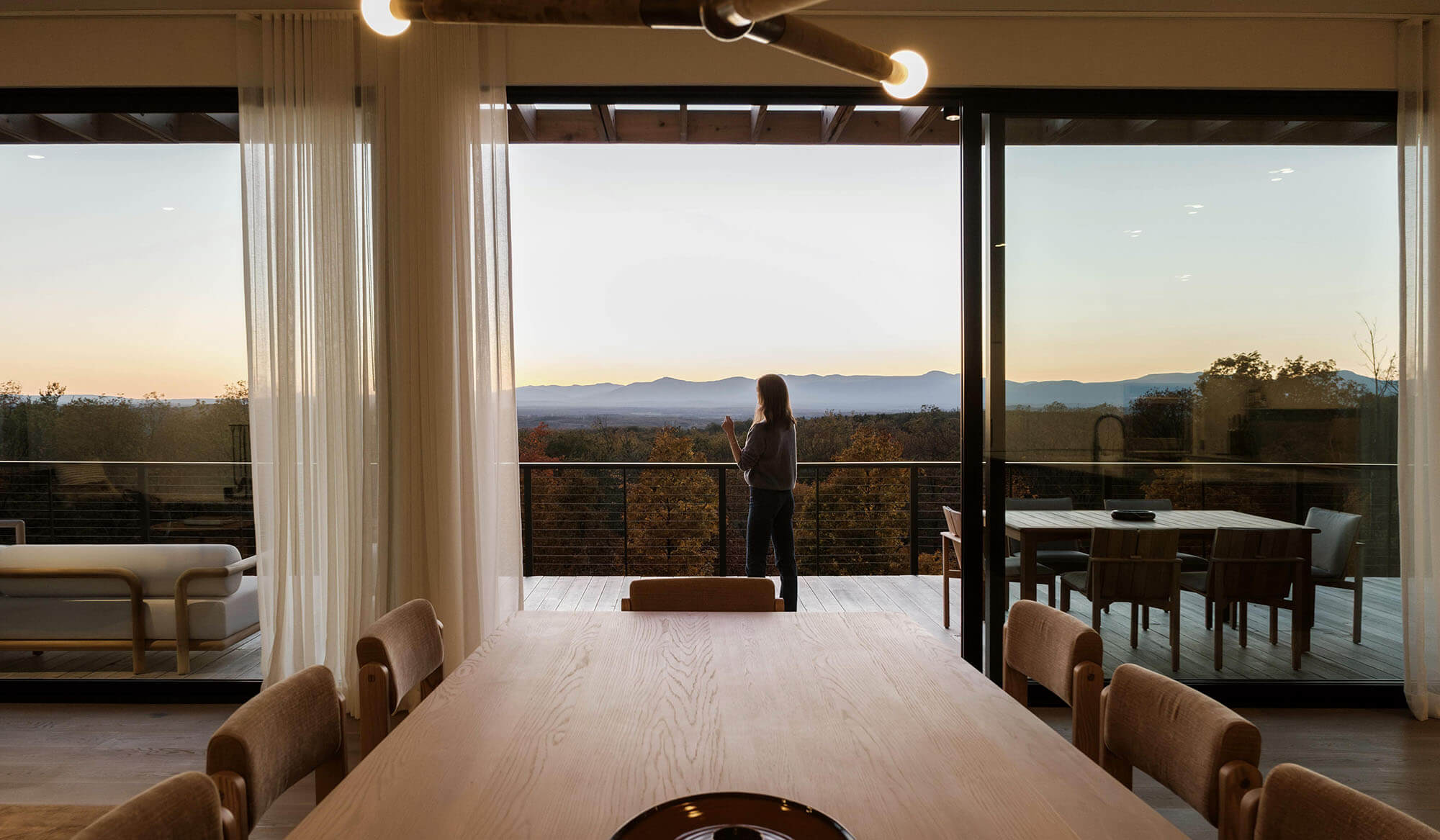
Designed to maximize the magical views across the Catskill Mountains, floor-to-ceiling sliding doors deliver views from every living space.
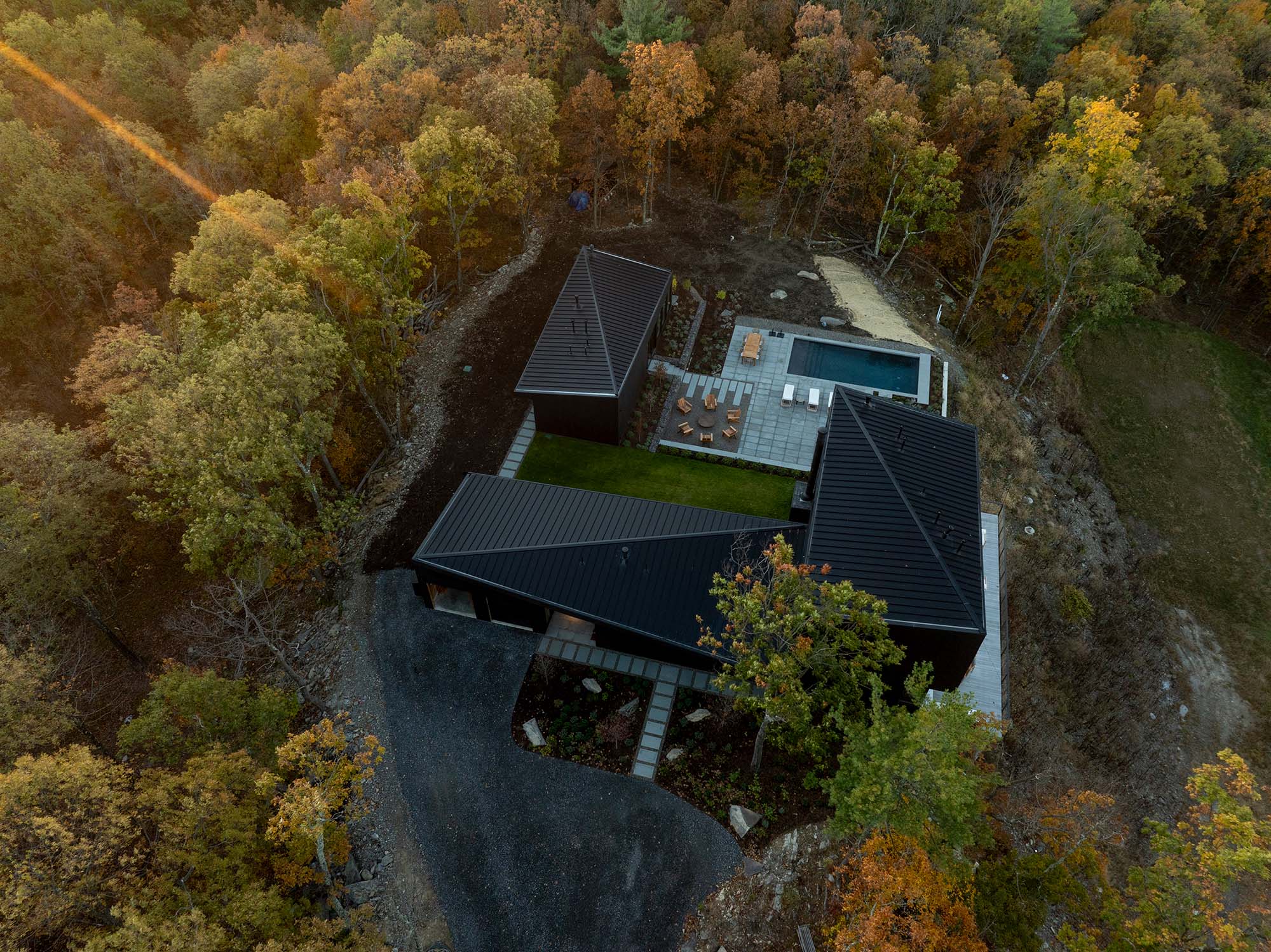
Although located on a substantial wooded plot, there was only a small area where it was feasible to build owing to the topography of the land. Early in the design the team used Archicad’s Sun Study feature to pinpoint the exact location and orientation of the property and pivoted the design around the pool, to harness the sun’s heat while simultaneously minimizing shadows.
Explore the Gallery
Twisted Ridge, USA, The Up Studio, theupstudio.com, Photos: ©Julian Bracero, ©Noah Kalina
Twisted Ridge, USA, The Up Studio, theupstudio.com, Photos: ©Julian Bracero, ©Noah Kalina
Twisted Ridge, USA, The Up Studio, theupstudio.com, Photos: ©Julian Bracero, ©Noah Kalina
Twisted Ridge, USA, The Up Studio, theupstudio.com, Photos: ©Julian Bracero, ©Noah Kalina
Twisted Ridge, USA, The Up Studio, theupstudio.com, Photos: ©Julian Bracero, ©Noah Kalina
Twisted Ridge, USA, The Up Studio, theupstudio.com, Photos: ©Julian Bracero, ©Noah Kalina
Twisted Ridge, USA, The Up Studio, theupstudio.com, Photos: ©Julian Bracero, ©Noah Kalina
Twisted Ridge, USA, The Up Studio, theupstudio.com, Photos: ©Julian Bracero, ©Noah Kalina
Twisted Ridge, USA, The Up Studio, theupstudio.com, Photos: ©Julian Bracero, ©Noah Kalina
Twisted Ridge, USA, The Up Studio, theupstudio.com, Photos: ©Julian Bracero, ©Noah Kalina
Twisted Ridge, USA, The Up Studio, theupstudio.com, Photos: ©Julian Bracero, ©Noah Kalina
Twisted Ridge, USA, The Up Studio, theupstudio.com, Photos: ©Julian Bracero, ©Noah Kalina
Twisted Ridge, USA, The Up Studio, theupstudio.com, Photos: ©Julian Bracero, ©Noah Kalina
Twisted Ridge, USA, The Up Studio, theupstudio.com, Photos: ©Julian Bracero, ©Noah Kalina
Twisted Ridge, USA, The Up Studio, theupstudio.com, Photos: ©Julian Bracero, ©Noah Kalina
Twisted Ridge, USA, The Up Studio, theupstudio.com, Photos: ©Julian Bracero, ©Noah Kalina
Twisted Ridge, USA, The Up Studio, theupstudio.com, Photos: ©Julian Bracero, ©Noah Kalina
Twisted Ridge, USA, The Up Studio, theupstudio.com, Photos: ©Julian Bracero, ©Noah Kalina
Twisted Ridge, USA, The Up Studio, theupstudio.com, Photos: ©Julian Bracero, ©Noah Kalina
Twisted Ridge, USA, The Up Studio, theupstudio.com, Photos: ©Julian Bracero, ©Noah Kalina
Design
A Systematic Design Process
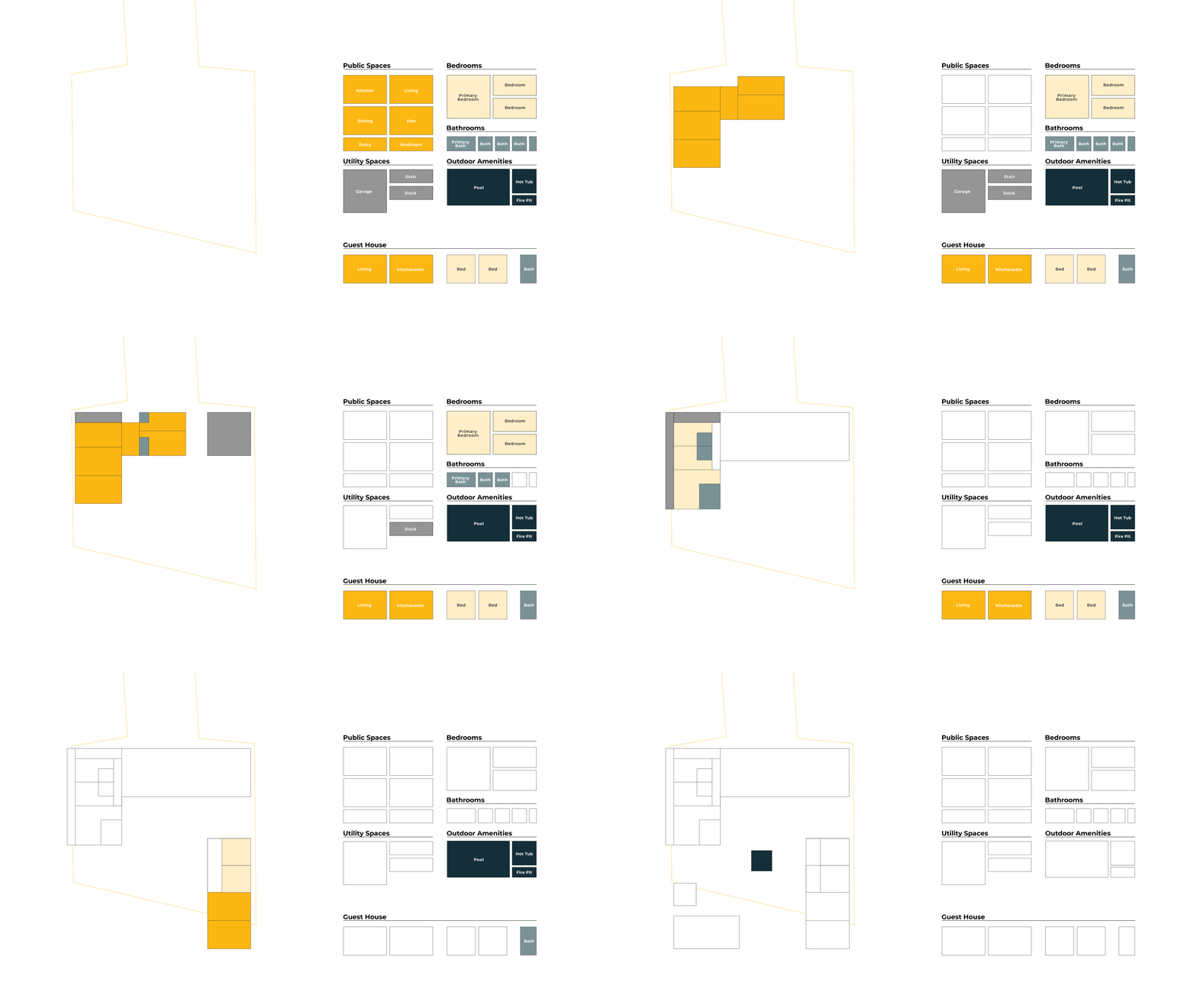
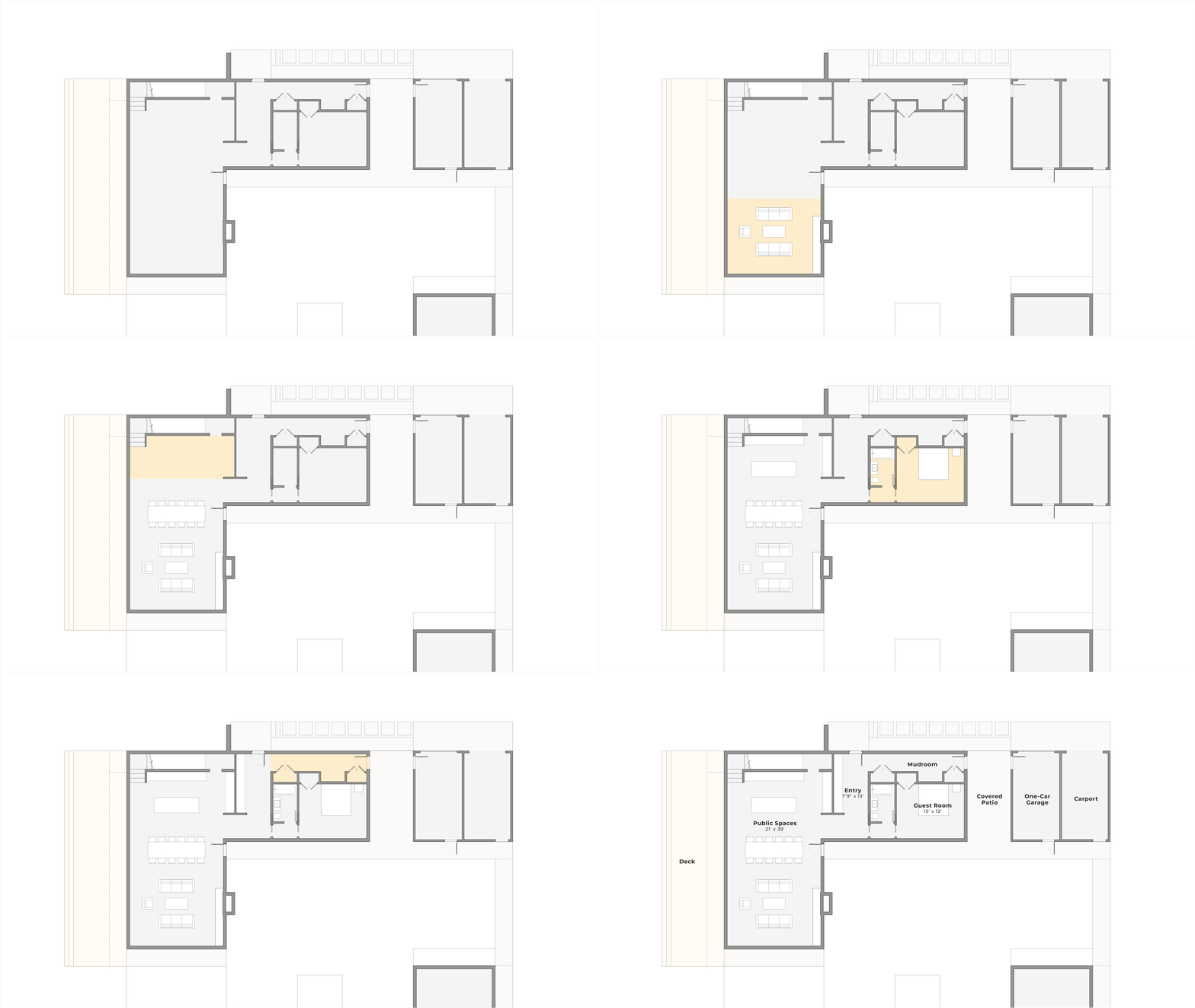
The Up Studio follows a systematic approach, which they call “Clarity of Design” – with Archicad at its heart.
Designing in Archicad from day one, the team first agrees on the conceptual idea to ensure all the client’s needs are met, before eventually revealing the full schematic design and renders.
In this way, the client embraces the concept before focusing on details such as color, decoration and interior layout.
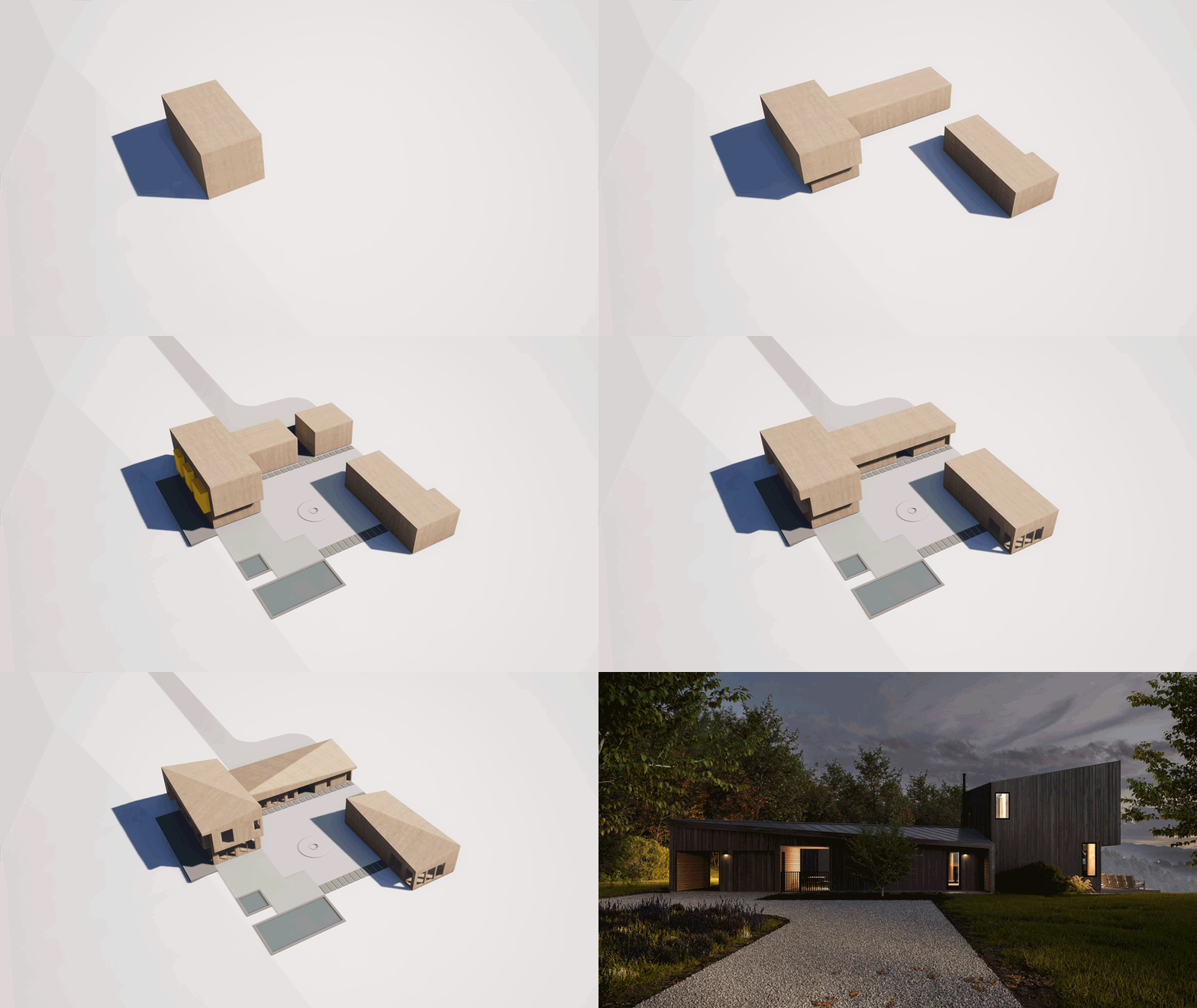
The decision to twist the roofs on both buildings came during the design process. By setting the traditional pitched roof on a diagonal, the architects created more surface area for future solar panels, while also helping snow to slide off the roof during the winter months. Aesthetically, the twisted ridges mimic the mountains in the distance.
New to Archicad? Enroll in our free Graphisoft Learn’s course to understand the benefits of using BIM. Learn the foundations of modeling, documentation, scheduling, teamworking and sharing your project via BIMx.
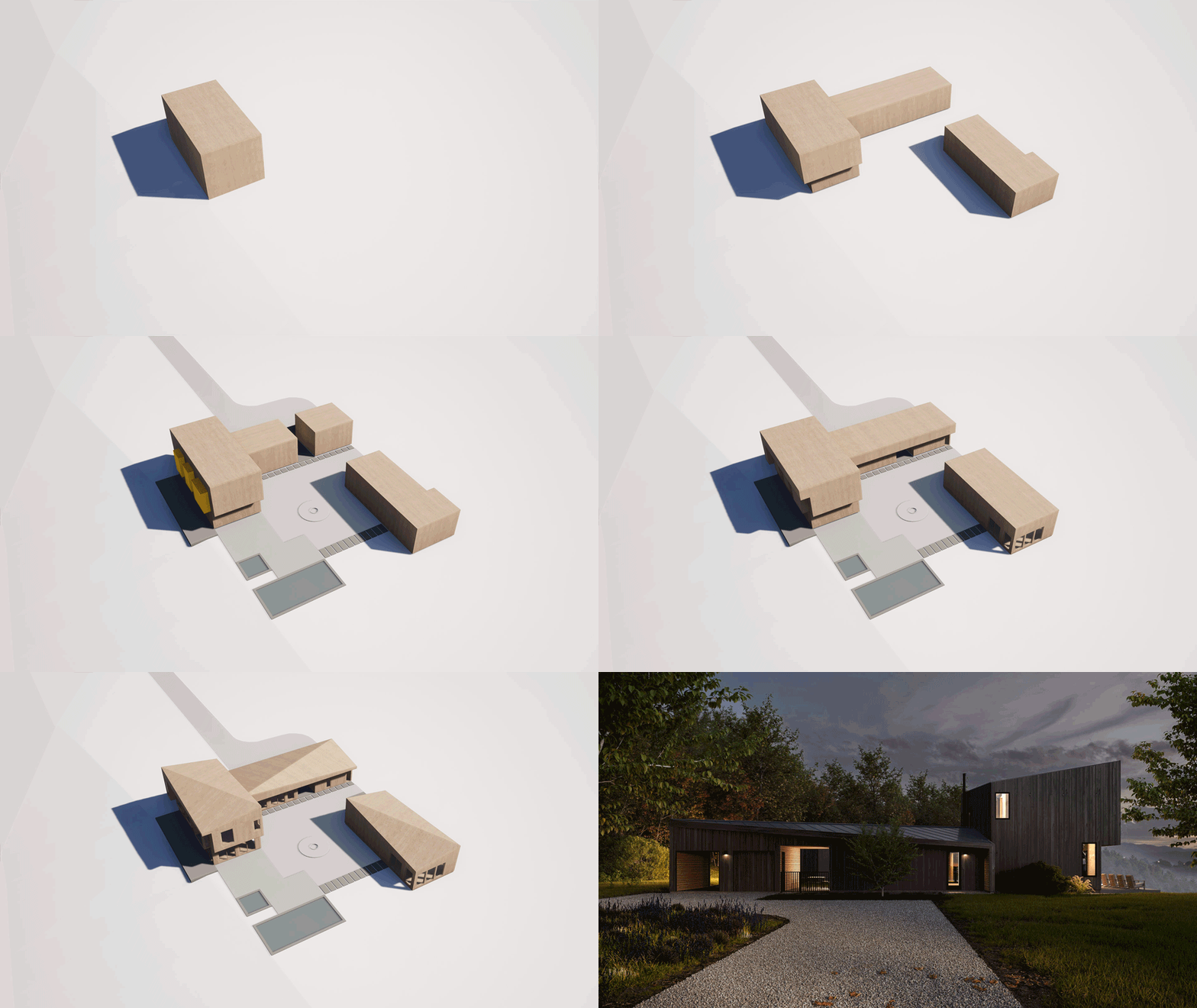
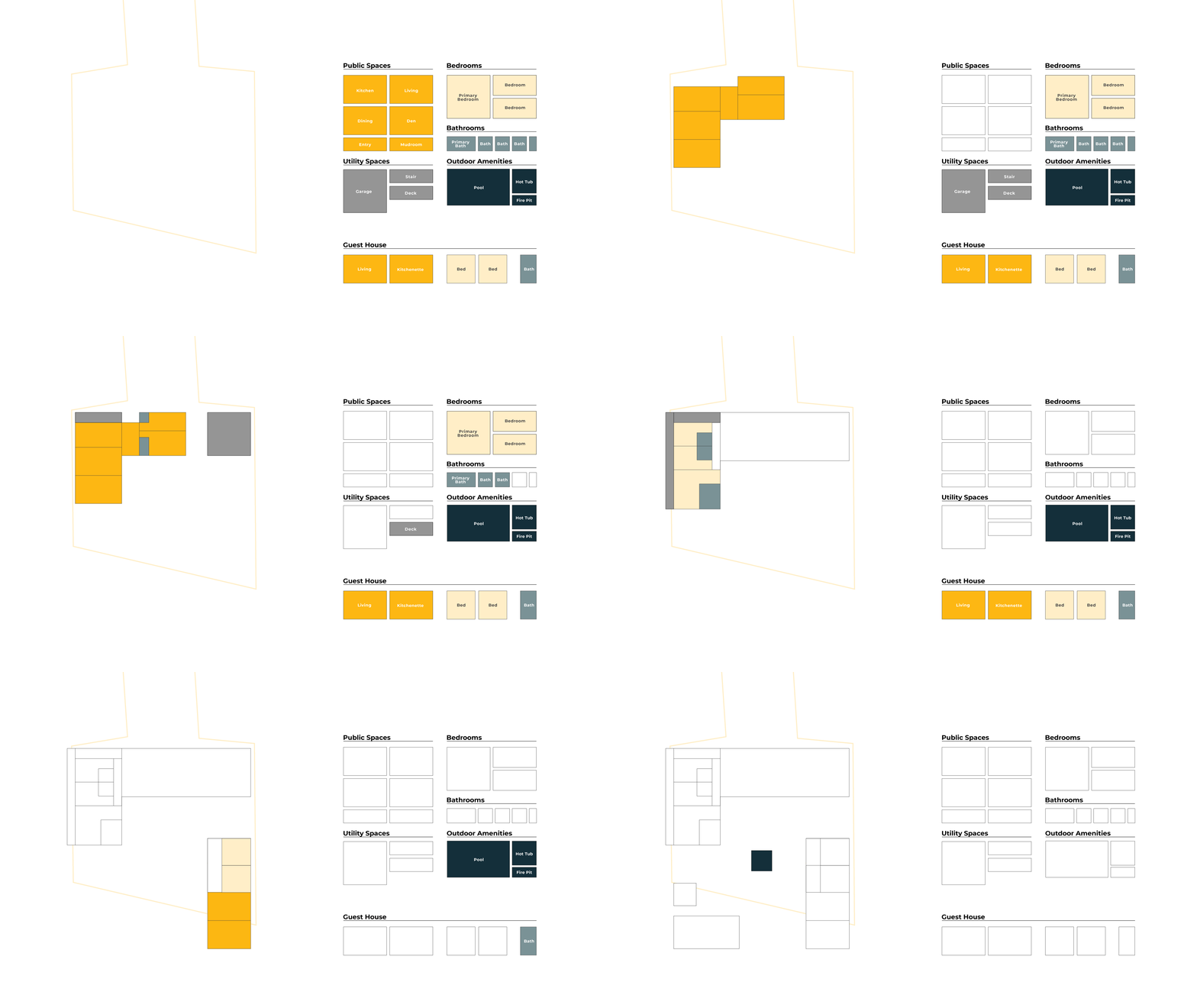
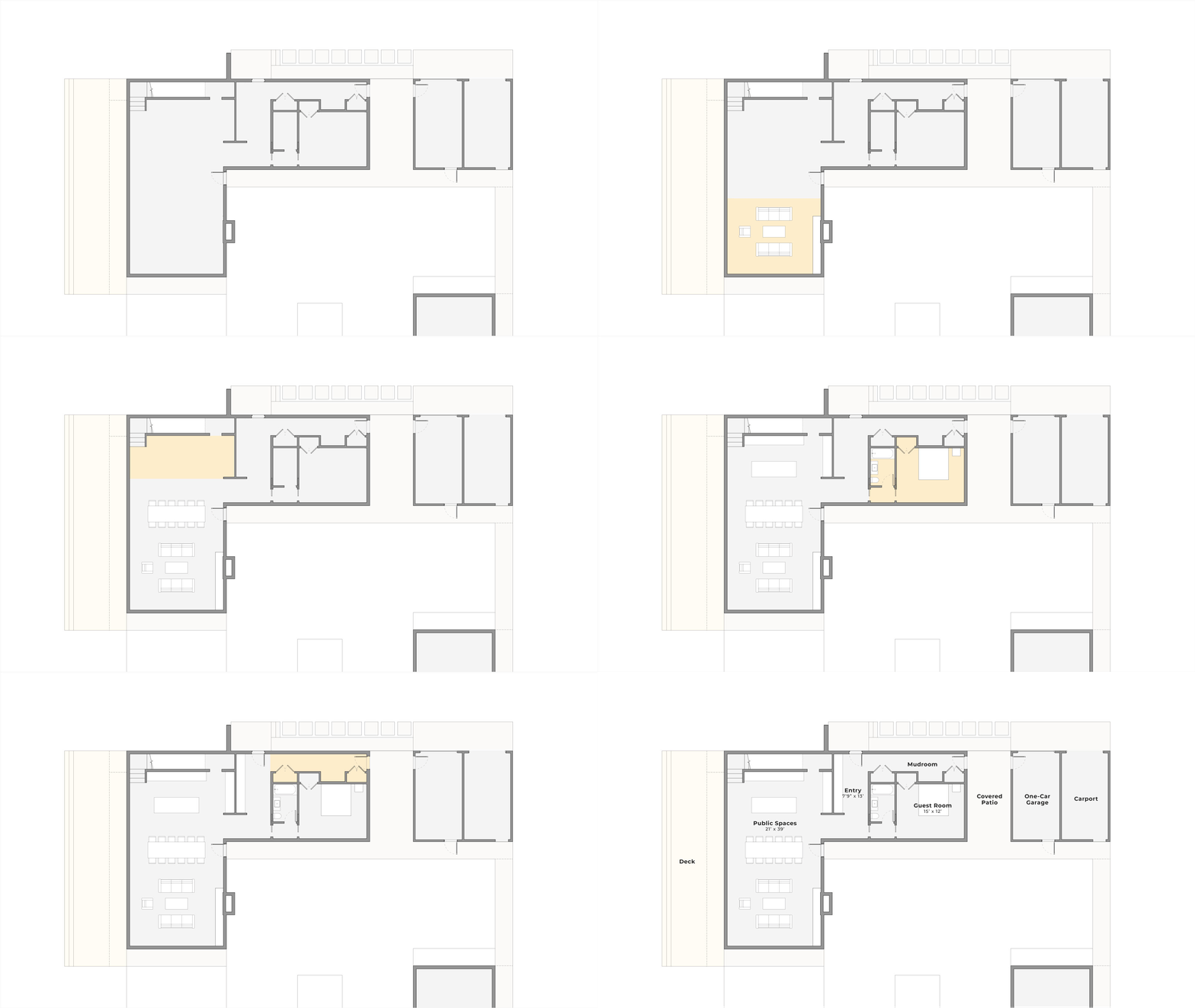
“Clarity of Design” diagrams – schematic design phase
We leverage the 3D model as a tool. In this way, the client can see the model come to life and see how they will function in the home.
John Patrick Winberry, Founding Partner and Architect, The Up Studio
Photo ©Julian Bracero
Twisted Ridge, USA, The Up Studio, theupstudio.com
Visualization
Bringing Designs to Life
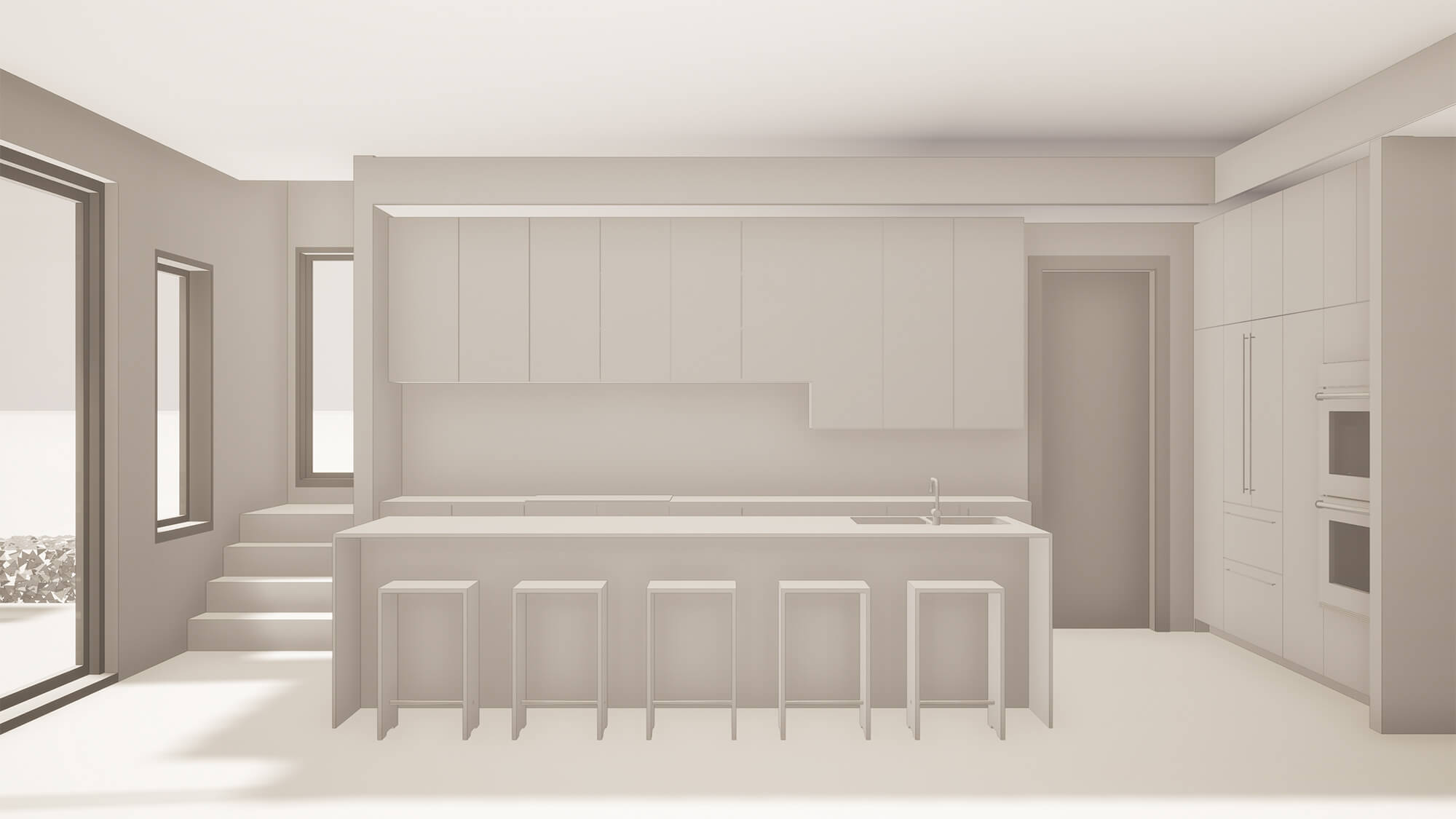
After creating the design for Twisted Ridge in Archicad, the team rendered the 3D model using Twinmotion. The architects slowly revealed the full design in a series of renderings, gradually adding elements such as the fenestration, courtyard, swimming pool and fire pit. When designing the interiors, The Up Studio used white models to show how each area would function, before objects were brought into the Archicad model, such as specific kitchen appliances.
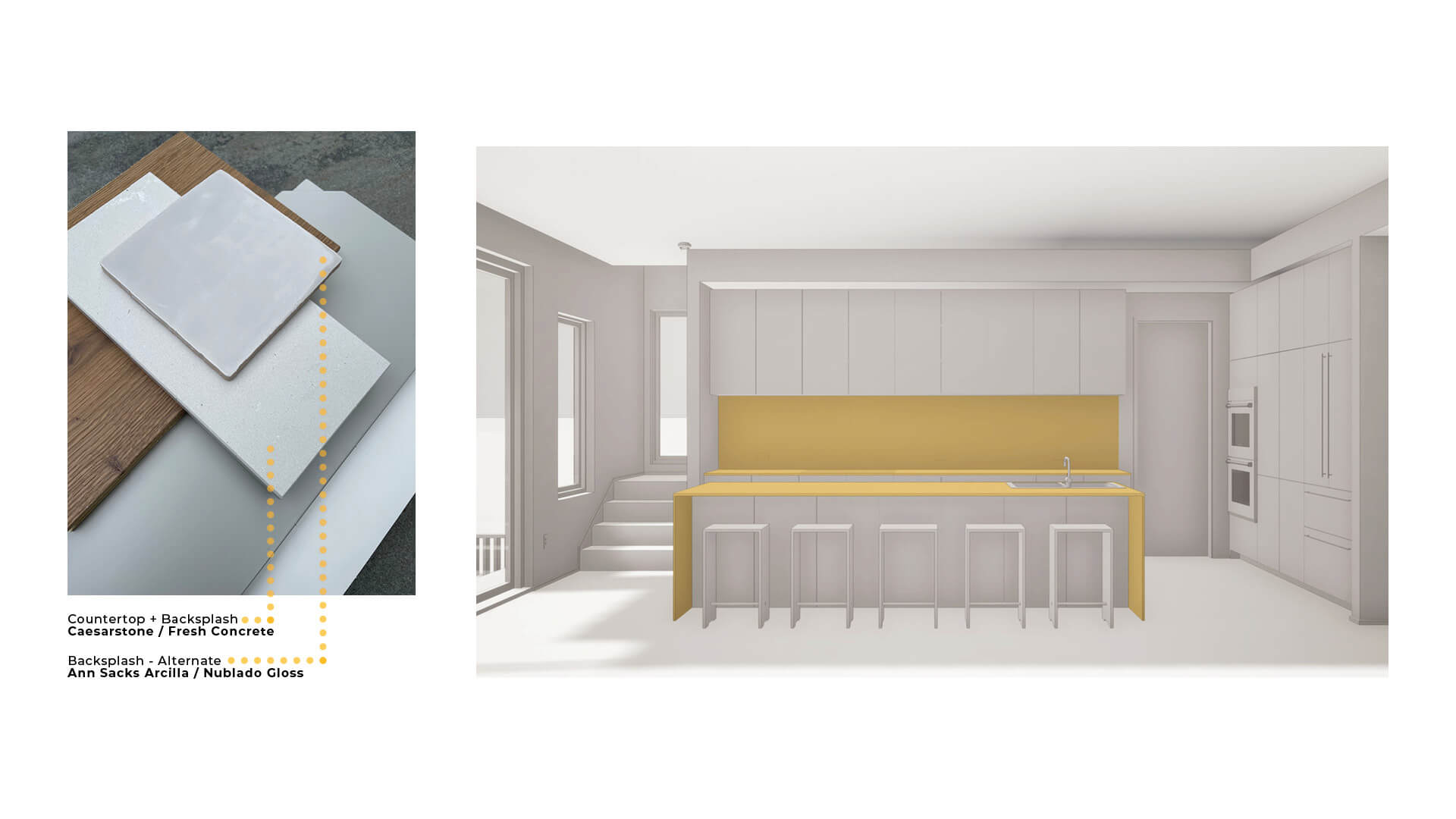
The team used storyboard selections and a color palette based on initial talks with the client and completed the 3D model with selected elements and surfaces, before finally rendering the model so the client could see how the final design would look.
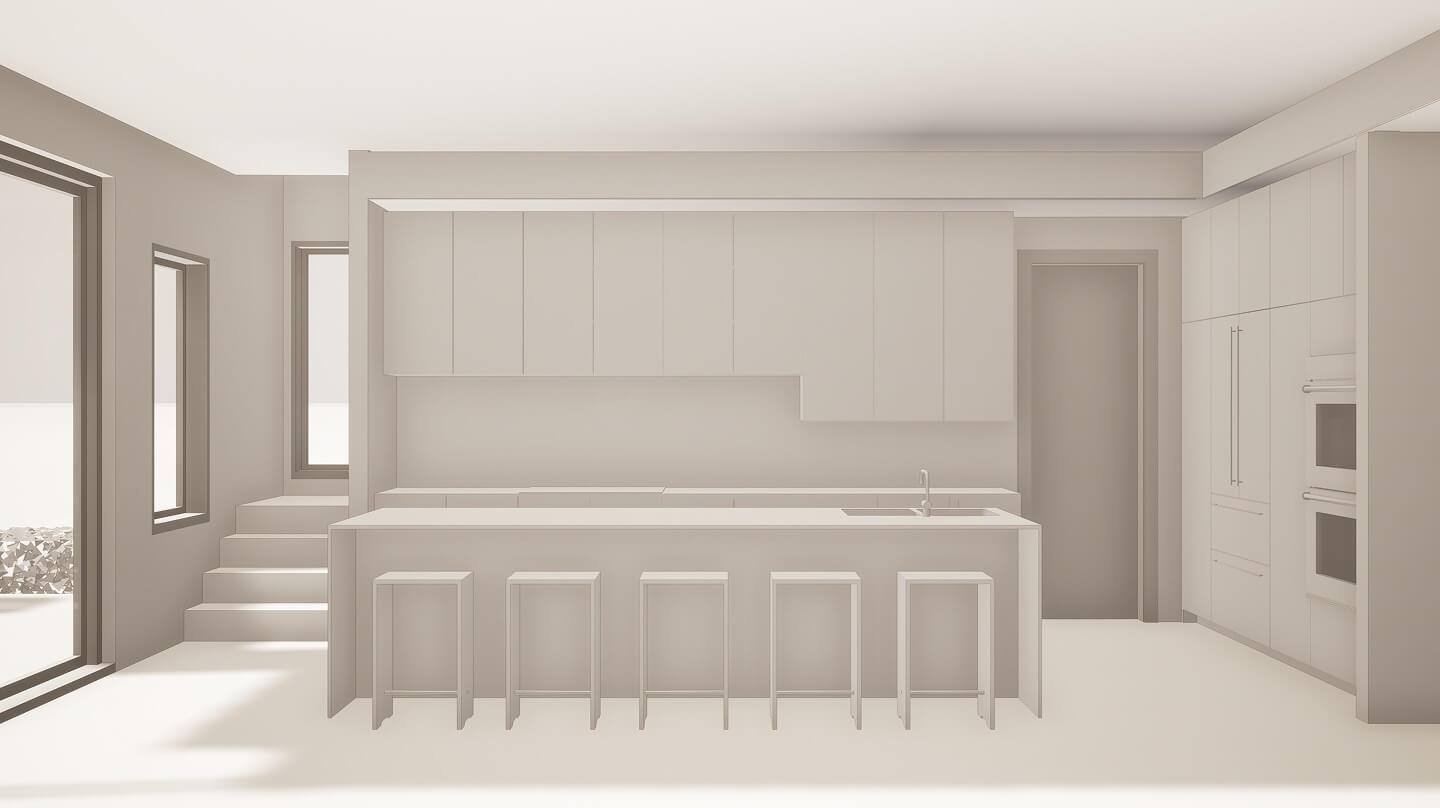
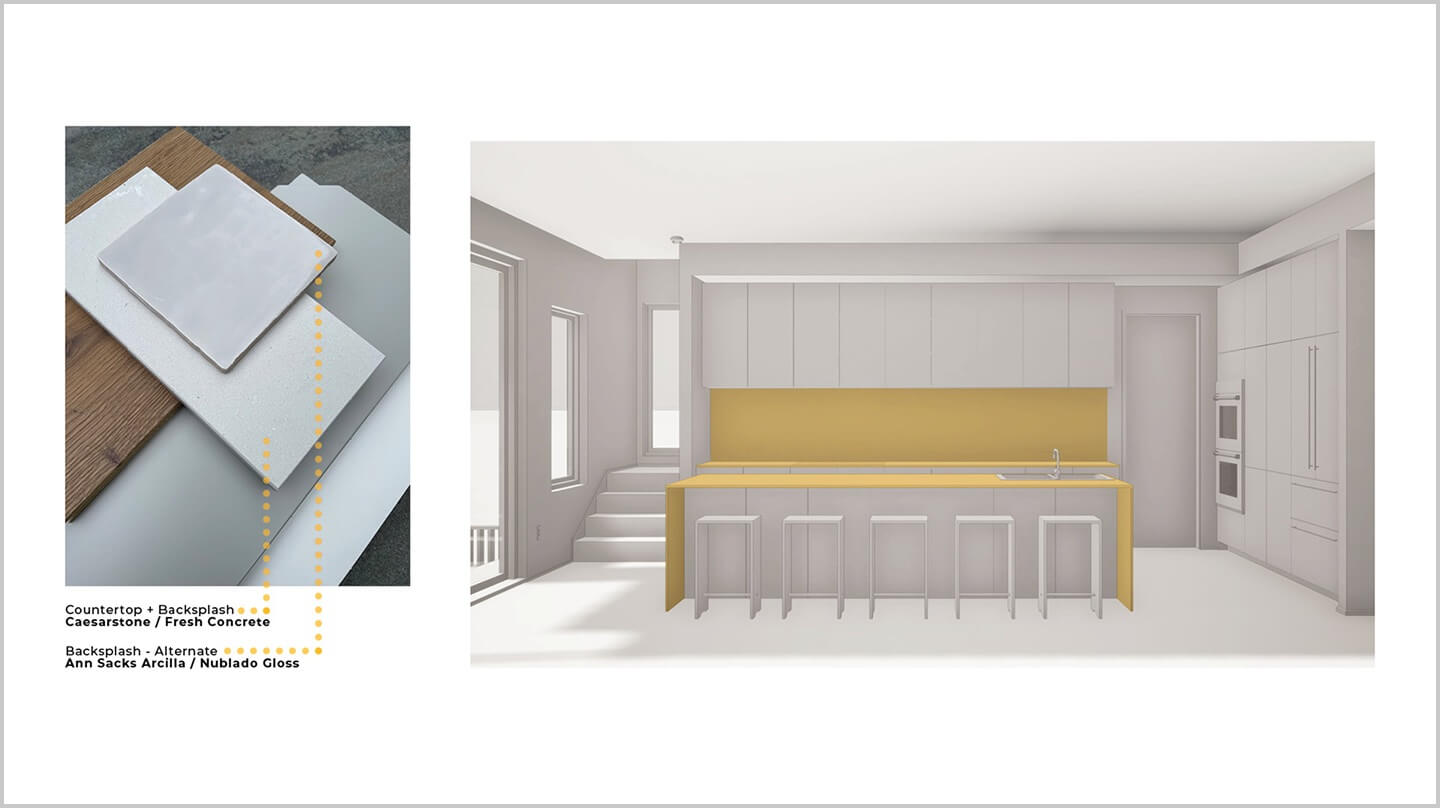
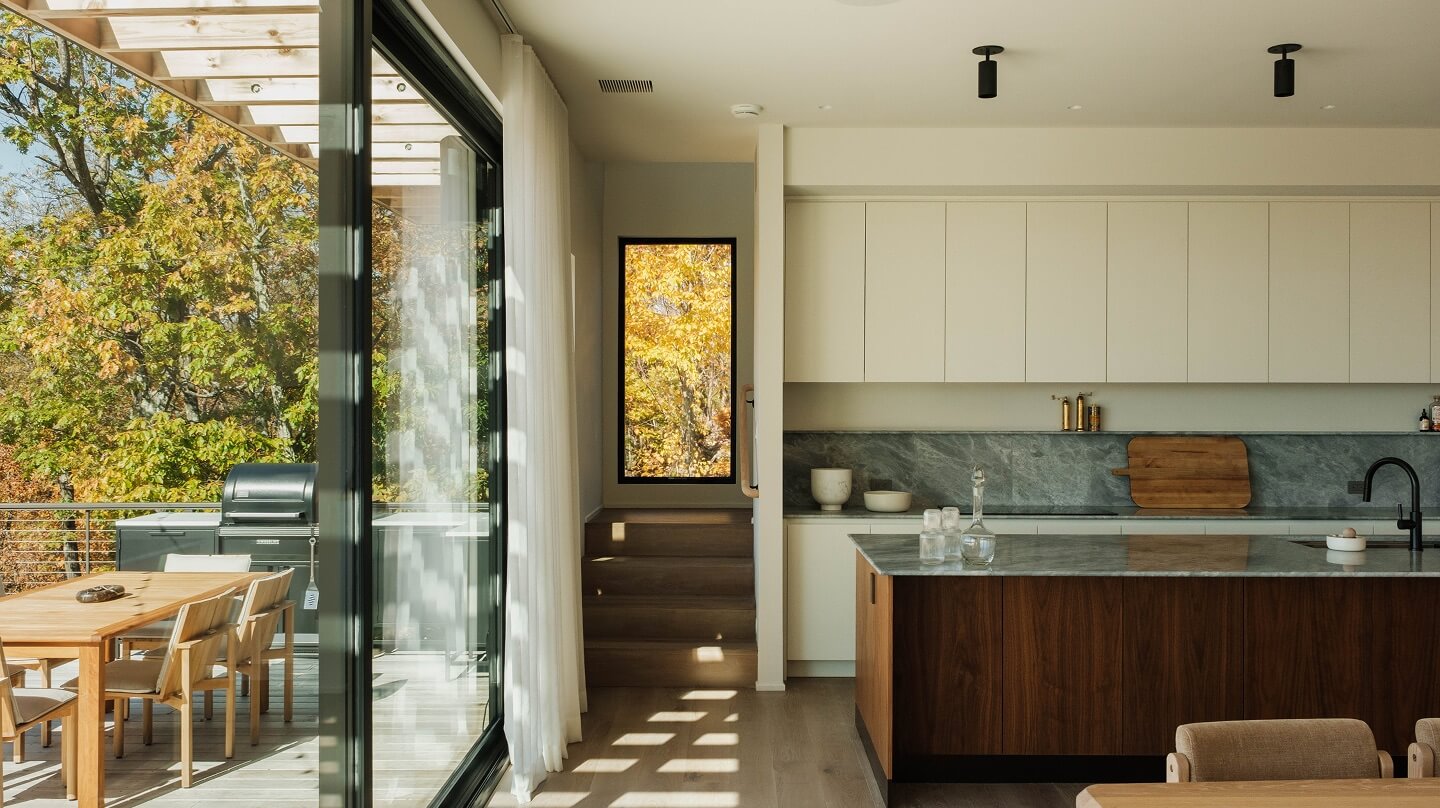
White model of the kitchen interior, digital storyboard selection of kitchen cabinet surfaces and the final result
Twisted Ridge, USA, The Up Studio, theupstudio.com, Photo: ©Julian Bracero
Before switching to Archicad, we would have used five different software programs to create one image. Now, Archicad is the sole source of our information. The 3D model is a 1:1 virtual representation of what we are going to build.
John Patrick Winberry, Founding Partner and Architect, The Up Studio
Photo ©Julian Bracero
Blueprints of success webinar: how The Up Studio brings ideas to life
Learn more about the detailed design process for this stunning mountain residence.
Register to watch the webinar
Collaboration
The Complexity Challenge Solved with BIM Collaboration
The Up Studio’s ultimate goal is that every consultant who is engaged in a project will also work integrated directly in the Archicad model. Each engineering discipline has its own subset of layers that they are working on inside The Up Studio Archicad model. In this way, MEP and structural engineers inform design decisions in real-time and if there is a clash, it can be resolved immediately.
The Twisted Ridge project employed this integrated and collaborative BIM approach from start to finish, with disciplines from interior designers to structural engineers all working within the shared Archicad model.
For those consultants who could not work within the Archicad model, the team used IFC to share information.
Are you a structural engineer? Discover Archicad’s integrated structural design workflow. Graphisoft Learn’s course, Getting Started with Integrated Structural Design, shows you how to generate structural analytical models in Archicad and share them with structural analysis software.
The [Archicad] 3D model is the best way to ensure you maintain design integrity while collaborating amongst multiple teams. We solve all the complexity inside the 3D model.
John Patrick Winberry, Founding Partner and Architect, The Up Studio
Photo ©Julian Bracero
Construction
Communication for Construction
As Twisted Ridge moved on-site, the Archicad model remained at the heart of the construction process. The BIM model was used as a communication tool by the architects for every site visit.
Meanwhile, the 3D model helped the contractor to understand and interrogate the designs, speeding up the construction process. In addition, the contractor used the BIMx model on-site when working with the subcontractors, helping to ensure all the final details came together and solving any problems in situ.
It speeds up the construction process when contractors have the BIMx model and use it to show the subcontractors the design intent. This has been such a revelation for our projects.
John Patrick Winberry, Founding Partner and Architect, The Up Studio
Photo ©Julian Bracero