 United States site instead?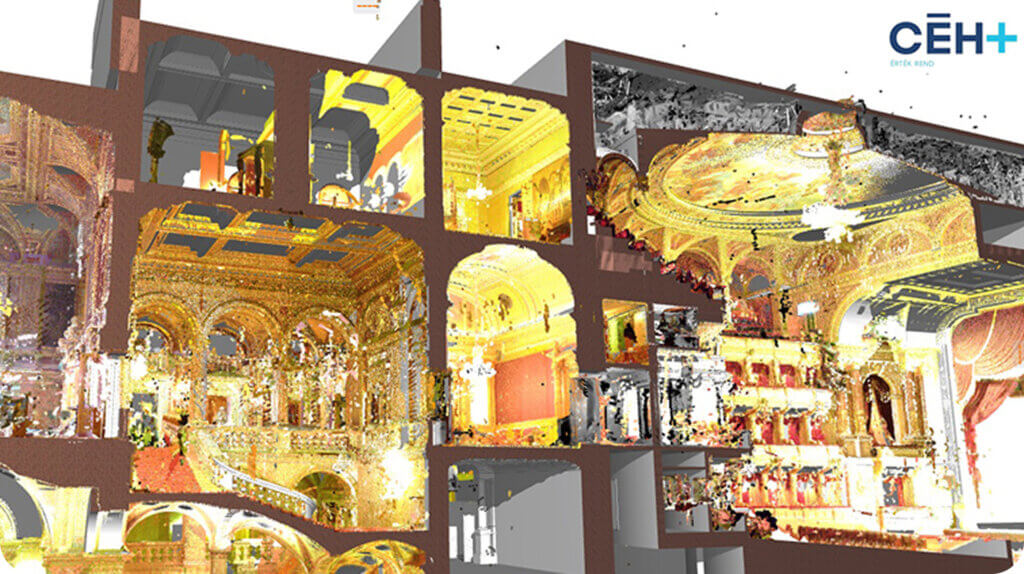
While selecting low-carbon products and materials, and designing energy-efficient systems is one way to design green buildings, adaptability and adaptive reuse are also effective sustainable strategies.
In place of demolishing and rebuilding, developers and architects are proactively finding ways to retain the embodied carbon inside an existing structure by adapting it for a new building use.
Simultaneously, historical preservation is growing in popularity. Preserving these landmarks which contribute to a community’s urban fabric and history, the process of adapting these buildings for modern use is yet another way to deliver sustainable buildings.
When pursuing such a project, a building survey detailing the structure’s existing architecture and conditions must be conducted. However, in most cases, architects are fortunate if they manage to come up with an old paper blueprint.
Point cloud surveys
Addressing this paint point, point cloud technology has emerged as way to accurately measure and detail an existing building through point cloud scans imported into green BIM software models to create these surveys.
For the Hungarian State Opera, the process of creating a model of the 19th century structure with its vaulted and zig-zag spaces was particularly challenging. In utilizing geodetic surveying, architectural 3D modeling and point cloud technology, CÉH Inc. was able to create a precise BIM model to support renovations. The Budapest-based architects tapped into additional tools to compress, manage and easily access the files.
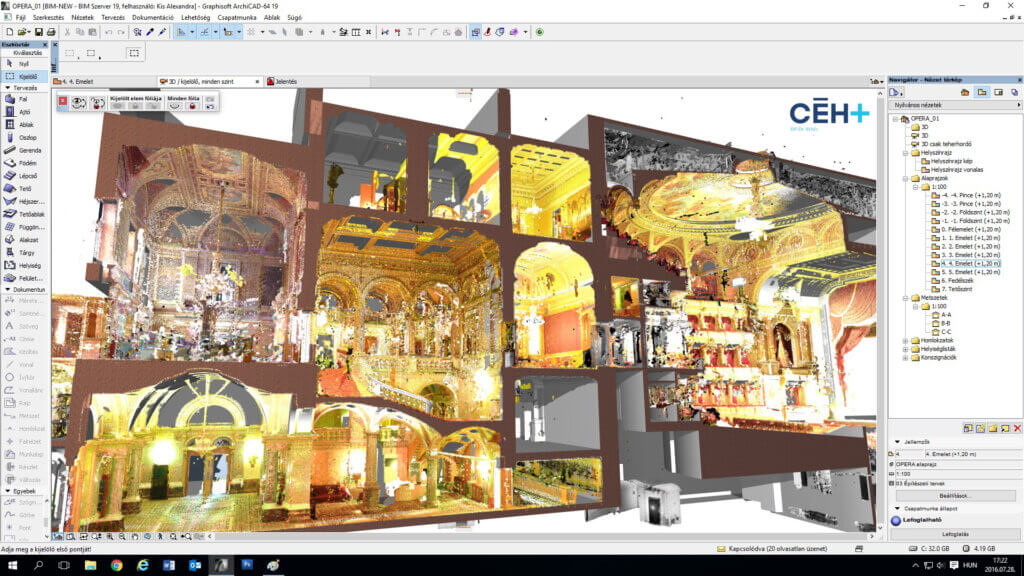
Read the case studyCredit: ©CÉH Zrt.
Everards Printworks Edinburgh
Another green buildings example is the transformation of the Everards Printworks building in Bristol’s historic quarter into an upscale hotel, apartments and shops.
“We were given an IFC base model created by the building surveyor from a detailed point cloud survey, and an interactive point cloud viewer for review,” relates Billy Duncan, associate director, AMA Studio, Edinburgh.
The architects were then able to work with the survey to meet the owner’s requirements for preserving the historic façade and concrete frame.
“All proposed new building elements were gradually replaced with BIM elements so that they could be scheduled and displayed correctly,” he relates.
Rome’s Palazzo Maffei Borghese
Also tapping the benefits of advanced software technology and sustainable design, Minnucci Associates was tasked with modernizing the 16th century Palazzo Maffei Borghese in Rome.
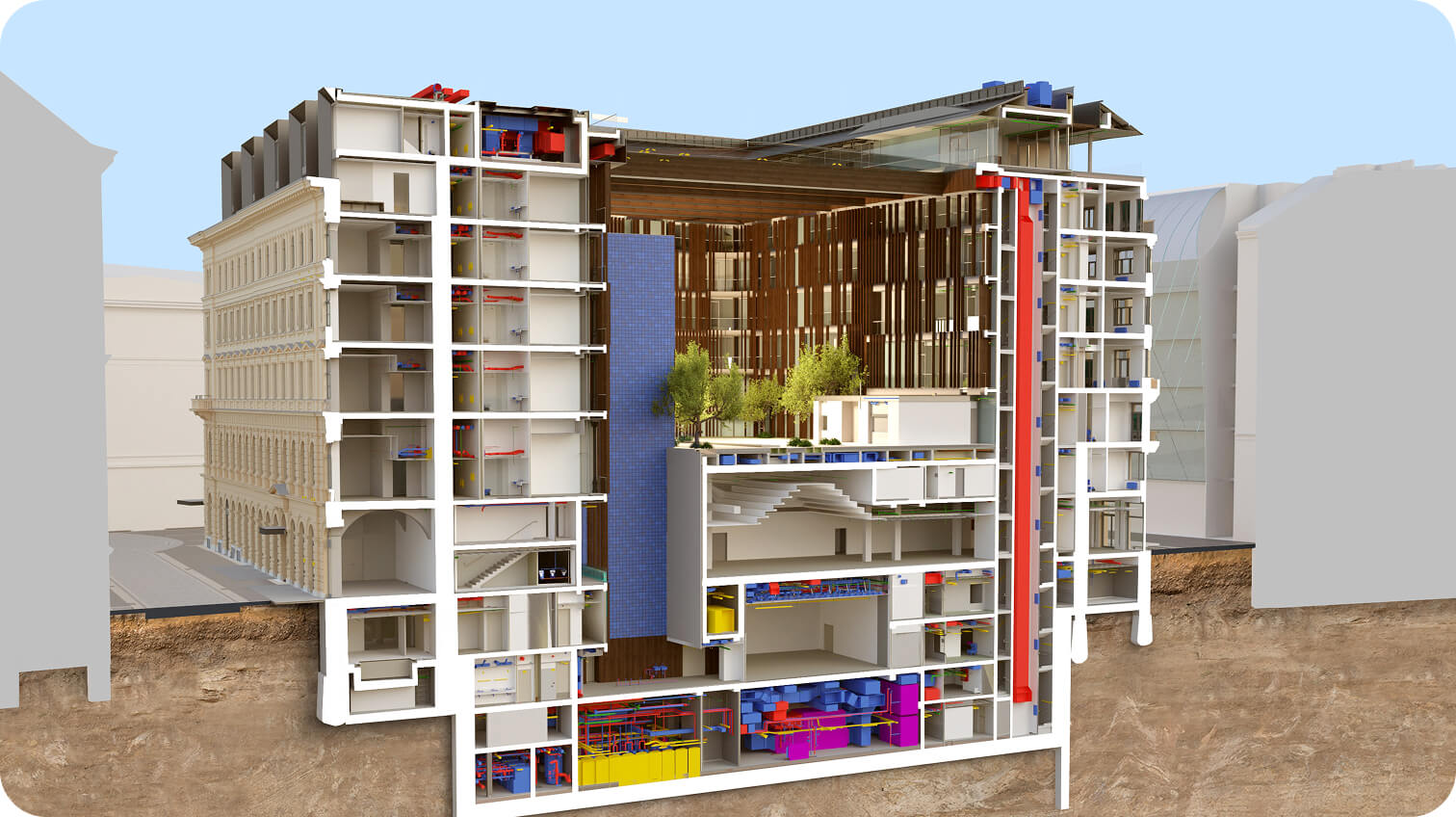
Historical and architectural studies, together with geometric surveys were integrated into an Energy Efficient Heritage Building Information Modeling (HBIM) system. This enabled the architects to run short-term scenarios for improved energy efficiency with temporary, low-cost measures; a medium-term scenario involving more extensive renovations with new technologies; and a long-term strategy targeting net zero energy.
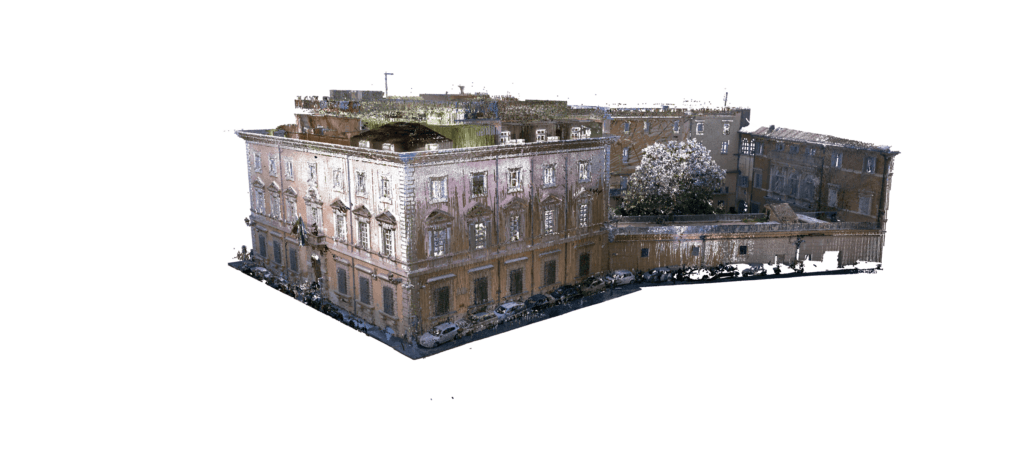
Read the case study
Credit: ©Minnucci Associati
“The geometric information — spatial and georeferenced coordinates — are crucial for HBIM, as the point cloud serves as a base for creating an accurate 3D twin model that can be updated as needed,” states Carlotta Cavalieri, architect, Minnucci Associates. “The colorimetric data, derived from photos taken during the scan, helped assess the building’s conservation status by identifying cracks, degradation and changes over time, making it a valuable tool for restoration and maintenance.”
Modular and easy to assemble construction
Another trending sustainable design strategy is modular construction where building components and systems are prefabricated in factory-controlled environments and then shipped to the building site ready for installation.
Yet another approach to environmentally-friendly buildings is designs which don’t require heavy machinery and skilled workers to construct.
Examples of applying some of these strategies and tools are the Floating office Rotterdam and the Future Africa Innovation Campus Dining Hall projects.
Literally floating in the Netherland’s Rotterdam Rjinhaven port, the Powerhouse Company’ Netherland’s office designed an off-grid, CO2-neutral and completely demountable office building.
The easy to assemble and dissasemble mass timber structure sits on a prefabricated concrete pontoon foundation on the water.
The building, with its pier-like appearance, features a photovoltaic, pitched roof for energy production and solar shading, and a heat exchange system drawing water from the port for cooling. The beautiful site, complete with outdoor space and even a swimming pool, is home to the non-profit Global Center on Adaptation.
As for the South African dining hall project, Earthworld Architects leveraged the power of BIM to design the building in small segments so the components could be easily transported to the site with no need for heavy machinery.
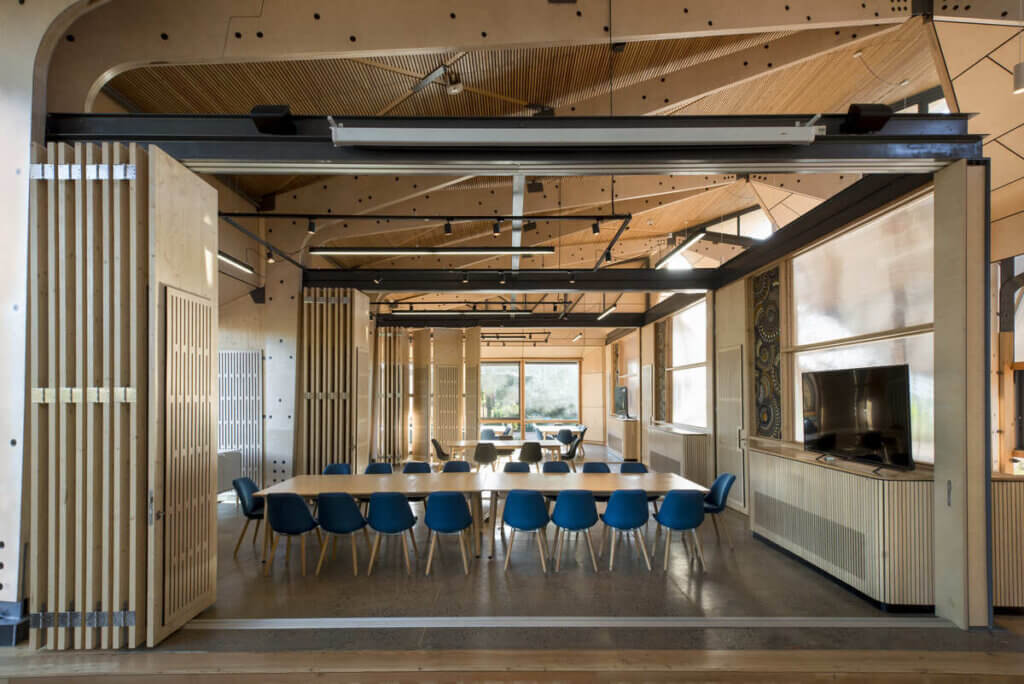
Read the case study
Future Africa Campus, South Africa, Earthworld Architects, ewarch.co.za, Photo: ©Dook Photo
Embracing the concept of “democratic industrialization”, the ability to easily view the BIM model on an iPad enabled small builders and unskilled workers to build the mass timber project.