 United States site instead?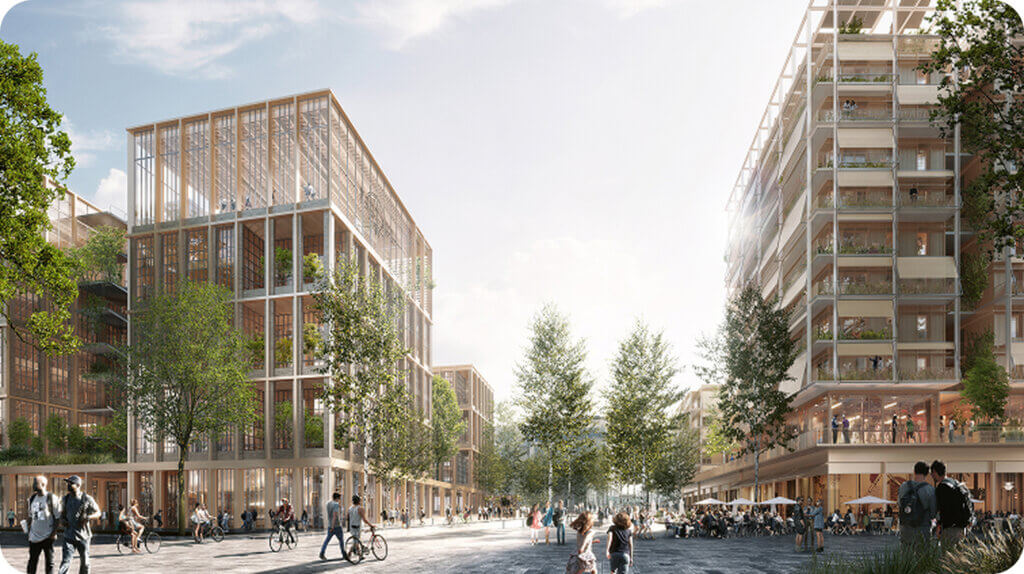
For the past three decades, green buildings and energy efficient building design has grown from a fad to a major movement. Driven by growing awareness of CO2 emissions and the large percentage of these emissions attributed to buildings, the industry saw the rise of sustainable buildings.
With approximately 27% of global emissions stemming from building operations and another 15% from the embedded carbon in building materials and systems, organizations like Architecture 2030, the World Green Building Council, and the World Resources Institute Built Environment provide valuable resources to support the design of environment-friendly buildings.
Furthermore, the industry is leveraging the power of green BIM software solutions and plugins to produce low carbon, green buildings.
Together with a collective goal of dialing down carbon emissions from the built environment, sustainable thought leaders are working to reframe the conversation from minimizing damage to proactively protecting and promoting the environment with truly sustainable buildings.
“We need to make buildings like trees that support life… that clean the air and generate soil It’s a tripple ’top’ line. We want to be good for the economy, good for society and good for other species,” states Professor Dr. Michael Braungart, founder of the EPEA International Umweltforschung GmbH in Hamburg, Germany and co-founder of MBDC McDonough Braungart Design Chemistry, creators of Cradle to Cradle Certified.
Sustainable, healthy materials
Toward that end, eco-conscious designers are looking at renewable, re-usable, locally-sourced, and low-carbon materials like bamboo, recycled steel and concrete, mass timber, reclaimed wood, cork, hempcrete, engineered/composite wood, recycled plastic, and recycled rubber. Even reused shipping containers are creatively showing up in projects like artist studios, hotels, schools, housing units, and labs.
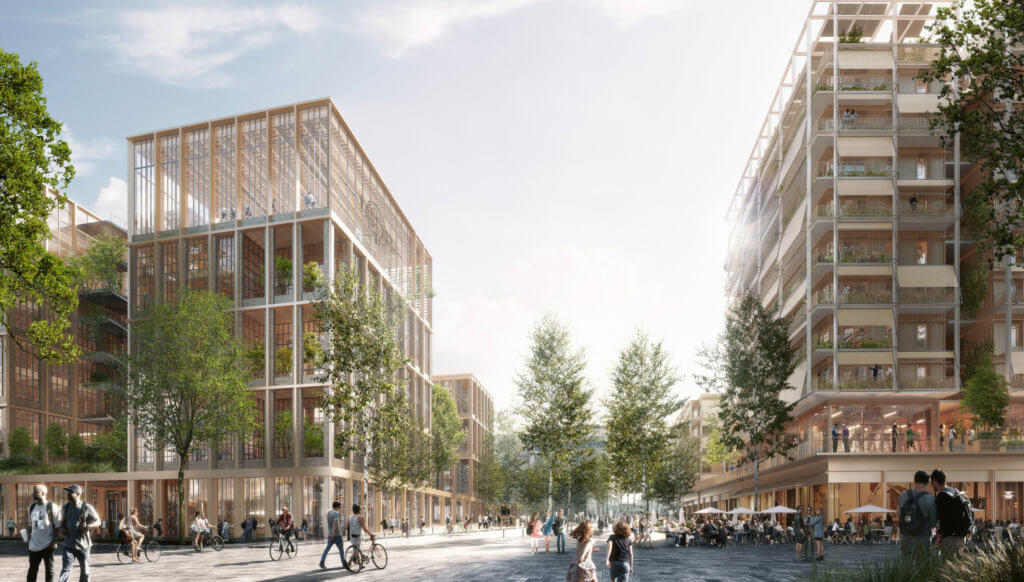
Athletes’ Village, Paris | CoBe Architecture & Paysage, cobe.fr | © Doug & Wolf
Healthy, non-polluting building materials are also garnering more attention. This includes products like low-VOC paints, plant-based polyurethan rigid foam, mycelium and timbercrete.
Another noteworthy trend is cradle-to-cradle building products. The C2C Certified Product Standard rates products based on material health, material reutilization, renewable energy and carbon management, water sterwardship and social fairness.
Taking things a step further, Berlin’s C2C LAB is researching things like products that clean the air and how to optimally recycle and reuse existing materials.
With a similar mindset, Buildings as Material Banks (BAMB) approaches buildings as vaults of valuable materials. For example, one of their programs focuses on the reuse potential of building products which can be assessed and optimized with green BIM software solutions.
Green buildings case studies
Mjøstårnet
On the shores of Norway’s biggest lake Mjøsa, at 18 stories, the Mjøstårnet mixed use tower is the world’s second tallest mass timber building. Constructed with spruce, the timber was locally sourced.
According to the project’s Norway architect Øystein Elgsaas, Archicad, the BIM software used for the design process helped the project team solve issues during the early design stages. Model sharing and collaboration was key to ensuring that the uniquely shaped timber members and complex joinery all fit precisely together.
The project team is also tapping savings from transportation, fabrication and erection time thanks to BIM.
Anna Seiler House
For another project, Archicad architectural design software was essential for the highly complex and sustainable Anna Seiler House, Inselspital main building at Bern University Hospital in Switzerland.
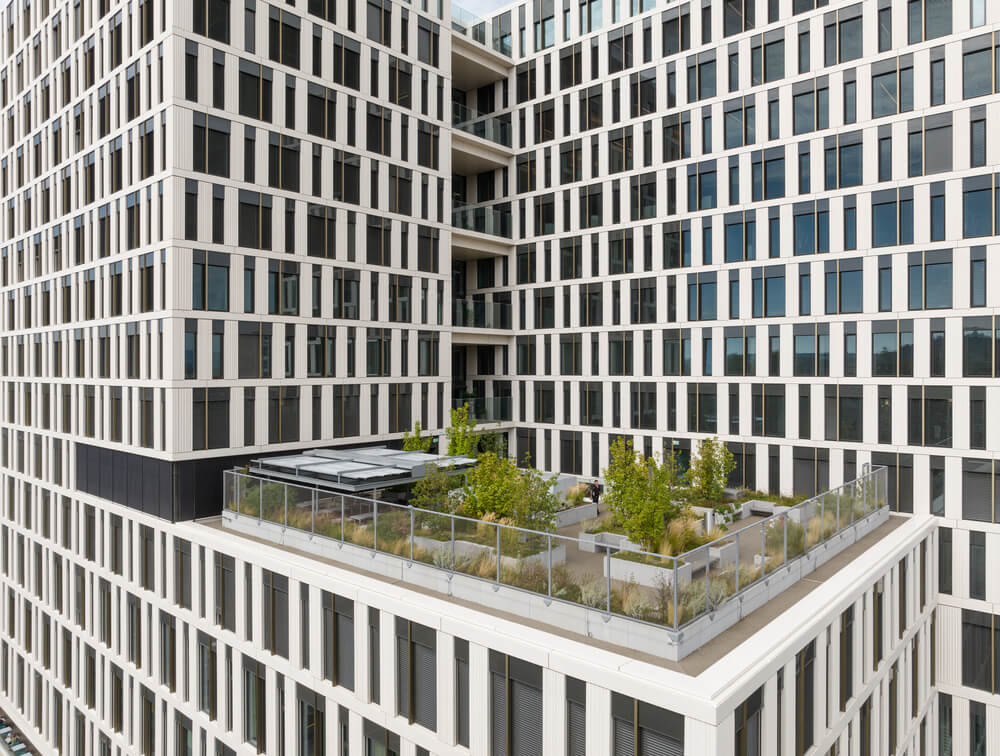
Anna-Seiler-Haus, Inselspital main building, Bern University Hospital, Switzerland | ASTOC ARCHITECTS AND PLANNERS, GWJ Architektur, IAAG Architekten | astoc.de / gwj.ch / iaag.ch | Photo: © HGEsch
“The team created a BIM database to deal with the project’s complexity, which included almost one million model elements. They also had to coordinate 25 disciplines, 250 designers and 200 IFC models,” explains Stephan Becker, architect, DIPL.-ING., ASTOC Architects and Planners.
The 18-story, 532-bed building’s structure is partially made from recycled concrete and its facade from 100% recyclable mineral composite material. The first hosptial to meet the new Minergie-P ECO standard, the design meets a high standard of building envelope performance. Other sustainable design features include enhanced indoor air quality, daylighting and good quality acoustics.
Paris Athletes’ Village
Just in time for the 2024 Summer Olympics the Paris Athletes’ Village is another noteworthy case study. Boasting a double lifecycle, the 80-building complex initially served as residences for the athletes and is now being transformed into a mixed use neighborhood with 6,000 residents and 6,000 workers.
The highly sustainable buildings in Saint-Ouen-sur-Seine, a suburb of Paris, France, were built with wood column beams, timber frame walls and prefabricated low-carbon concrete floor slabs. Meeting the E3C2 energy and carbon performance standard, the development is designed to run on 100% renewable energy featuring photovoltaics, geothermal heating, water reuse and air purification.
Sustainable design and construction
Key elements of environment-friendly buildings are adaptability and adaptive reuse, both of which ensure a buildings’ longevity.
Once a structure is built, the embodied carbon that goes into construction is retained as the building is adapted for different uses throughout its lifetime. In addition to avoiding the waste and landfilling of demolishing facilities, communities benefit from minimized noise pollution and enhanced quality of life with the limited construction associated with adaptive reuse designs. The same applies to building retrofits and renovations.
Another principle is designing for easy construction. By embracing strategies like modular, prefabricated units where components of the building are fabricated off-site, the erection of the building is then faster and easier. Examples include prefabricated metal buildings, fully fabricated pods and modular building units which can be built out with full structural, MEP, millwork, interior fit outs, facade and cladding systems.
Reversible building design and adaptive reuse
Reversible building design enables the resource efficient repair, re-use and recovery of building products. To keep track of materials within buildings, passports are created for each building material. The passport contains electronic data on the material’s quality, function, past uses, maintenance, guidelines for disassembly and options for recycling and reuse.
Meanwhile, adaptive reuse projects where older buildings are repurposed for different market sector use is growing significantly. Leading the charge, office conversions have trippled in the last three years, comprising 42% of the adaptive reuse market, according to RentCafe 2024 data.
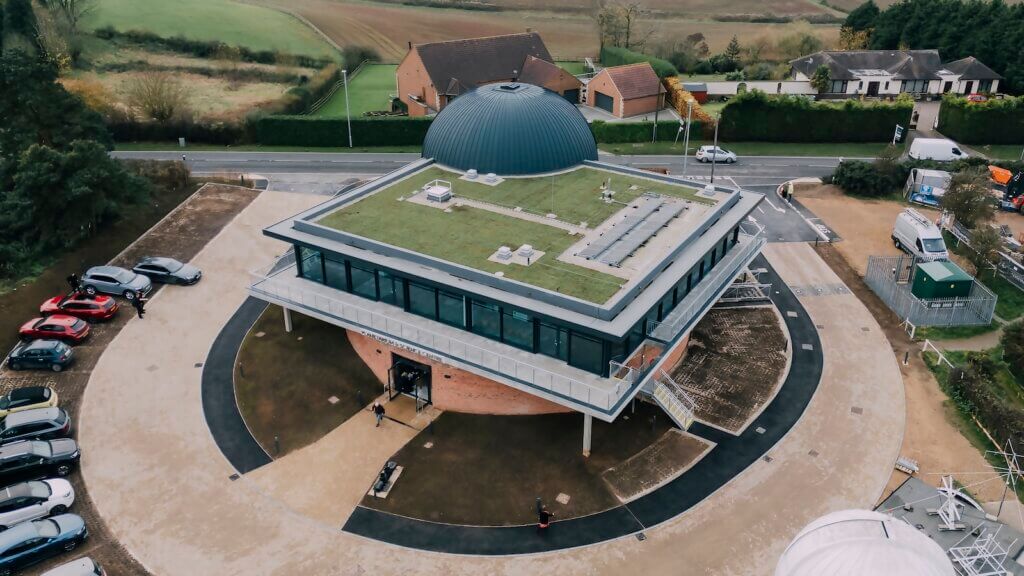
Sherwood Observatory, United Kingdom | Anotherkind Architects | www.akind-a.com | Photo: GF Tomlinson
Adaptive reuse offers numerous benefits including significant embodied carbon savings through reusing the building’s structural bones. These projects also revitalize communities, and promote historic preservation and tourism.
When undertaking a reuse project, the first step is a detailed building survey. However, in many cases, the most an architect will have access to are non-digital architectural drawings, if that.
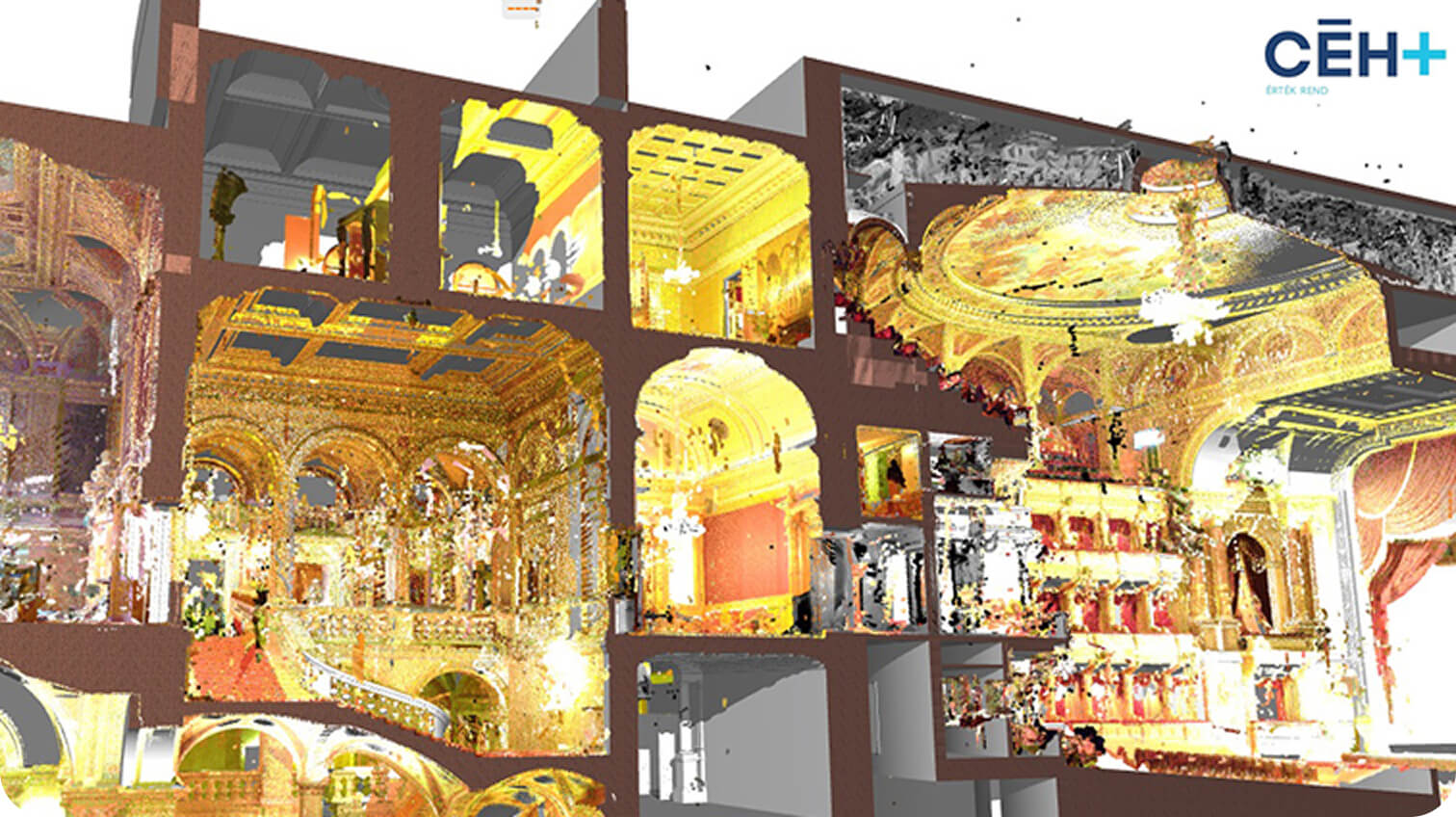
Fortunately point cloud technology is filling this void. Easy to work with, measure and detail, point cloud scans can be imported into BIM software models to create precise building surveys.
Sustainable BIM design
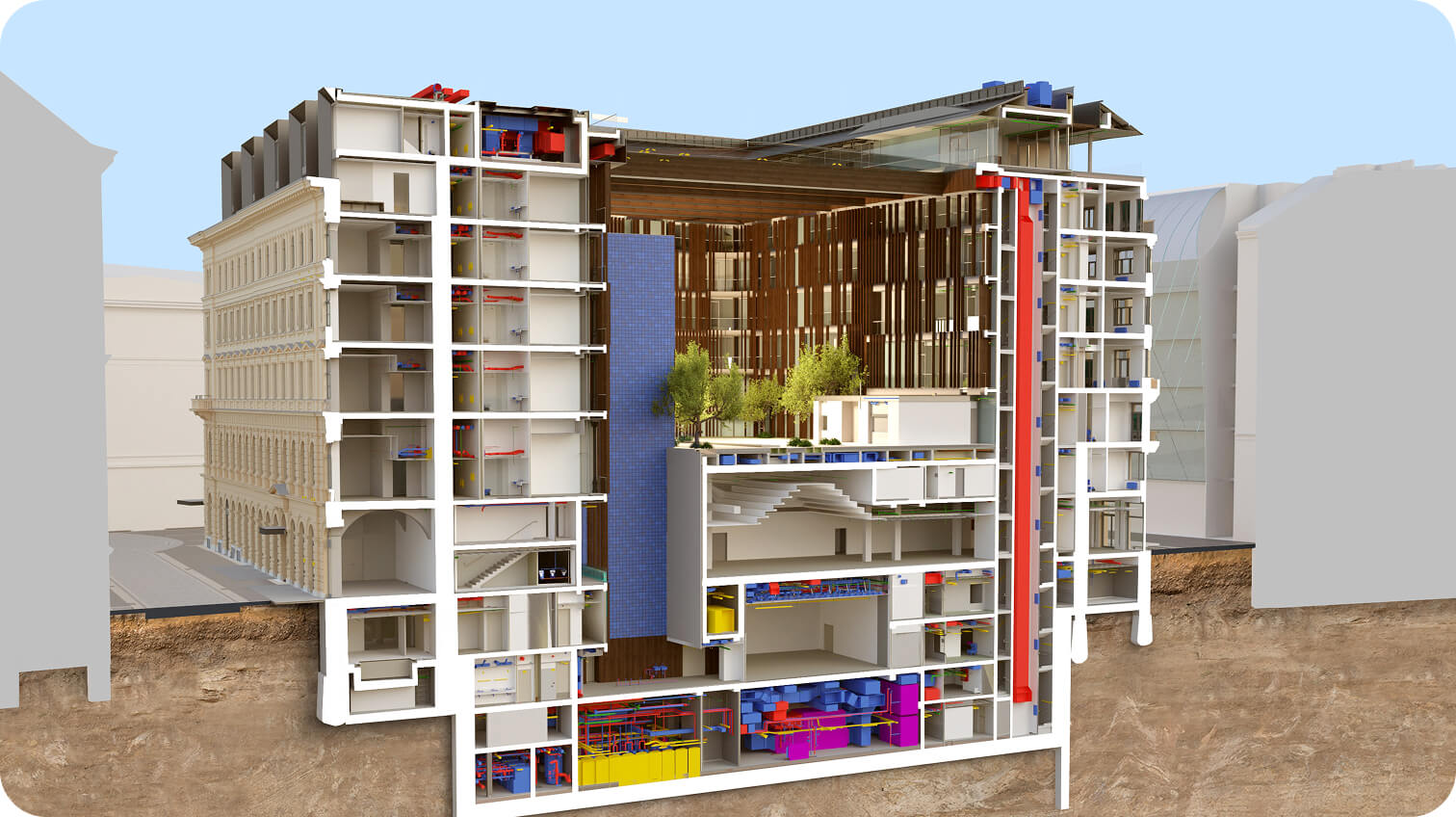
To maximize sustainable design options, a BIM model coupled with energy modeling tools is essential. Starting with the schematic design phase, energy performance values can be computed for a large number of design iterations. Armed with this information, teams can make much better design decisions with regards to energy efficiency, waste and carbon footprint.
BIM can also help streamline the certification process for a number of standards and requirements including ASHRAE, Title 24 and CalGreen, and many more.
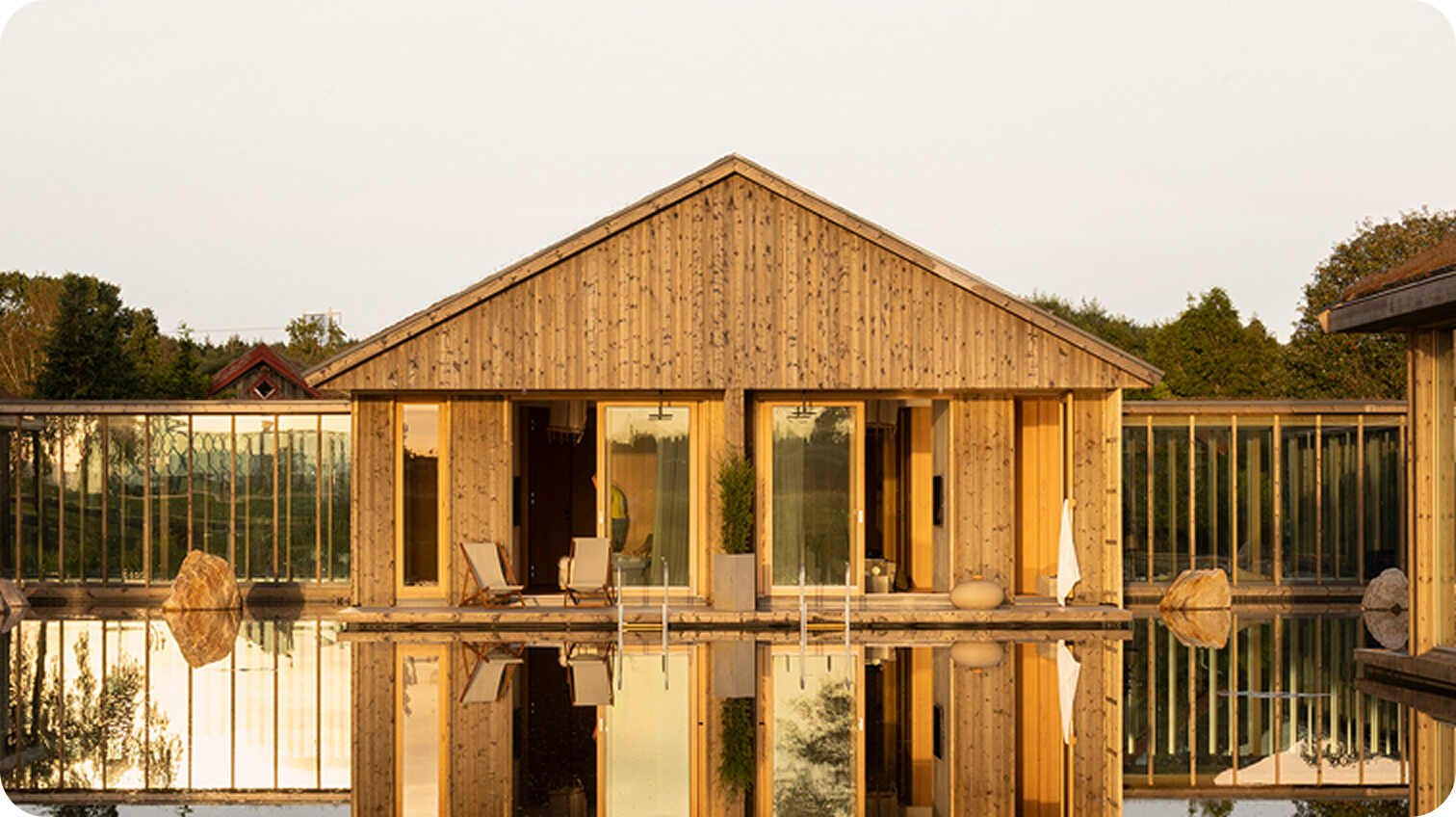
For more case study examples on how the utilization of BIM software helped teams enhanced the design of their green buildings, check out Minnucci Associates’ experimental project, Waugh Thistleton Architects’ adaptive reuse project, Sugar House Island, and a great point cloud utilization example, CÉH Inc.’s Hungarian State Opera survey.
Sustainable energy use
As is well known, a key strategy in designing sustainable buildings is tapping into natural resources including solar, wind, heat pumps, geothermal, rainwater harvesting and natural ventilation.
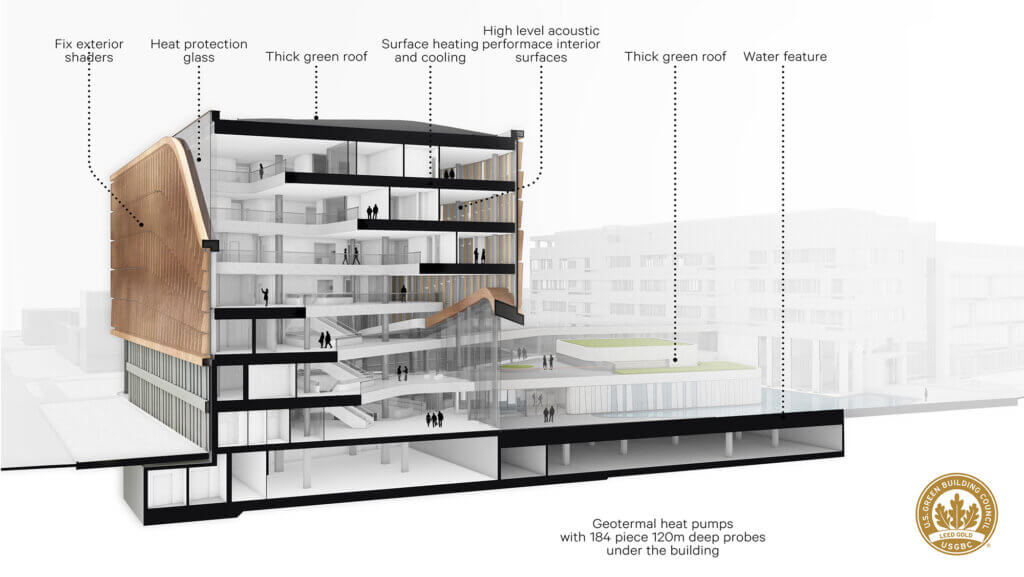
Richter Gedeon Headquarters | Zoboki Design & Architecture, Hungary | zda.hu
As of last year 15.9% of global energy use in buildings comes from renewables and 30 countries have regulatory policies for renewables in buildings, according to Ren21’s 2024 Global Status Report.
In particular, the deployment of energy-efficient heat pumps are growing significantly and are expected to account for 1/3rd of the increase in global electricity consumption by 2028.
Another resource is the American Instute of Architect’s Primer on Renewable Energy. The white paper lays out the following steps for incorporating renewable energy into building projects:
- Set energy-use intensity (EUI) targets.
- Use design strategies to optimize energy performance–e.g., massing and orientation, natural ventilation, solar and shading, daylighting and building, envelope design–and select energy efficient technologies and strategies.
- Employ building performance simulations.
- Offset EUI from conventional sources with renewable energy.
- Design a “solar ready” project.
- Discuss resilience and energy storage with the end user.
A key part of this process is the ability to create more accurate LCAs. The more detailed the model is, the more precise the LCA data will be.
Overcoming traditional limitations of LCA software, Lendager Architects’ DesignLCA Archicad plugin provides a more comprehensive embodied carbon and energy use calculation from a project’s energy design phases to final documentation.
Archicad BIM software is also compatible with other LCA plugins such as One Click LCA and Anavitor.