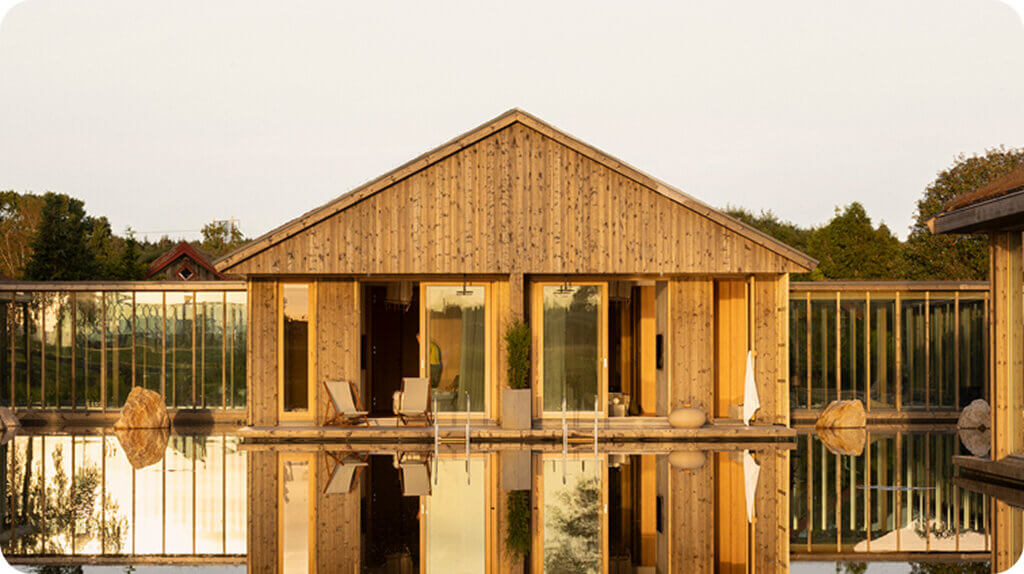
While most design professionals, building product manufacturers and organizations support the notion of green buildings, there’s a difference between checking a few green boxes and truly exploring ways to reduce carbon and promote a circular economy.
Empowering the industry to think more broadly about sustainable buildings, visionary environmental thinker Professor Dr. Michael Braungart, believes there needs to be a transition from building products that “do less bad” to product designs that enhance the environment.
“The approach should be protecting the environment, not just minimizing damage,” states Braungart, founder of the EPEA International Umweltforschung GmbH in Hamburg, Germany, and co-founder of MBDC McDonough Braungart Design Chemistry, creators of Cradle to Cradle (C2C) Certified.
Key to the innovation of C2C building products is end user purchasing power, he says.
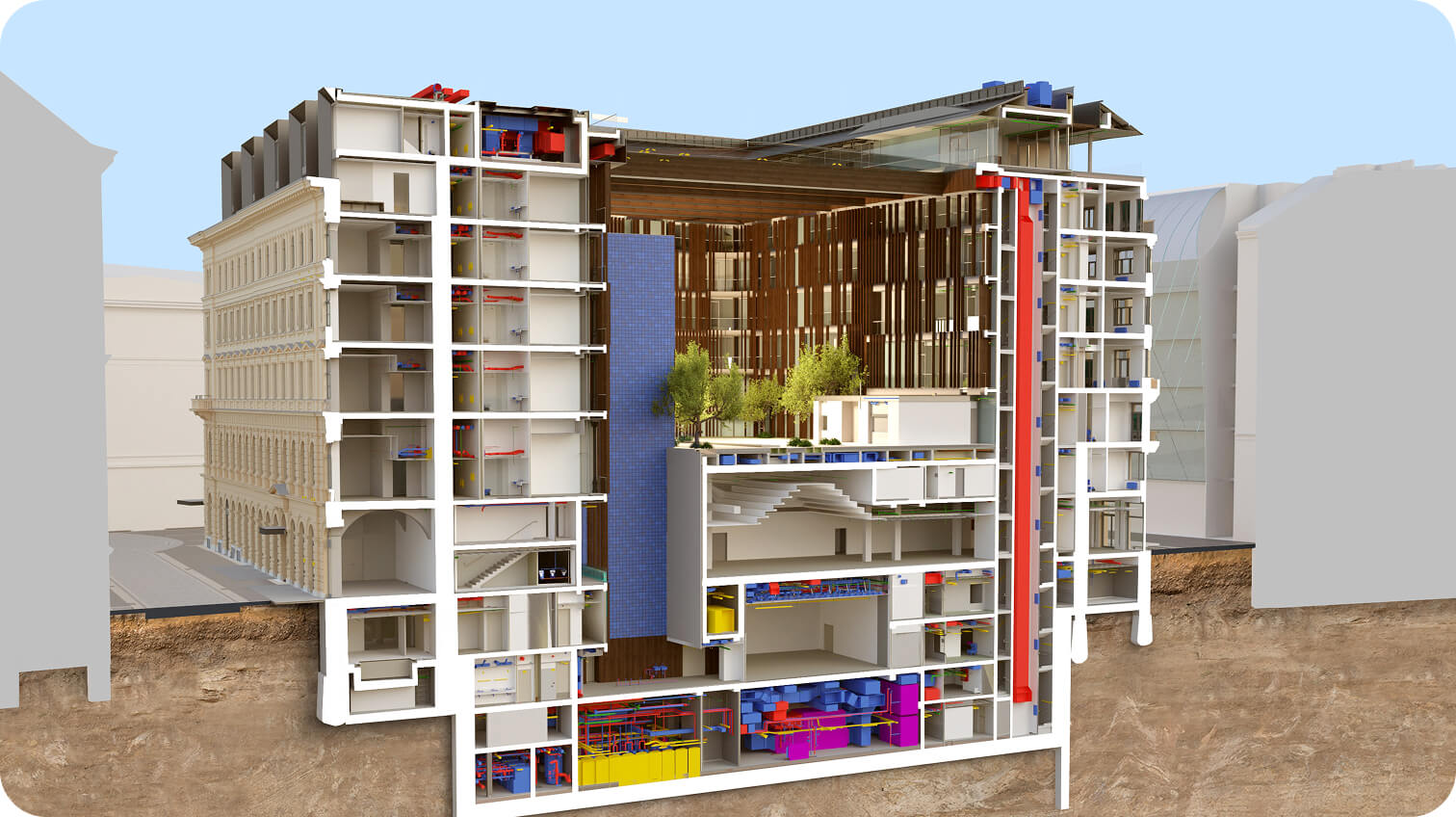
Playing a key role in the design of environmentally-friendly buildings, Archicad BIM is bringing architects beyond simply specifying sustainable products to fully collaborating with project teams on ways to create energy-efficient designs, optimize material use and reduce ongoing maintenance.
The following are examples of ways in which Archicad BIM software is supporting highly sustainable building projects.
Mjøstårnet mass timber high-rise
The world’s second largest mass timber high-rise, the 18-story Mjøstårnet is located on the scenic Lake Mjøsa shore in Norway.
Made with spruce from local suppliers, large glulam trusses were designed as the main structural system for the façade and internal columns, and cross-laminated timber (CLT) acts as a secondary load bearing system for the tower housing residences, office space and a hotel.
According to Voll Architects’ Øystein Elgsaas, keeping track of the dimension and placement of timber elements was essential to the project’s workflow.
“We had to make sure that the diagonal trusses didn’t steal too much daylight with regards to the window pacement and that every resident had access to their balcones without having to maneuver around a glulam beam. BIM collaboration was essential to achieve that,” he states.
In addition, the uniqueness of each piece of timber and the complexity of the joinery required a high level of fabrication and installation precision. To reduce the risk of error, the designers and trades worked closely together in Archicad. The BIM model was then exported into the timber fabricator’s software and the columns, beams and trusses were produced.
“This project shows that it’s possible to build large, compex timber buildings and inspire others to do the same,” states Elgsaas.
Anna Seiler House
When it comes to building a new hospital tower, the technological requirements and complexity involved in properly designing such a high-tech space is significant.
For the 18-story, 532-bed Anna Seiler House addition to the Inselspital University hospital in Bern, Switzerland, Info Kanehl, CEO of ASTOC ARCHITECTS AND PLANNERS, relates that the team’s ability to master this complex project with its complex requirements was made possible with BIM technology.
As the first hospital to meet the new Minergie-P ECO standard for sustainable buildings, the patient tower, designed by three architectural firms, prioritizes indoor air quality, noise protection and natural daylight.
With a goal of creating more sustainable buildings in Europe and beyond, the architects carefully selected products to conserve resources, enable climate-friendly construction and support low-carbon operations. For example, a 100% recyclable mineral composite material, produced with no water and little electricity, was specified.
The facade design was another complex aspect of this project. Covering 24,000 square meters, the designers sought to boil down the sophisticated design into 45 different facade types to capture efficiencies in standardization. In addition, the team wanted to display the facade elements as both an abscract, flat representation and as a more detailed, wavy view for enhance project coordination. In both cases, Archicad green BIM software filled these needs.
Paris Athletes’ Village
An innovative approach to green buildings is double lifecycle development where a property or site is used for one purpose and then adapted for a completely different purpose.
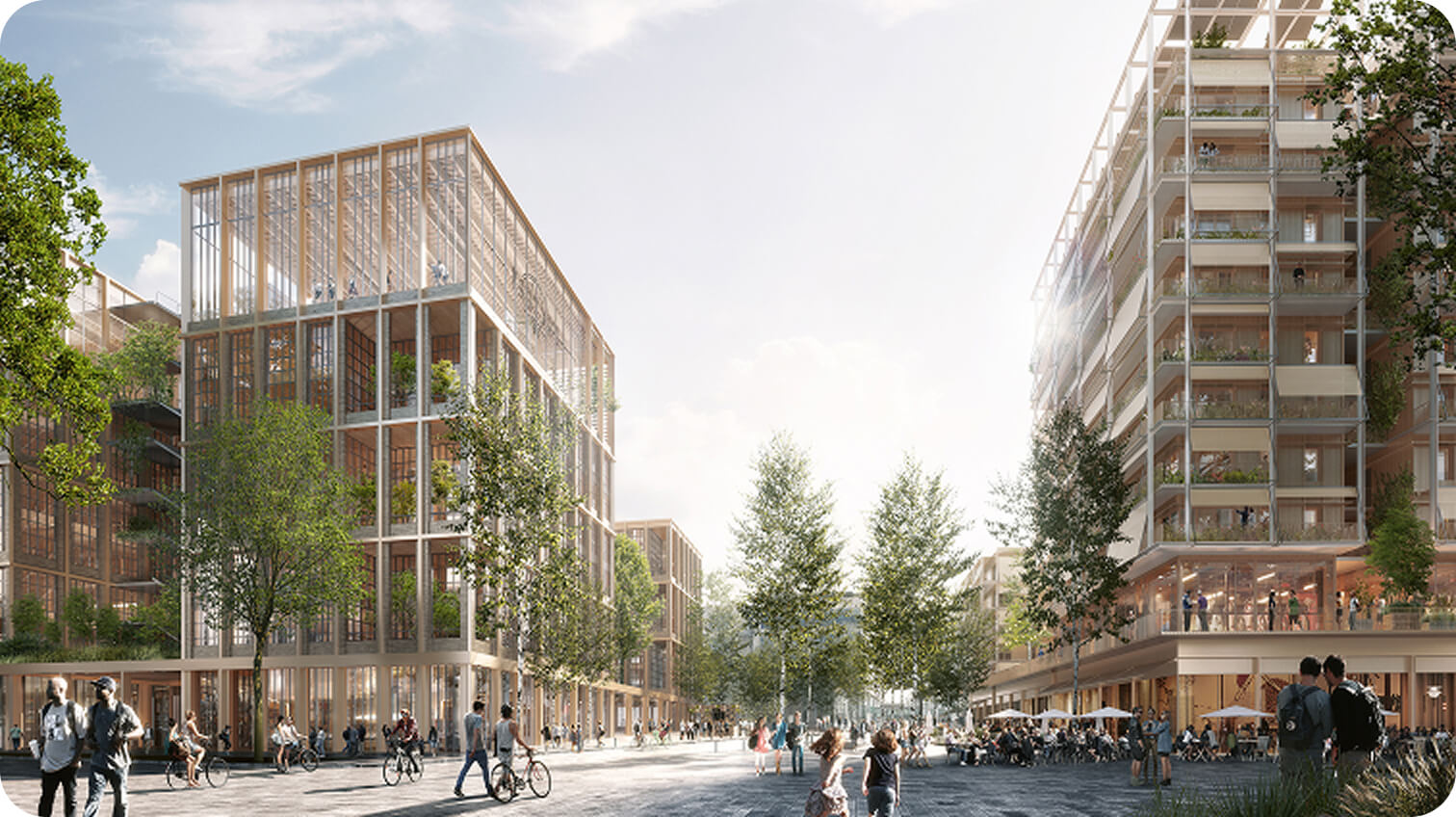
As a large scale example, the Paris Athlete’s Village in Saint-Ouen, France, was designed to house athletes for the 2024 Summer Olympics and is now being transformed into a housing and commercial complex for 6,000 residents and a another 6,000 workers.
The sheer scale of this 52-hectare undertaking, involving seven different architectural firms, required architectural design software.
“Archicad enabled us to achieve this reversibility between the two phases: the athletes’ village and the so-called legacy phase, which will subsequently become housing,” stated Alexis Charlot-Etienne Architect, CoBe Architecture & Paysage.
The use of BIM was also reqired by the public contracting authority to extract and share project information with the contractor and developer.
Embracing standards set by environmentally-friendly buildings, the Village buildings were constructed with a wooden column beams, structural timber frame walls and pre-fabricated low-carbon concrete floor slabs. Designed to run on 100% renewable energy, the site incorporates a geothermal system, providing cooling in the summer and heating in the winter. Meeting the E3C2 energy and carbon performance standard, the Village uses half the carbon footprint as conventional buildings.
Alternative case studies:
Duke Ellington School of the Arts
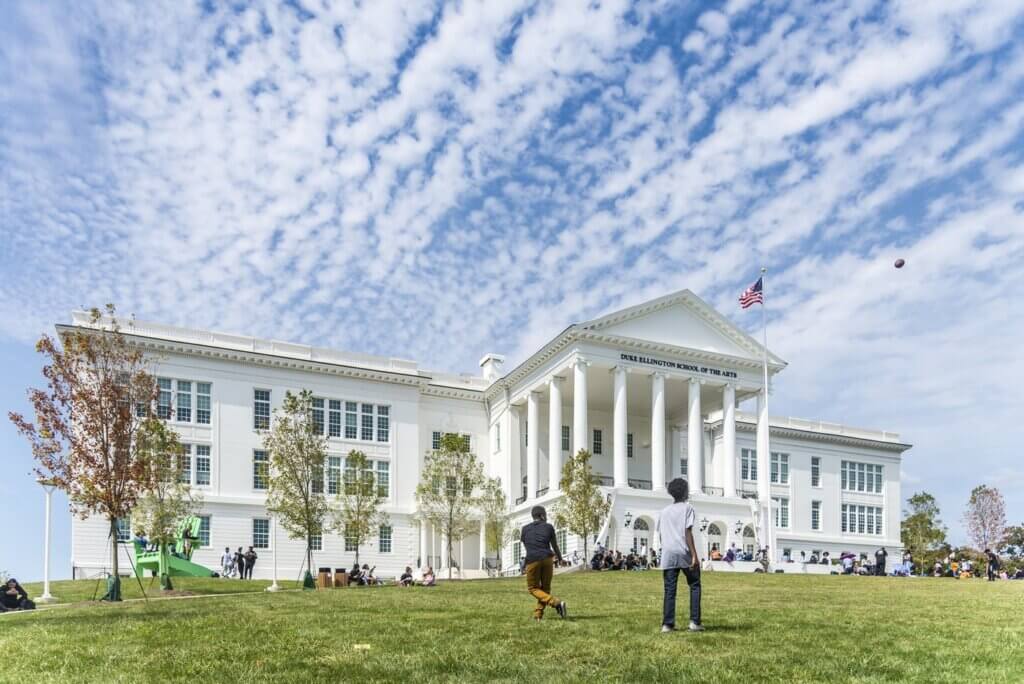
Duke Ellington School of the Arts, cox graae + spack architects / LBA Joint Venture, Photo: ©Chris Ambridge / Ambridge Photography
Resonating with Duke Ellington School’s mission to create responsible global artists, cox graae + spack architects (CG+S) was committed to making the building a living example of practical sustainability. The renovation project successfully achieved LEED Gold certification, demonstrating how environmental excellence can be reached even on a limited budget.
Using Archicad’s detailed BIM modeling capabilities, CG+S tested hundreds of sustainable design ideas through mechanical and lighting studies, technology exploration, and integration analysis. This iterative digital design approach allowed the team to incorporate a wealth of environmental features that actively inform and inspire students on a daily basis.
Specific green initiatives included geothermal wells, green roofs, and rainwater cistern systems for graywater usage. The building’s sustainable features serve a dual educational purpose—not only reducing environmental impact but also demonstrating to students what responsible architecture looks like in practice.
The project’s Director of Operations, Ronald Jones, captured the vision’s success: “When they showed us what sustainability was and how it could work, we just said, you’ve got it. This is perfect”. The Duke Ellington School shows other institutions what’s achievable when commitment to sustainability meets innovative BIM-enabled design.
Bamble Junior High School
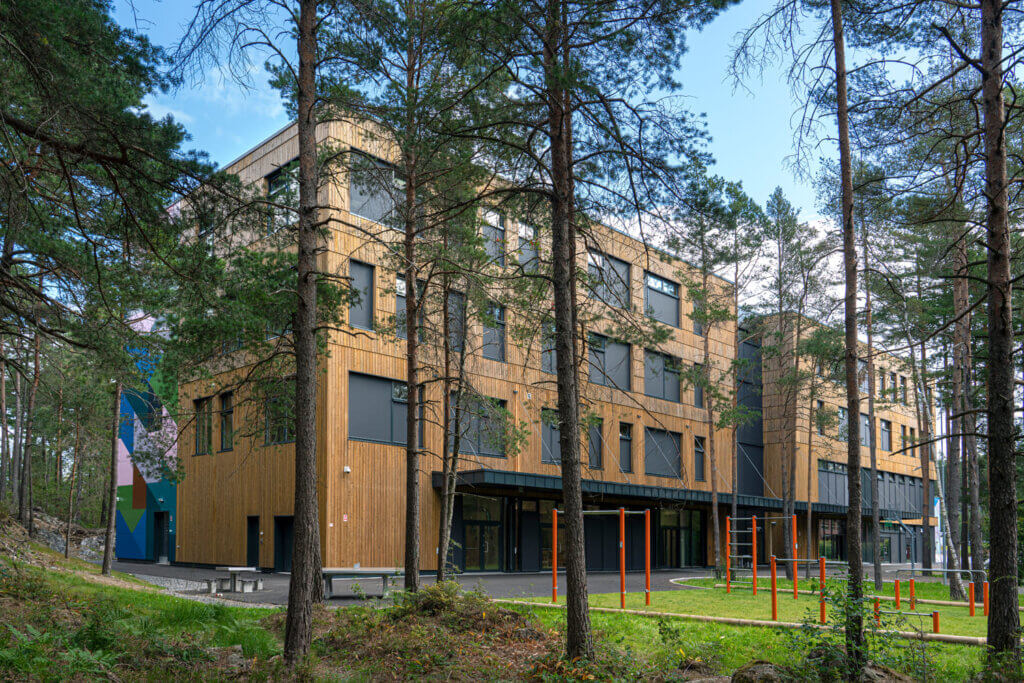
Pioneering Sustainable Design with Archicad BIM Images: © Jiri Havran
Designed by Norwegian firm Spinn Arkitekter, Bamble Junior High School in Stathelle demonstrates an unwavering commitment to environmental responsibility through innovative material choices and ambitious energy targets. The project won a price and design competition with the most sustainable proposal, setting new standards for educational architecture in Norway.
Spinn reached back to original Norwegian building materials, creating an all-wood structure using cross-laminated timber (CLT) construction throughout the entire campus. Most notably, the project features Norway’s first solid wood swimming pool—a remarkable achievement in sustainable design. The use of CLT combined with low-carbon concrete class A resulted in a 51% reduction in material-related greenhouse gas emissions compared to reference buildings.
Using Archicad, the team integrated the cross-laminated timber into the model from the outset, allowing them to present the construction team with a comprehensive model that could be accurately priced. This BIM-enabled workflow made it possible to propose an environmentally friendly, all-wood design that remained competitively priced.
The project achieved BREEAM Very Good certification and targeted 50% energy reduction compared to Norwegian building regulations (TEK17) for the school building, with 30% reduction for sports facilities. Additional sustainable features included geothermal heating from a well system and electric tower cranes during construction, reducing building site emissions by 67 tons CO2e.
Lower Woodland Barns
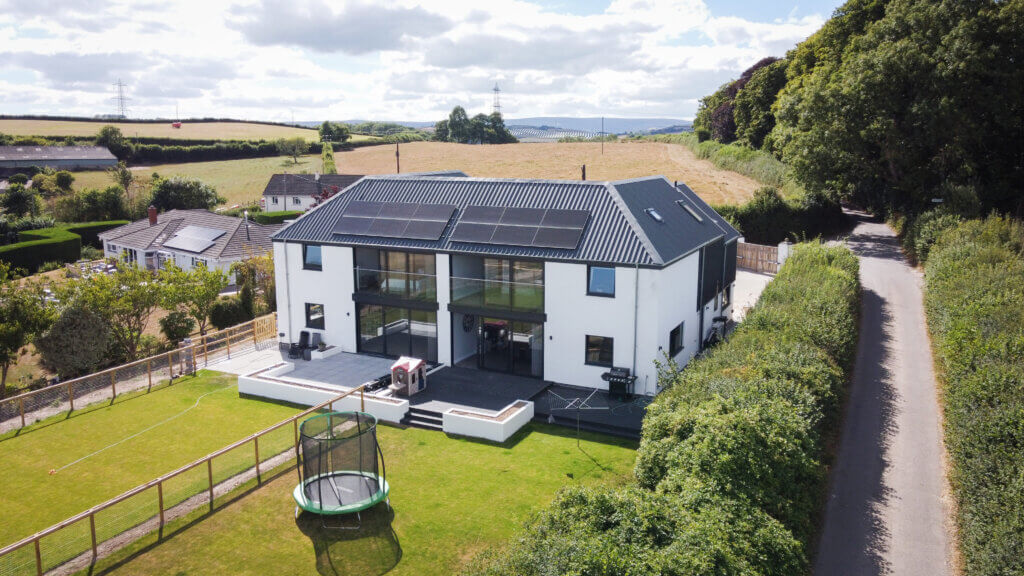
Sustainability through Simplicity Photo: ©PMR Architecture
PMR Architecture’s Lower Woodland Barns is a compact rural housing project in South Devon that combines low-cost delivery with a sustainability-led design approach. The scheme works with the existing agricultural context rather than against it, using a barn-like massing strategy to reduce visual impact while maintaining a clear architectural identity.
From a sustainability perspective, the project is strong because it balances material efficiency, long-term durability, and buildability. The architecture is intentionally simple and robust, which helps limit unnecessary complexity in construction and supports a more resource-conscious use of materials. This kind of straightforward planning can also reduce waste and improve delivery efficiency, both of which are important parts of sustainable practice.
Archicad played a key role in shaping the project’s coordination and design development. By working in BIM from the outset, PMR could test the relationship between form, construction logic, and budget more effectively, helping the team make decisions that supported both performance and cost control. Sustainability here is therefore not just about environmental gestures, but about precision, coordination, and designing a building that remains efficient over its full life cycle.