 United States site instead?
Client Success Story
Preserving the Past, Inspiring the Future
Adaptive Reuse for a Stellar Experience
Anotherkind Architects, United Kingdom
Sherwood Observatory, United Kingdom, Anotherkind Architects, www.akind-a.com
Photo: © G F Tomlinson
Summary
Conservation specialist Anotherkind Architects was tasked with transforming a derelict Victorian subterranean reservoir into a new planetarium and science center.
Drawing on the principles of adaptive reuse, the complex project involved careful conservation of the existing building while coordinating a highly specialized mechanical design.
Archicad’s visualization tools helped secure funding and support for this ambitious project, and BIMx was invaluable in aiding collaboration on site.
Anotherkind’s use of Archicad and sustainable BIM was pivotal in designing and delivering this exciting visitor attraction, which will enhance regional learning opportunities and be a place for people of all ages to experience and enjoy time and again.
Team
Championing Adaptive Reuse and Conservation
Anotherkind Architects is a conservation and Passivhaus specialist, with expertise across community, education and residential projects. A collaborative, forward-thinking collective, the Nottinghamshire-based practice has been an Archicad user for more than seven years.
With several in-house accredited Passivhaus Designers, Anotherkind encourages all its customers to bring more sustainability into their designs.
Project: Sherwood Observatory
Project Location: Sutton-in-Ashfield, Nottinghamshire, United Kingdom
Firm: Anotherkind Architects
Project Type: Cultural, Education
Project size: 1200 sqm/13.000 sqft
Year of Completion: 2024
Software used: Graphisoft Archicad, Graphisoft BIMx
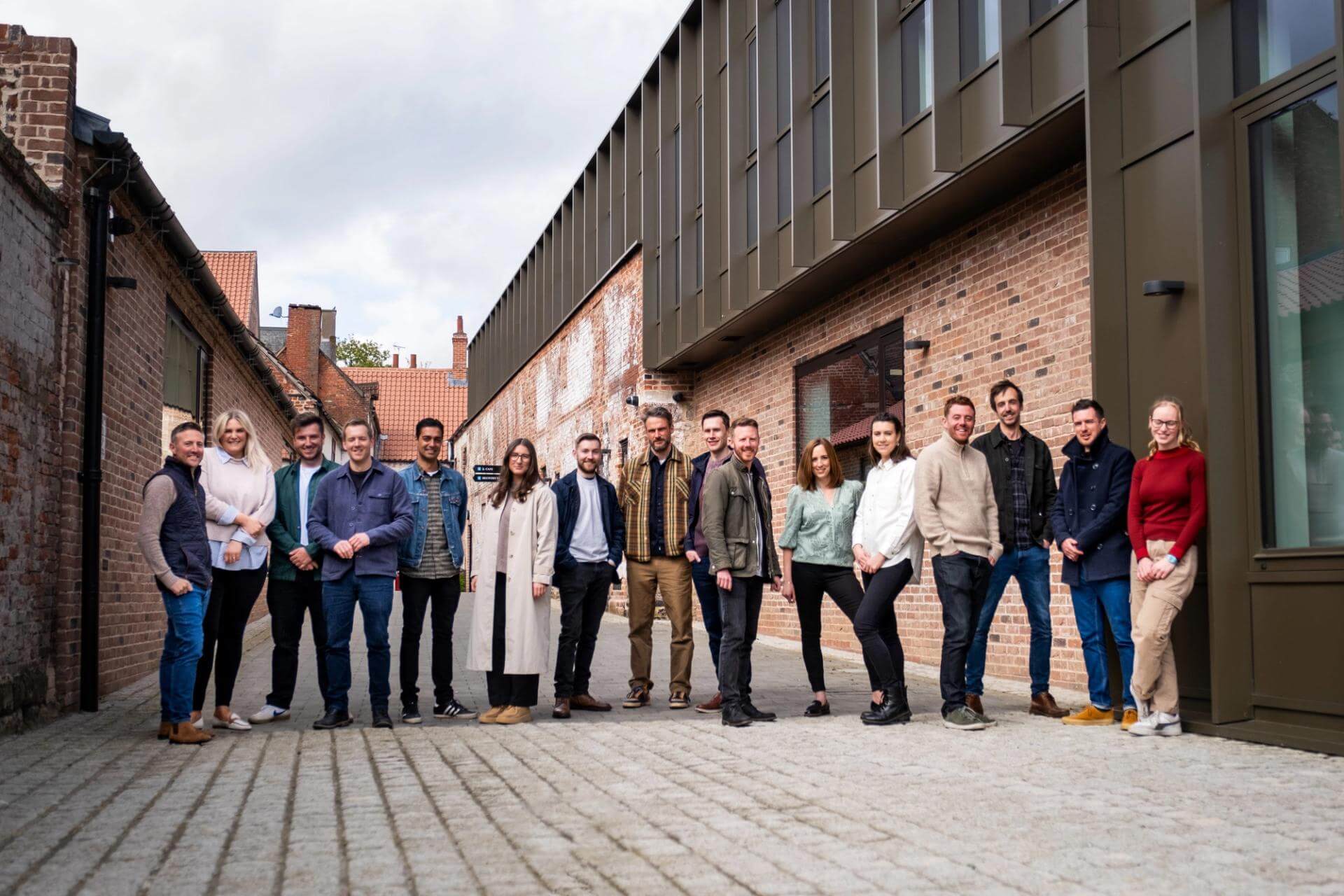
Anotherkind Architects team
Project
Archicad 3D Visualization Helps to Secure Investment
Anotherkind was tasked with transforming a derelict Victorian subterranean reservoir in Nottinghamshire into a new planetarium and science center for the Mansfield and Sutton Astronomical Society (MSAS). The Sherwood Observatory aims to promote STEM (science, technology, engineering and mathematics) opportunities in an area with a high index of deprivation.
As a charitable organization, the MSAS does not generate funds commercially. Therefore, the project was financed through a series of grants, local government funding, donations and direct fundraising.
To support the fundraising initiative, Anotherkind invited the public, stakeholders, and investors to view the proposed designs for the planetarium within Archicad in 3D. The team used virtual fly-through videos generated from the BIM model to provide virtual tours of the development and convey what the building would bring to the community.

Using Archicad, we created convincing visuals, renders, video fly-throughs, and 3D-printed models. This led to us securing the commission and aided the client in their fundraising.
Dan Kilarski-Marlow, Senior Architect, Anotherkind Architects
Interested in learning how Archicad can streamline your workflows and increase efficiency?
Design
The Challenge of Modeling for Adaptive Reuse
The existing structure of the Victorian reservoir was a large underground brick chamber approximately seven meters tall, with a 25-meter diameter. The design team wanted to maintain the reservoir and include it as part of the design, despite its complex geometry. Using Archicad’s Renovation Filters, Anotherkind was able to model the site using the 2D topographical information, and control how the proposed elements merged into the existing context with both the demolition and proposed filter options.
To produce the complex reservoir structure that formed part of the existing site model, a combination of meshes and morphs were sculpted to the required forms with Archicad’s Solid Element Operations command.
One of the most challenging components of the project was managing the environmental conditions of two completely contrasting spaces, which are designed and constructed to suit their period, but behave very differently. Archicad’s Renovation Filters were invaluable in enabling us to model how to integrate old and new.
Dan Kilarski-Marlow, Senior Architect, Anotherkind Architects


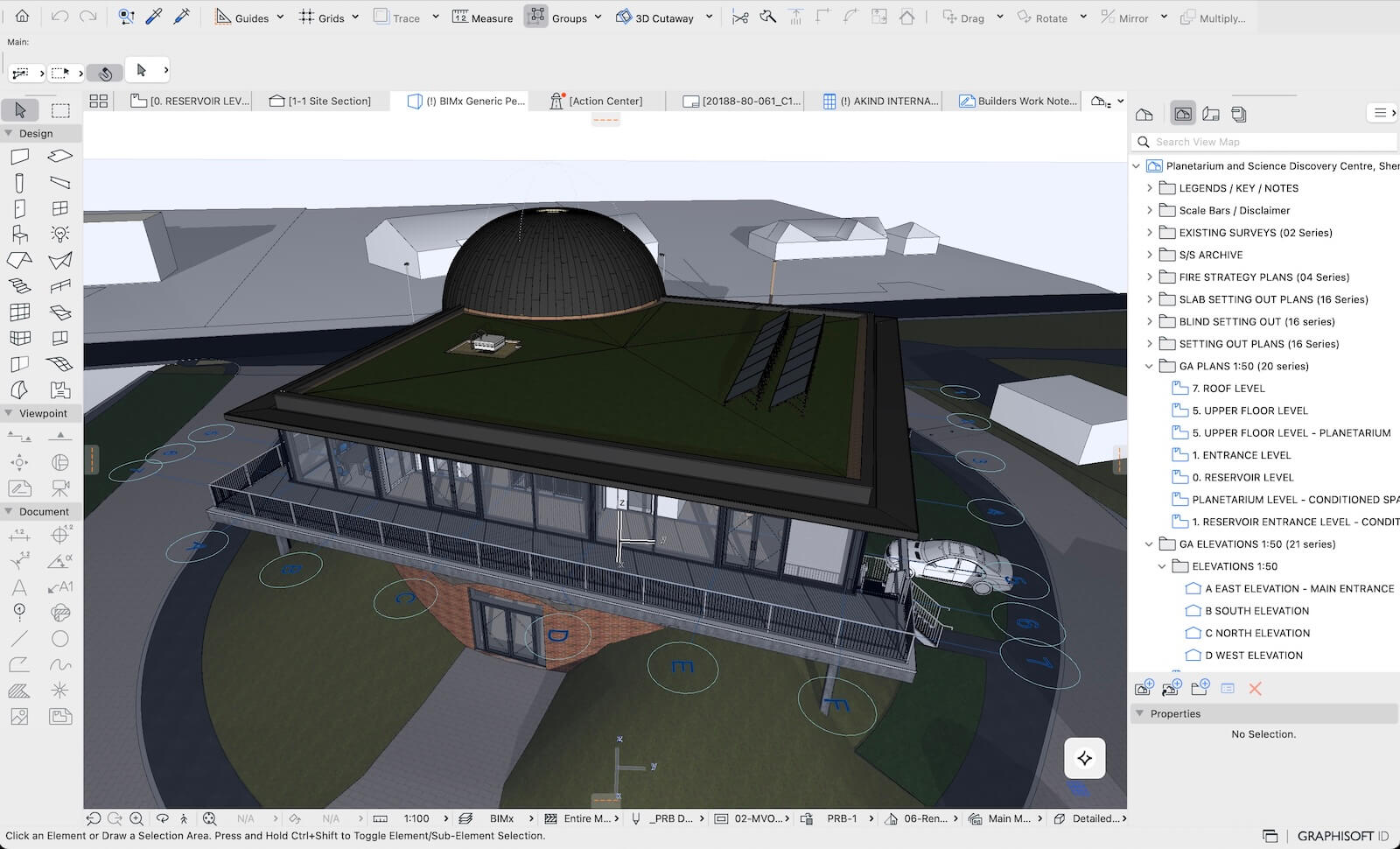
Existing, after demolition and final stages of the Sherwood Observatory Archicad model
Sherwood Observatory, United Kingdom, Anotherkind Architects, www.akind-a.com, Video: © G F Tomlinson
Coordination
BIM Coordination Saves Time for Specialist Design
Working with the sustainable BIM model in collaboration with specialist consultants, Anotherkind was able to build complex geometries, navigate interfaces between existing and new, design out complexity, and coordinate structural and services information through ongoing clash detection.
The planetarium requires a heavily controlled space, where even a speck of dust could affect the digital infrastructure and dome screen. This involved a highly specialized mechanical design, coordinated to avoid the complex structural steelwork, ensuring correct air exchanges and noise suppression.
In contrast, the existing reservoir structure was not only underground but also connected to the earth, so it required a detailed ventilation strategy to control humidity and moisture.
When you are working with awkward designs on an already complex project, having the ability to interrogate designs in 3D and bring in other people’s models saves a lot of time.
Dan Kilarski-Marlow, Senior Architect, Anotherkind Architects
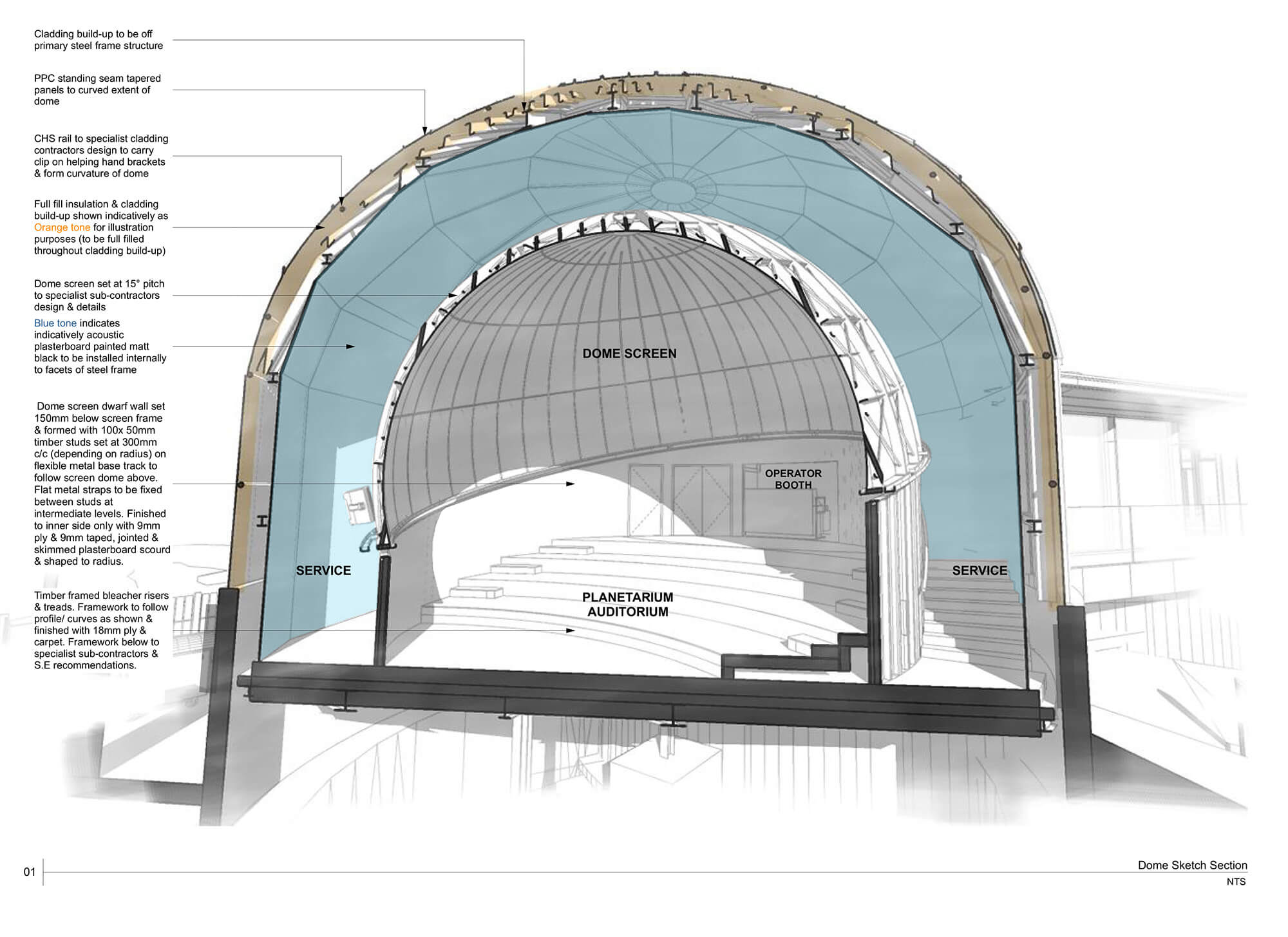
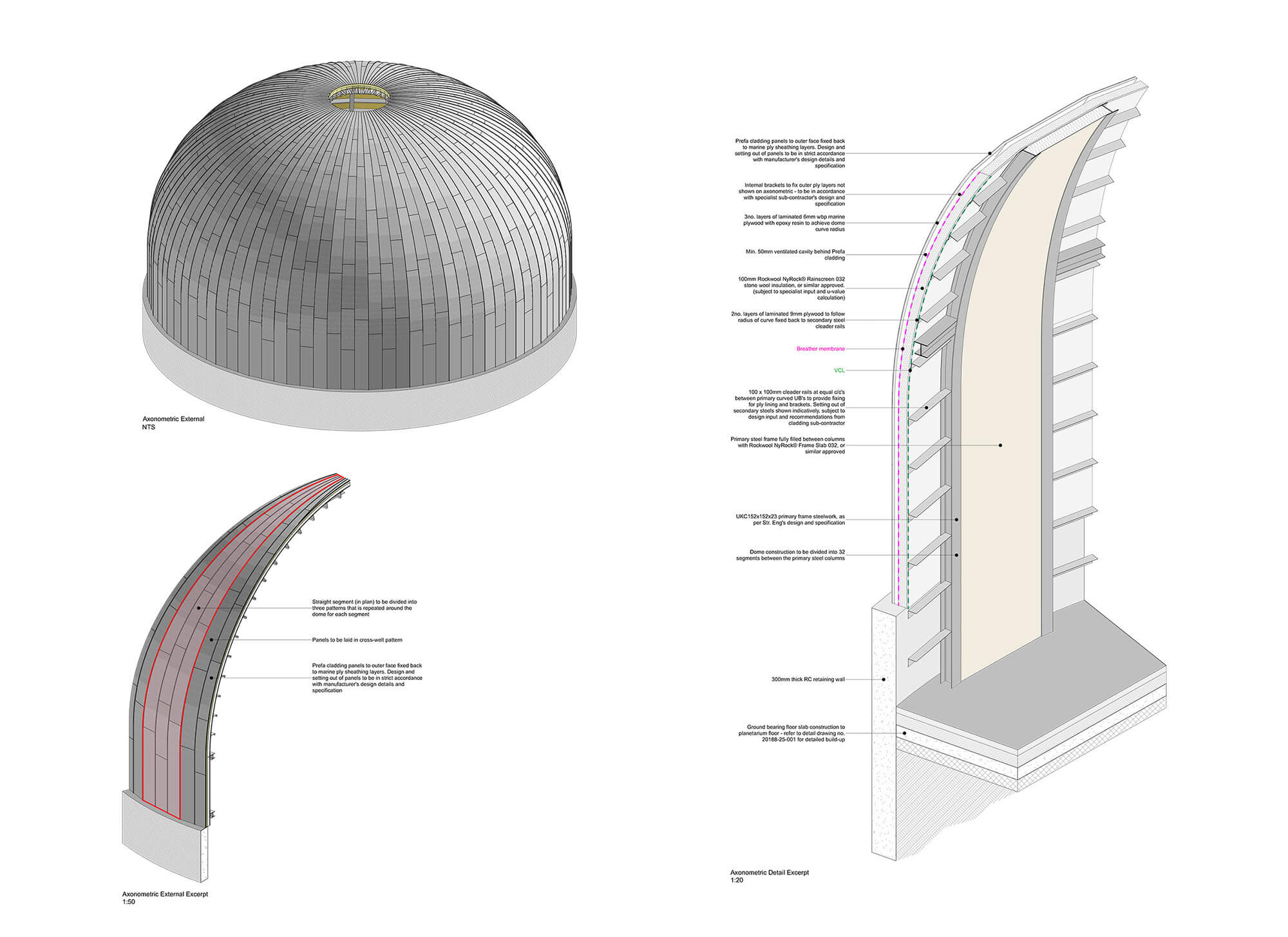
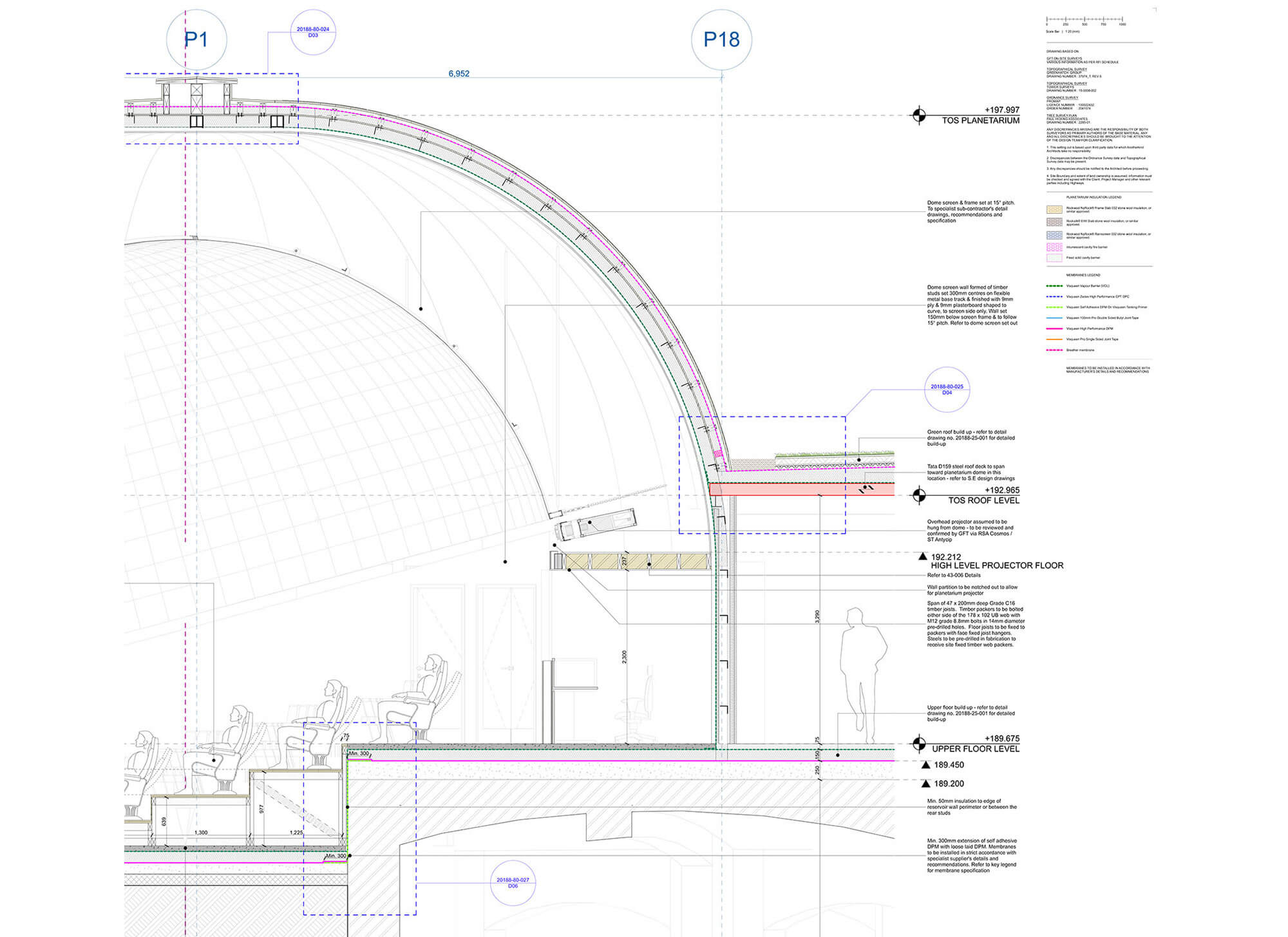
Sketch section, axonometric details and a detailed section drawing of the dome’s structure and cladding
Sustainability
Designing for Sustainability
From the outset, the team wanted to minimize the environmental impact and keep energy costs and carbon emissions low.
When designing the planetarium, Anotherkind opted for a green roof to ensure net biodiversity gain, while maintaining the provision for additional solar panels when future funding is identified.
Embodied carbon on the project was reduced compared to an equivalent new build, as the existing Victorian reservoir was reused. After excavating the land around the reservoir, the site team reused the earth, and around 2,000 tonnes of surplus excavated sand was locally donated.
Meanwhile, electric car charging points and cycle storage were installed, and sustainable travel is encouraged.
Explore the Gallery
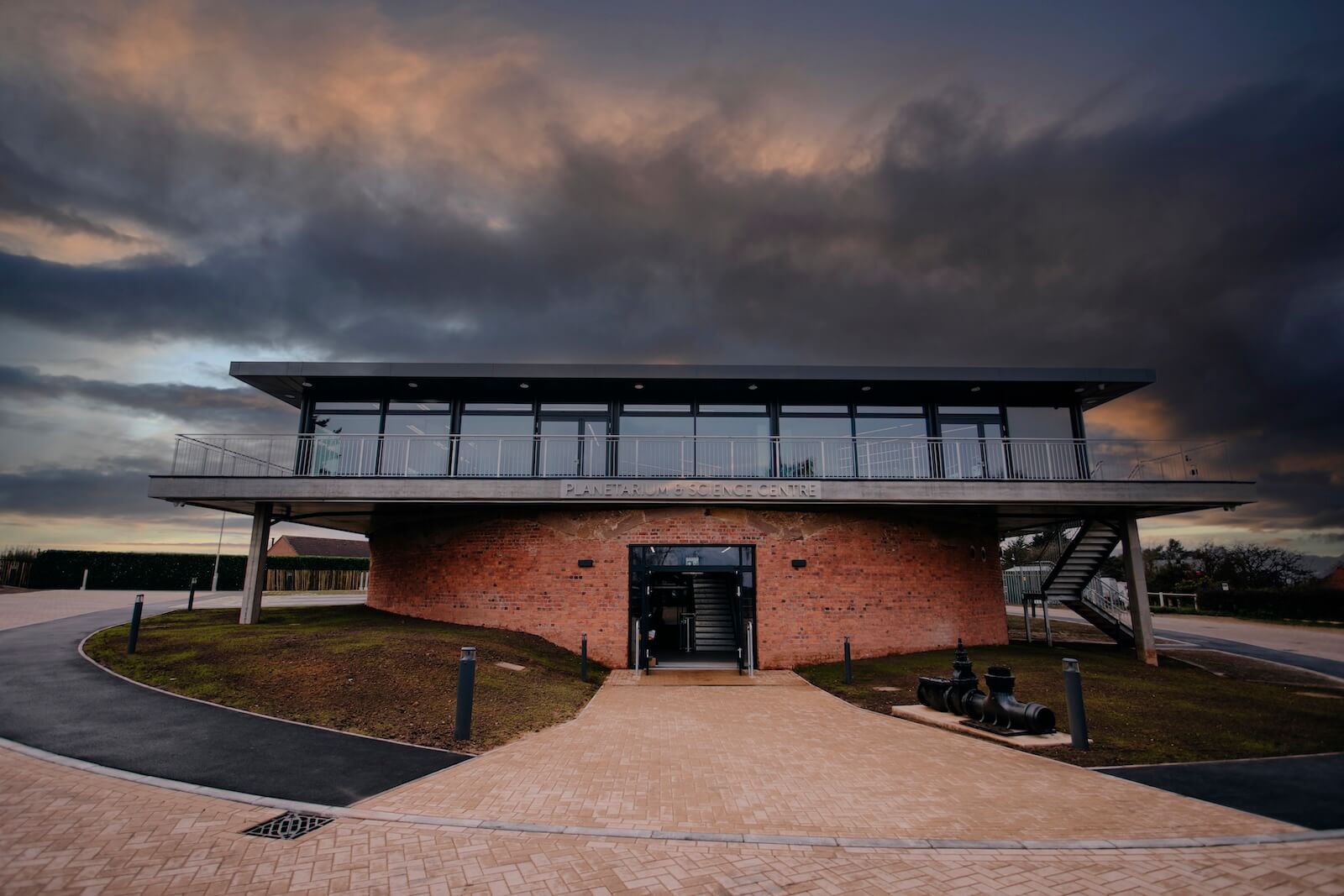
Sherwood Observatory, United Kingdom, Anotherkind Architects, akind-a.com, Photo: © G F Tomlinson
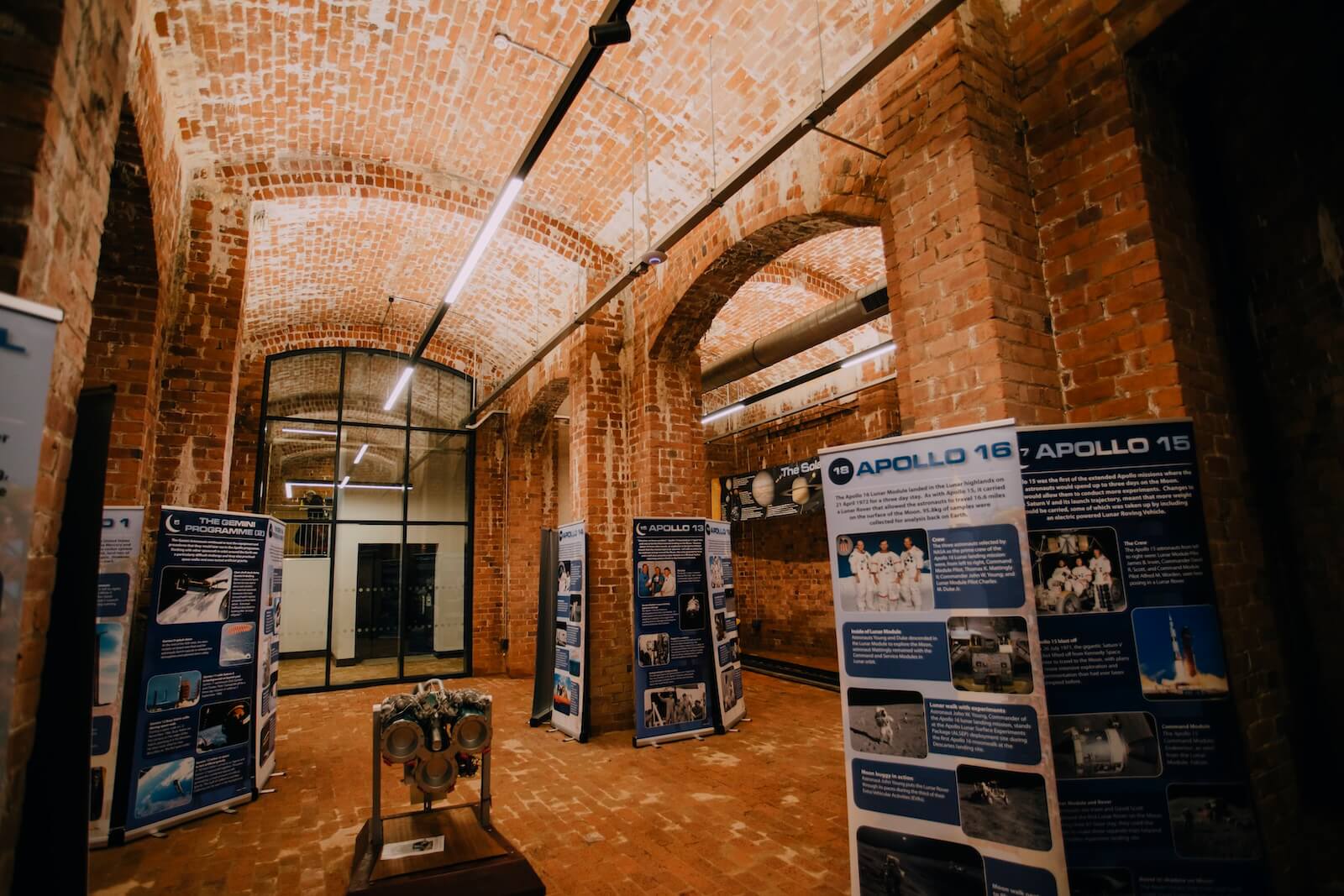
Sherwood Observatory, United Kingdom, Anotherkind Architects, akind-a.com, Photo: © G F Tomlinson
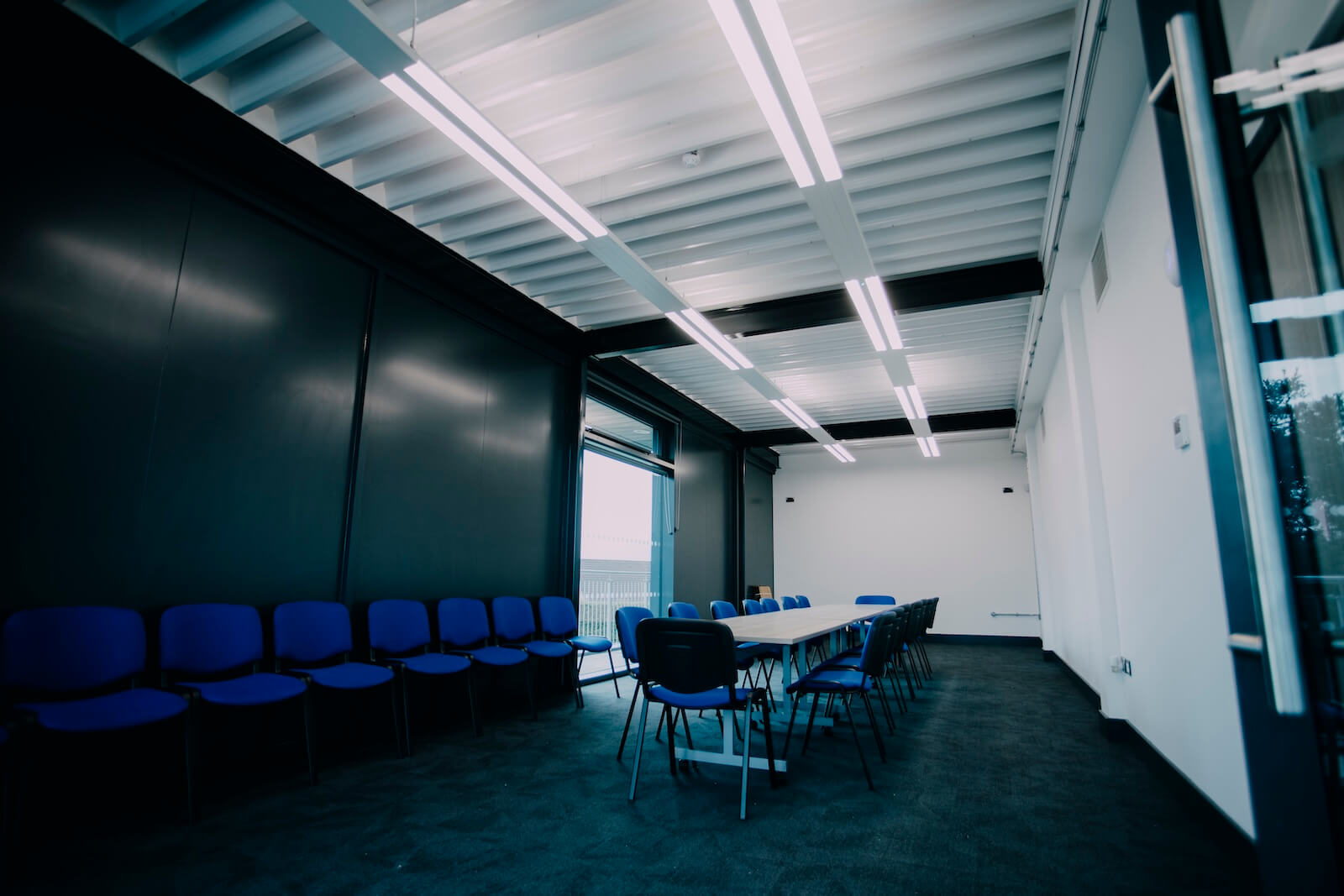
Sherwood Observatory, United Kingdom, Anotherkind Architects, akind-a.com, Photo: © G F Tomlinson
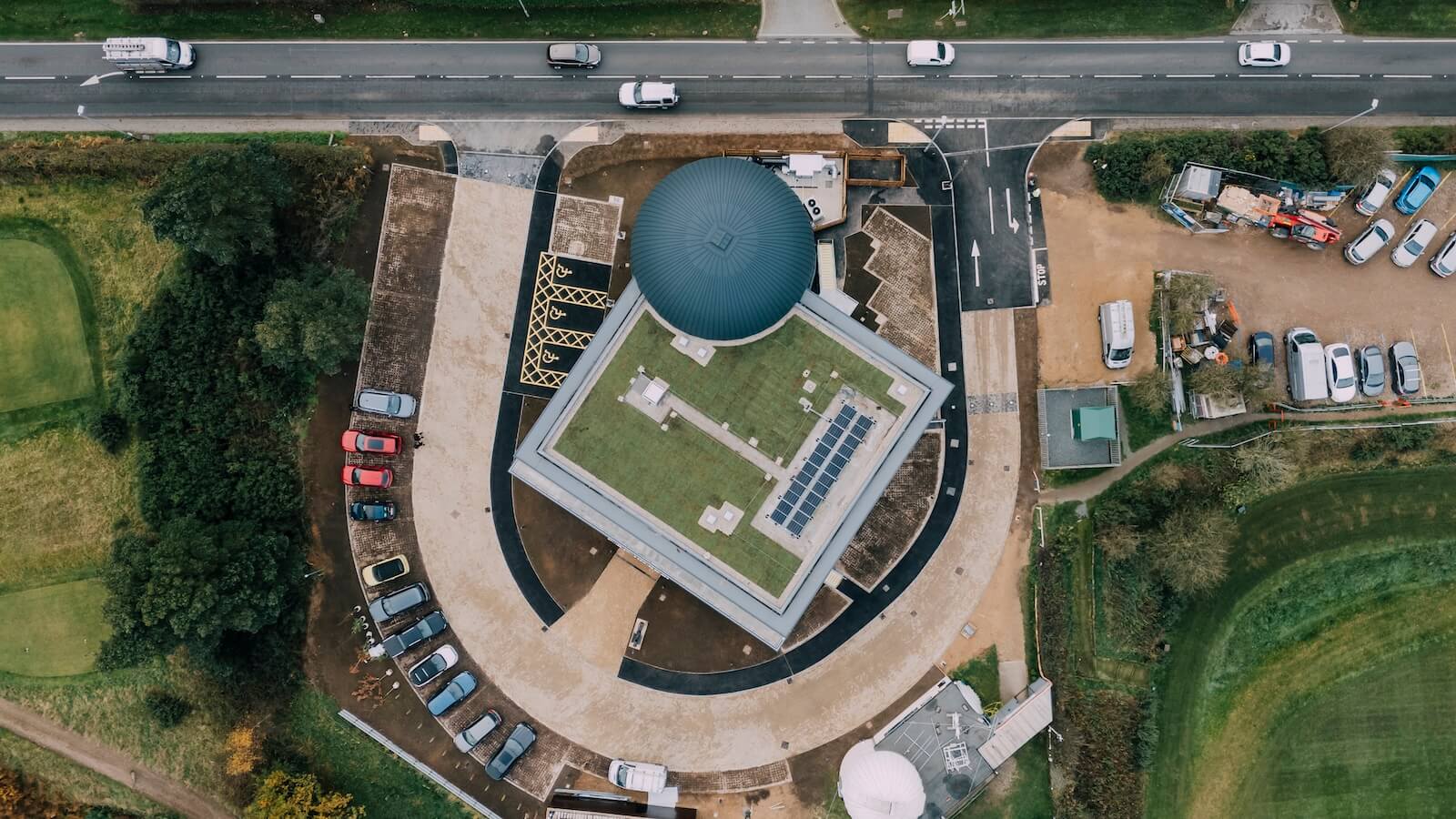
Sherwood Observatory, United Kingdom, Anotherkind Architects, akind-a.com, Photo: © G F Tomlinson
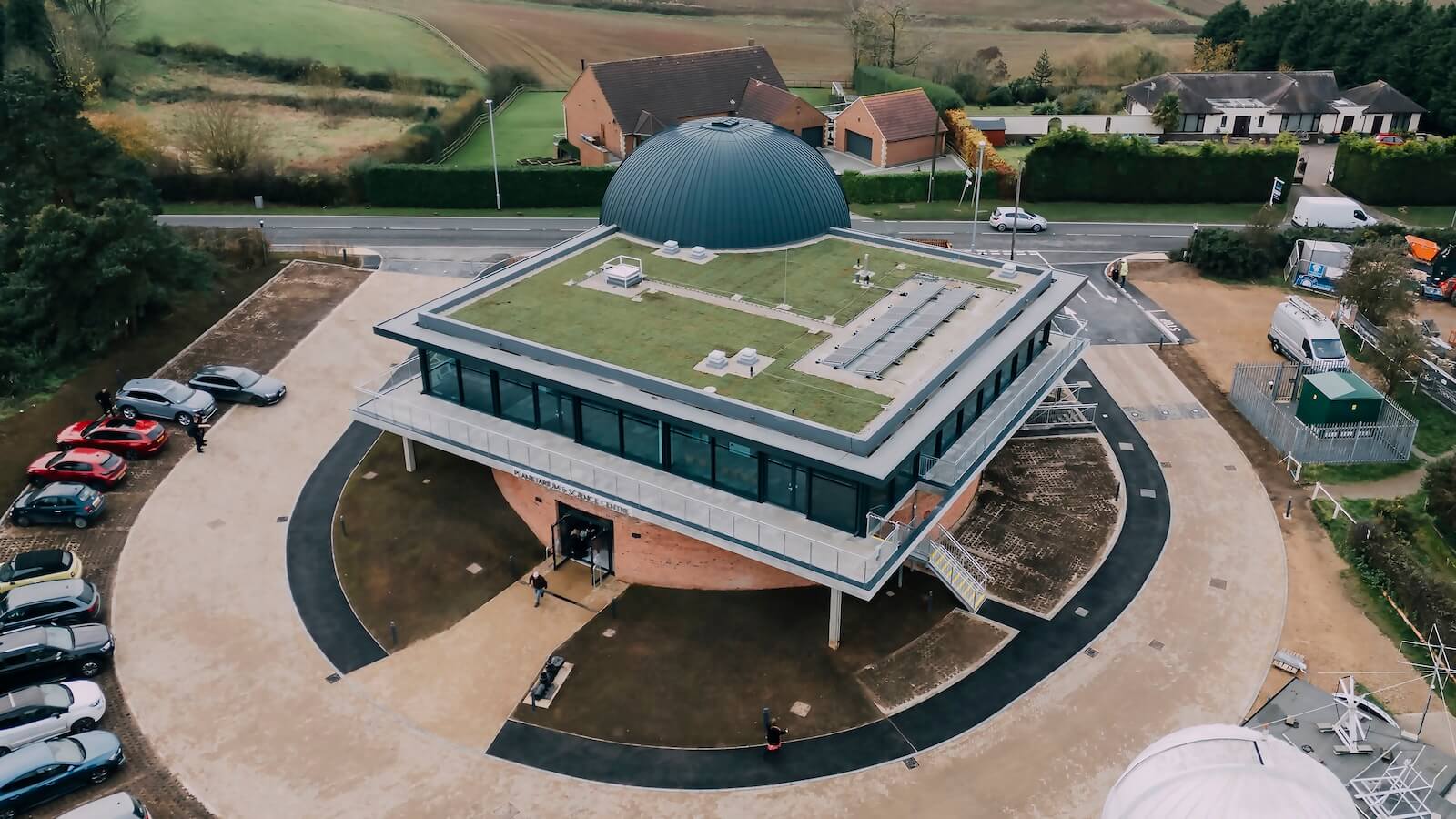
Sherwood Observatory, United Kingdom, Anotherkind Architects, akind-a.com, Photo: © G F Tomlinson
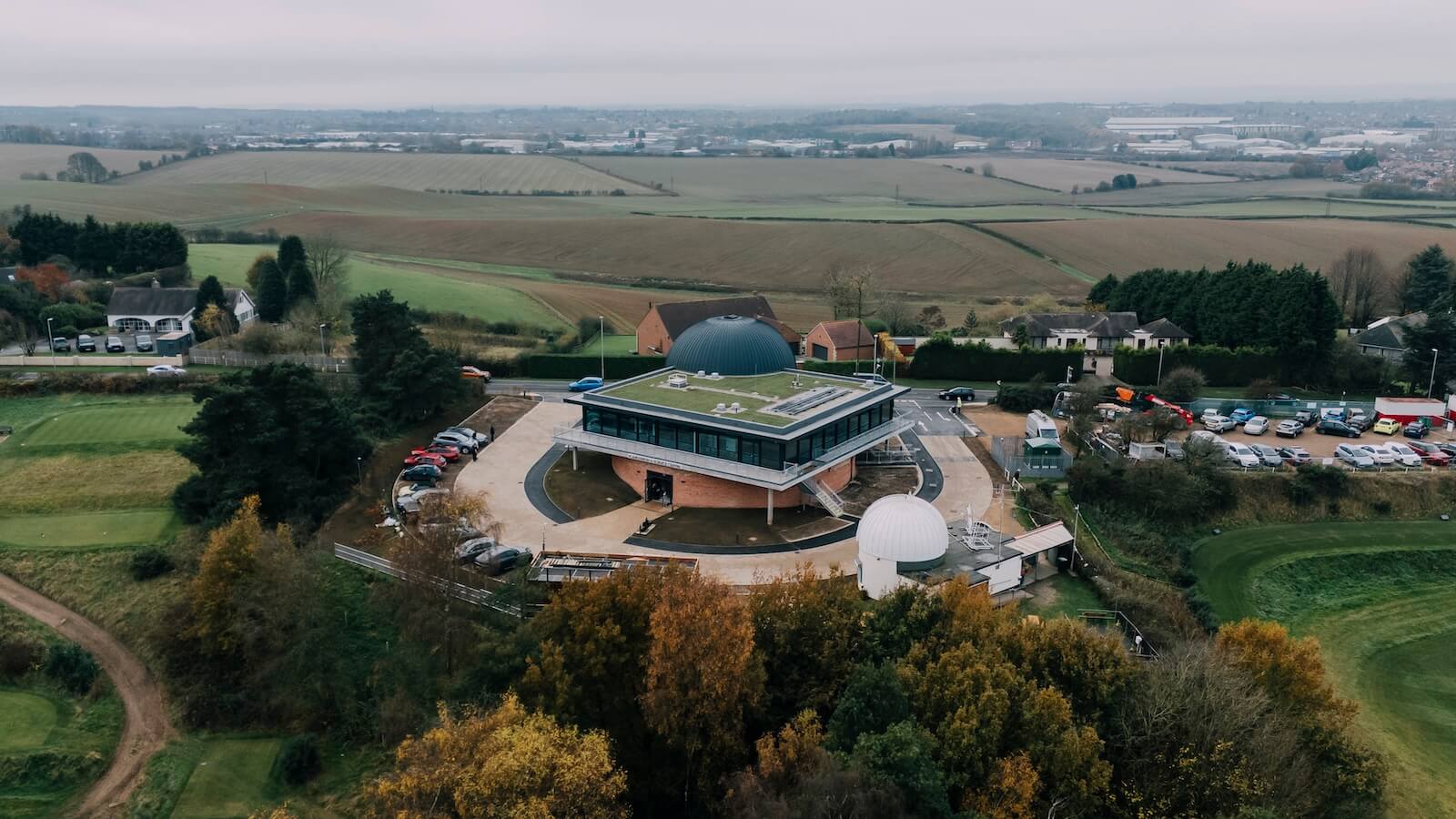
Sherwood Observatory, United Kingdom, Anotherkind Architects, akind-a.com, Photo: © G F Tomlinson
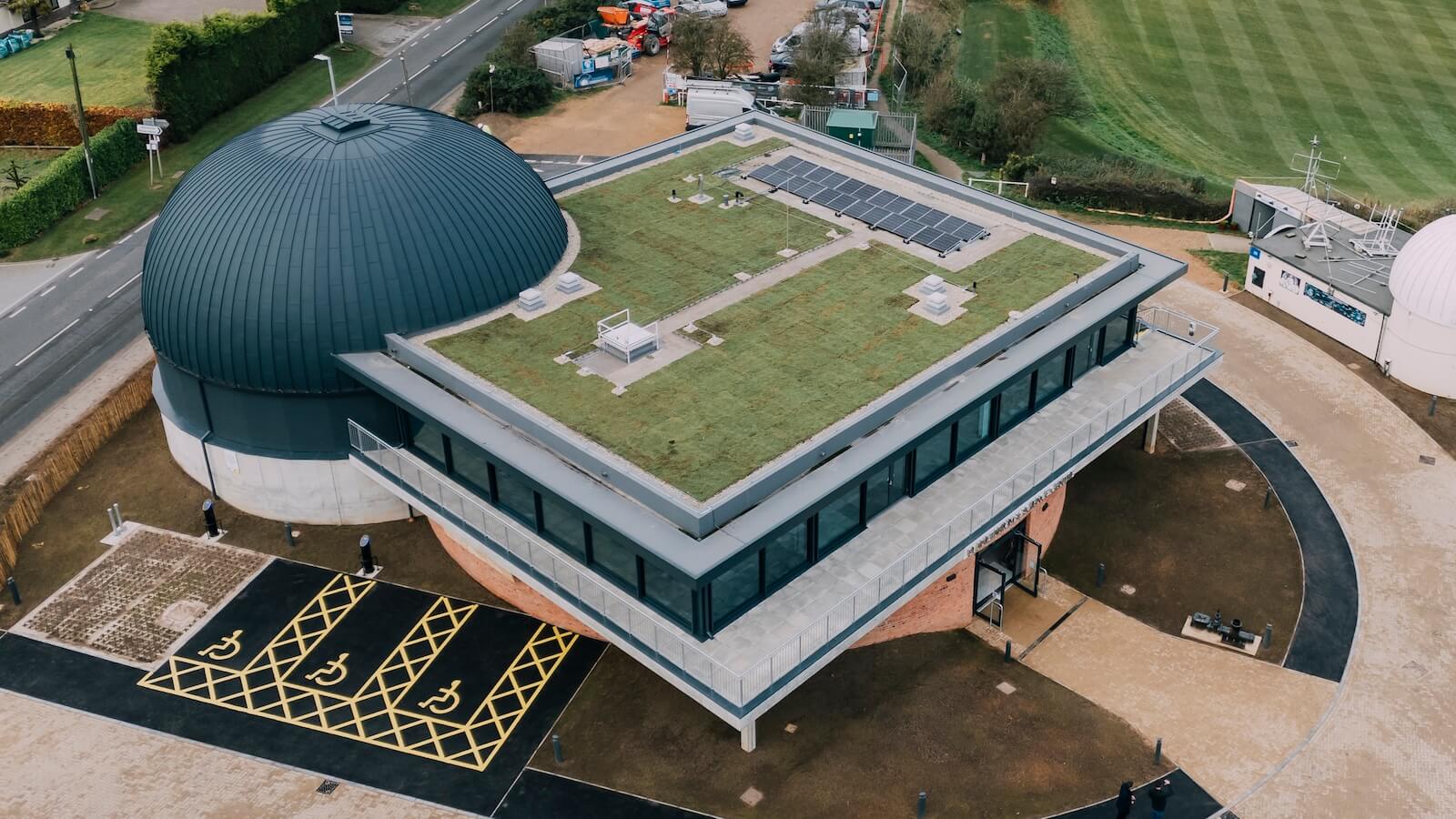
Sherwood Observatory, United Kingdom, Anotherkind Architects, akind-a.com, Photo: © G F Tomlinson
Sherwood Observatory, United Kingdom, Anotherkind Architects, akind-a.com, Photo: © G F Tomlinson
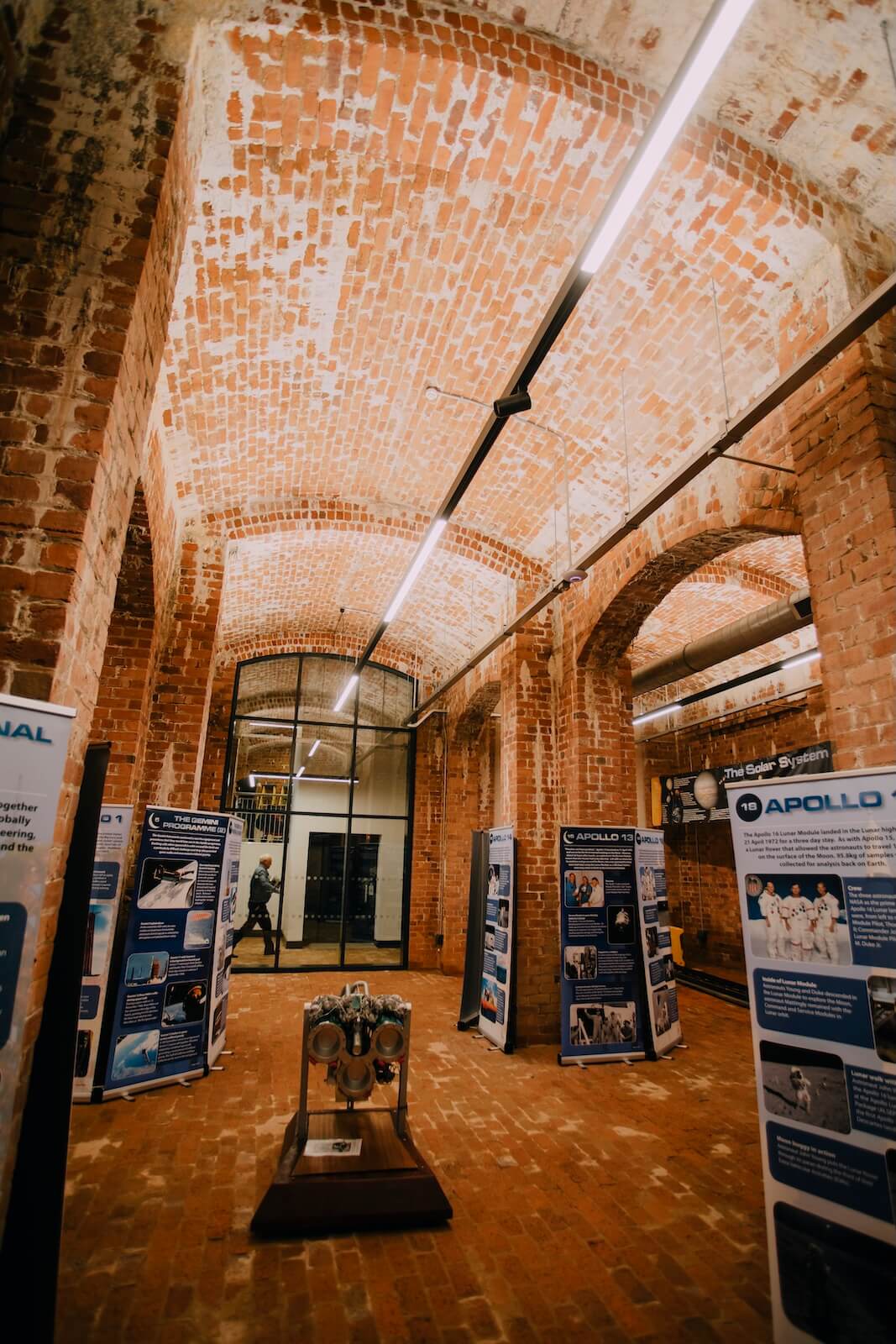
Sherwood Observatory, United Kingdom, Anotherkind Architects, akind-a.com, Photo: © G F Tomlinson
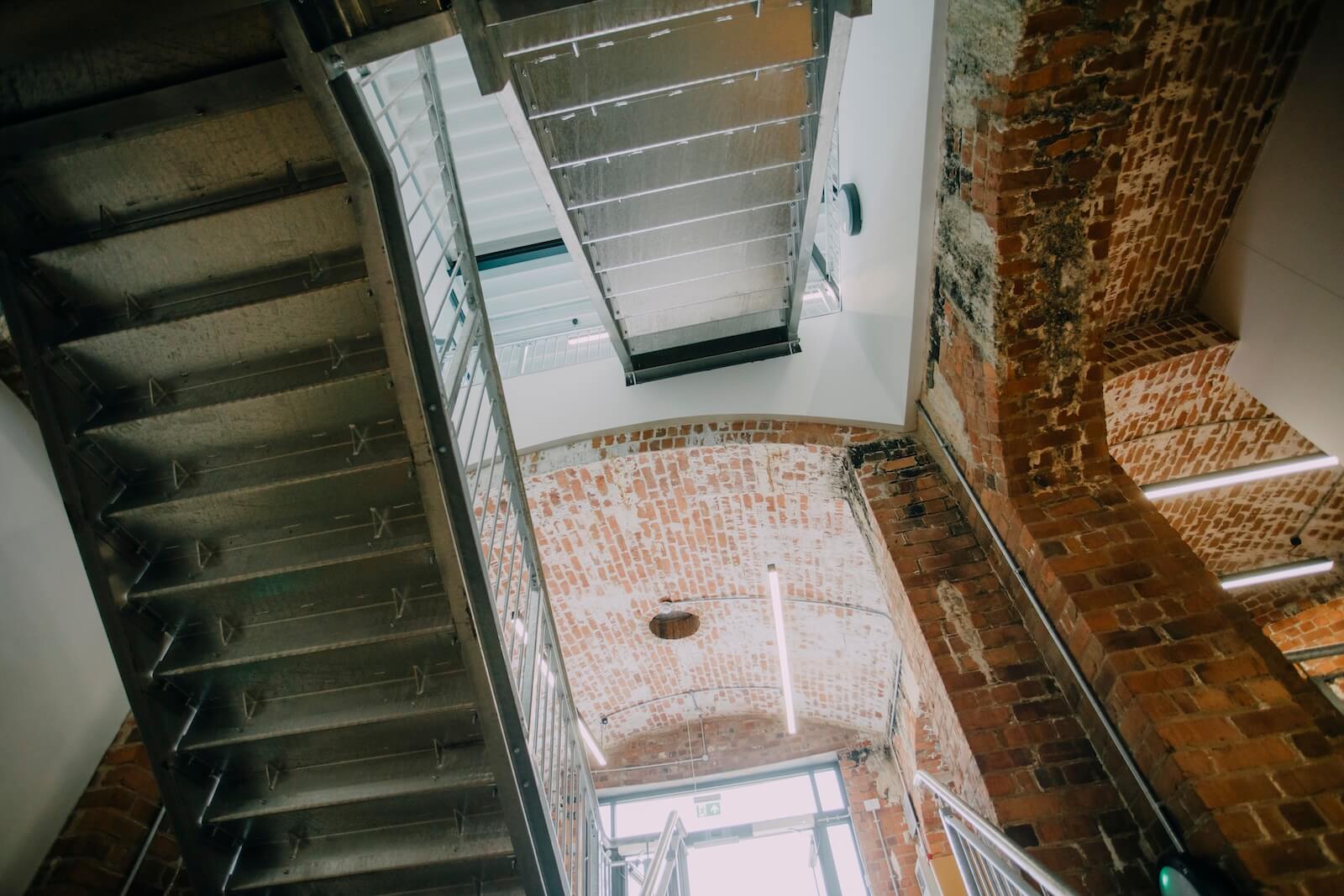
Sherwood Observatory, United Kingdom, Anotherkind Architects, akind-a.com, Photo: © G F Tomlinson
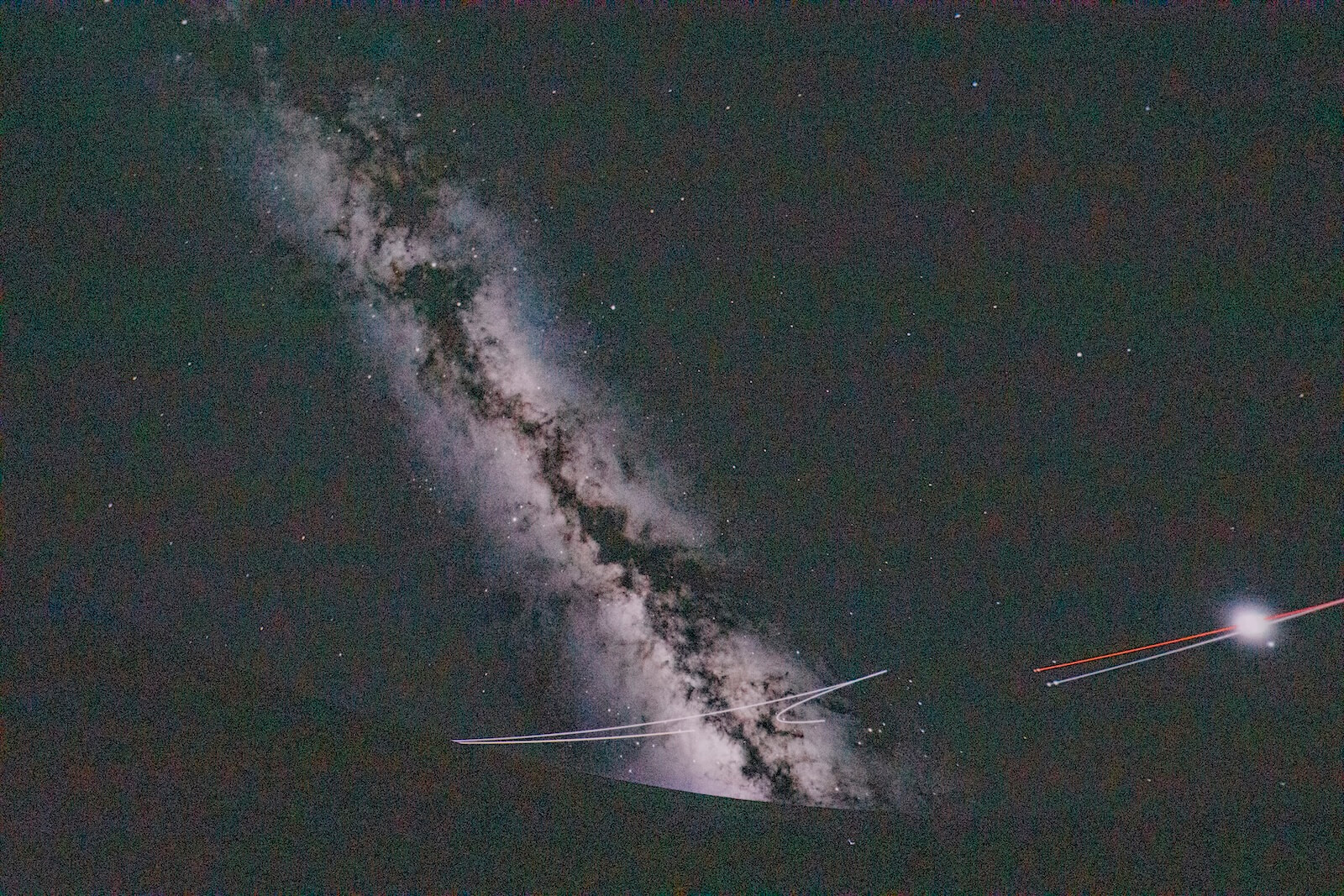
Sherwood Observatory, United Kingdom, Anotherkind Architects, akind-a.com, Photo: © G F Tomlinson
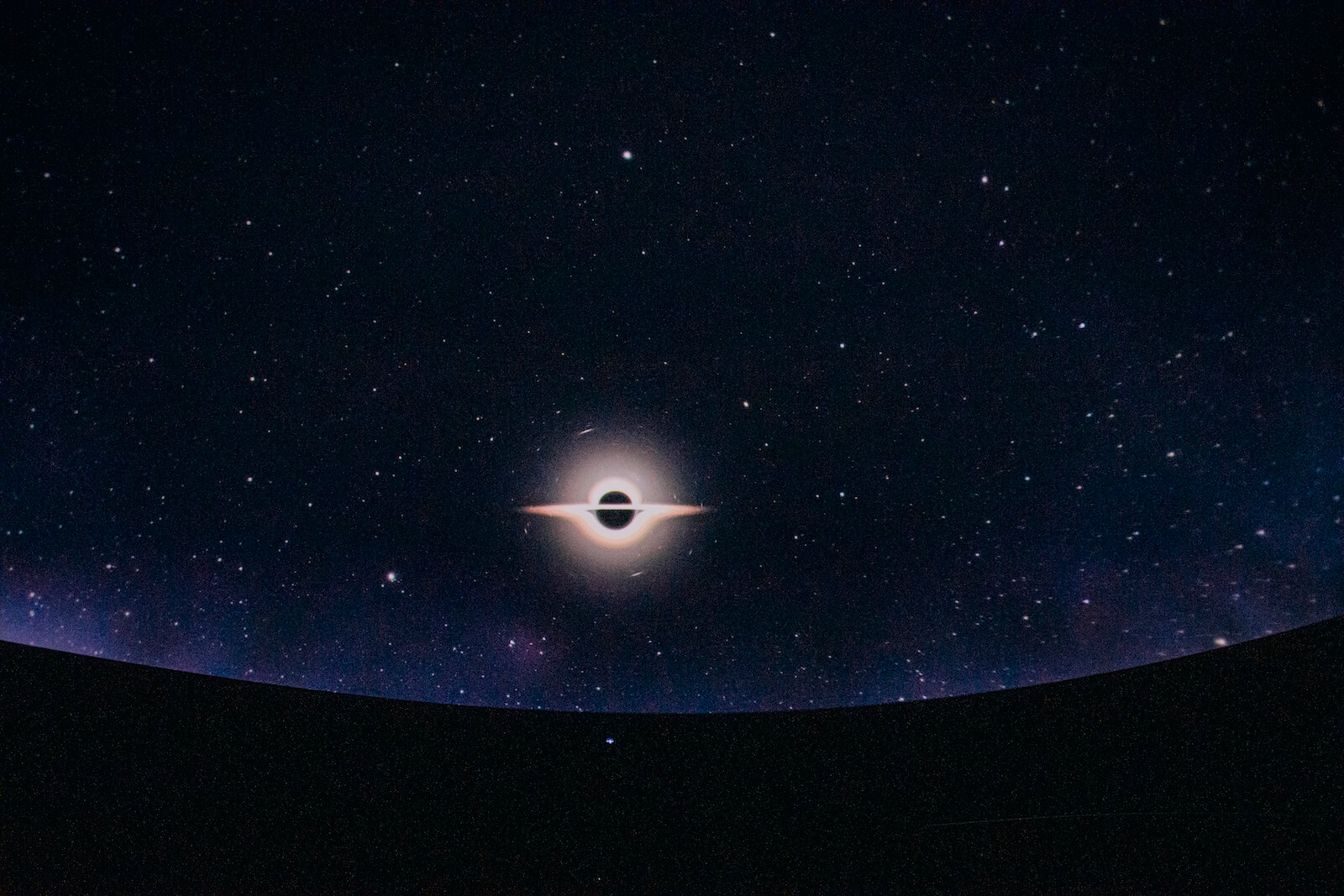
Sherwood Observatory, United Kingdom, Anotherkind Architects, akind-a.com, Photo: © G F Tomlinson
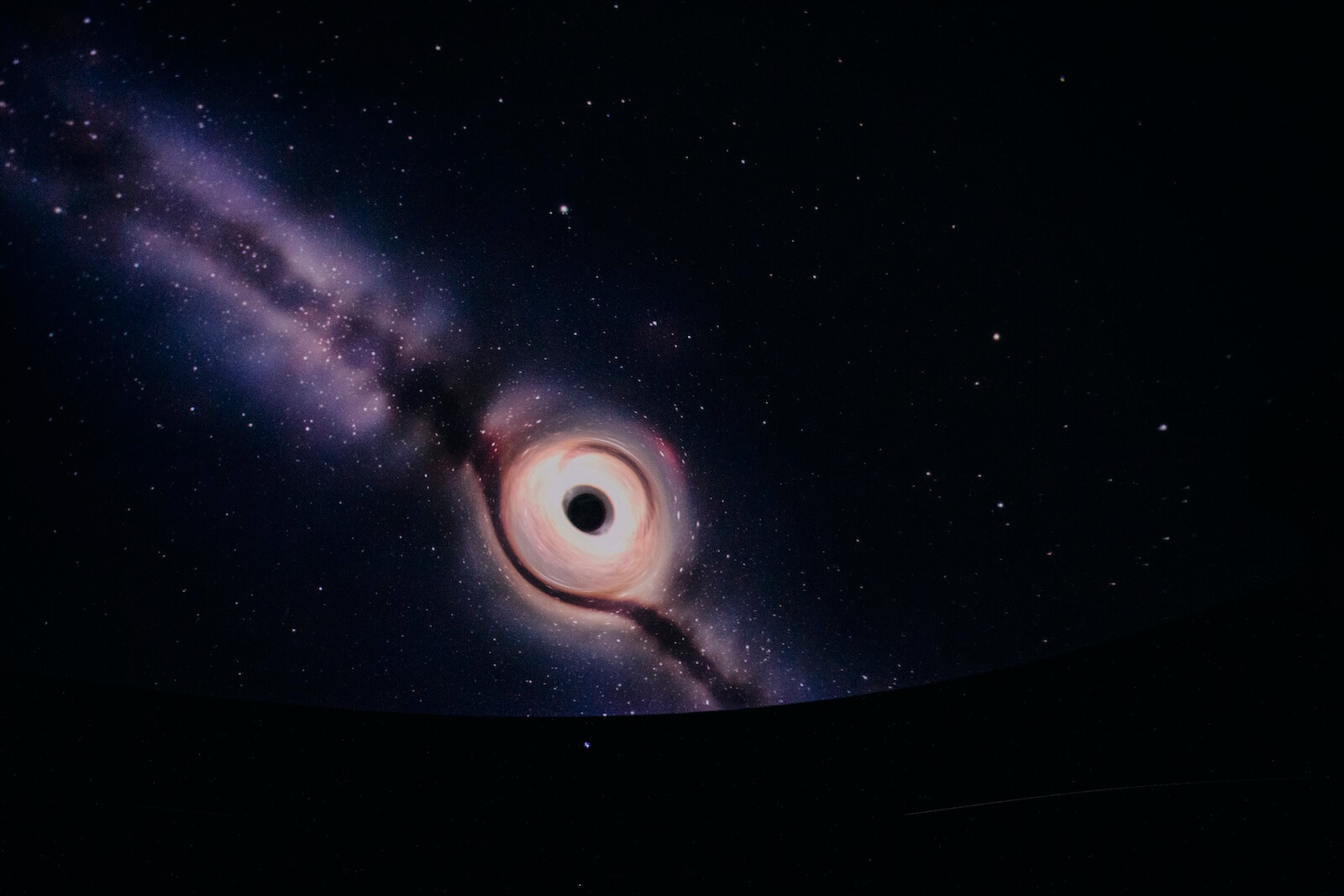
Sherwood Observatory, United Kingdom, Anotherkind Architects, akind-a.com, Photo: © G F Tomlinson
Sherwood Observatory, United Kingdom, Anotherkind Architects, akind-a.com, Photo: © G F Tomlinson
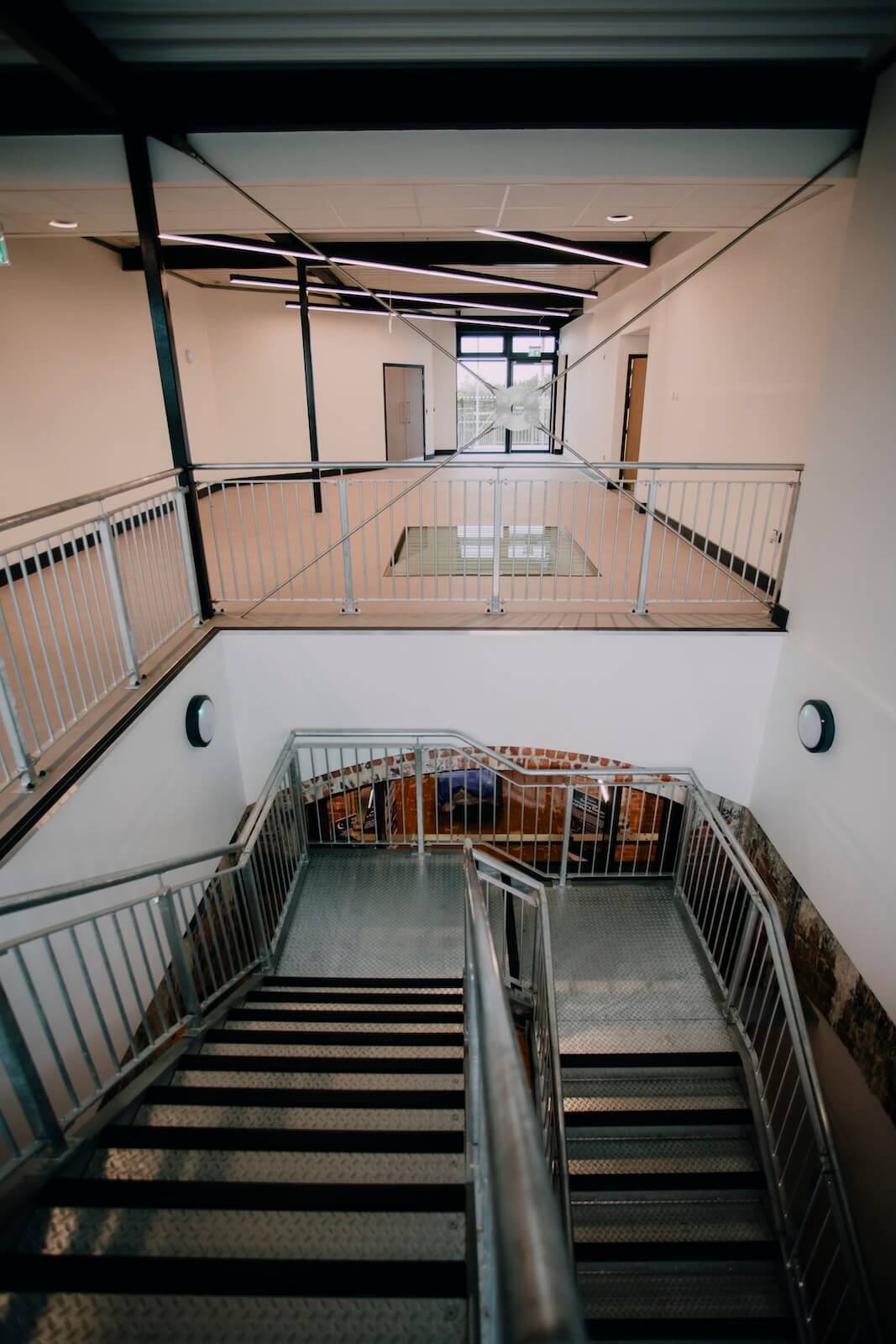
Sherwood Observatory, United Kingdom, Anotherkind Architects, akind-a.com, Photo: © G F Tomlinson
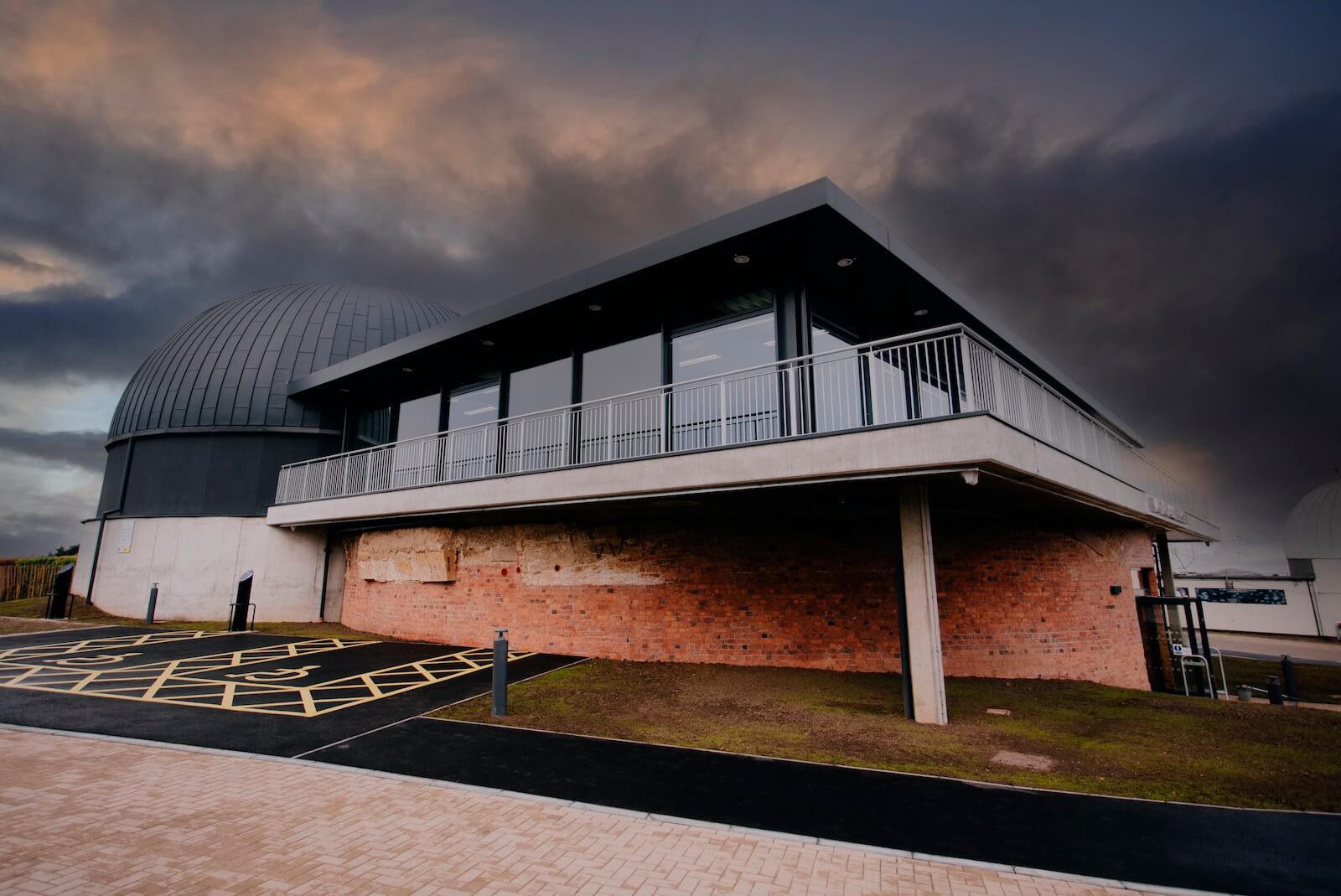
Sherwood Observatory, United Kingdom, Anotherkind Architects, akind-a.com, Photo: © G F Tomlinson
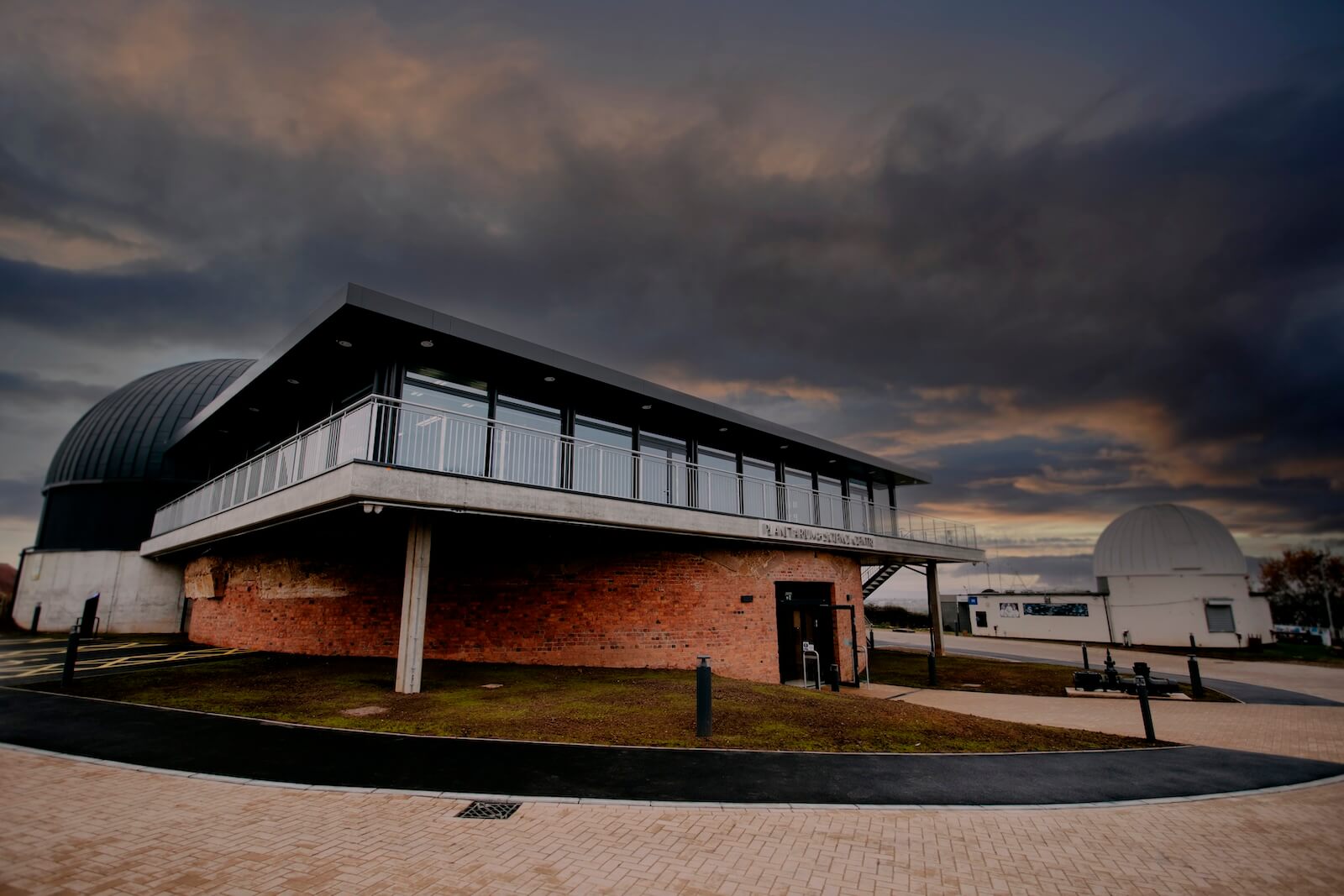
Sherwood Observatory, United Kingdom, Anotherkind Architects, akind-a.com, Photo: © G F Tomlinson
Sherwood Observatory, United Kingdom, Anotherkind Architects, akind-a.com, Photo: © G F Tomlinson
BIMx
BIMx Enables Smooth Onsite Collaboration
Throughout the project, the contractor G F Tomlinson used BIMx on a tablet PC to collaborate in real-time on site. During these meetings, the model was brought up on screen and the necessary mark-ups could be done in the moment.
Anotherkind exported both the 3D model and the drawings from Archicad, coordinating closely with the structural IFC models provided by the structural and civil engineers, HSP Consulting. Bringing this together in a single BIMx Hyper-model proved invaluable in supporting the construction phase.
Explore, present, and coordinate with BIMx! Share Your Archicad Project with BIMx is a self-paced online course on how to export your Archicad model to BIMx and how to explore the BIMx model on any device.
Using BIMx throughout the construction process enabled collaboration in real-time on site, moving between drawings and the model, getting into the bones of the building, the detailed construction, and with the contractor adjusting as necessary to suit site conditions.
Dan Kilarski-Marlow, Senior Architect, Anotherkind Architects
Explore the BIMx Hyper-model for this ambitious and complex project
An Award-Winning Transformation
The Sherwood Observatory Science Centre and Planetarium was completed in November 2024 and has since won numerous awards, including the 2025 Conversion of the Year Architectural Technology Award. Anotherkind and Graphisoft also jointly won the Digital Construction Project of the Year 2025 Award at the Construction Computing Awards.