Centro acquatico Saint-Nazaire
Coste Architectures – Winning competitions with OPEN BIM – the Saint-Nazaire Aquatic Center

Centro acquatico Saint-Nazaire

“Se vuoi andare veloce, vai da solo. Se vuoi andare lontano, vai insieme” è un proverbio africano che Emmanuel Coste ama citare per descrivere il suo approccio collaborativo e proattivo all’architettura e alla gestione dei progetti. Convinto fin dall’inizio dai vantaggi di strumenti “artigianali” come il CAD, Emmanuel Coste dirige uno studio di architettura che è diventato il portabandiera per la progettazione di progetti complessi portati alla vita da tecnologie innovative; un riferimento per l’alta qualità ambientale che unisce un ampio team multidisciplinare.

Centro acquatico Saint-Nazaire

Nel luglio 2013, CARENE, uno sviluppatore di Saint-Nazaire, ha scelto il progetto del Centro acquatico di Coste Architecture. Oltre alla loro completa conformità al programma, alle loro proposte energetiche e ambientali e alla loro proposta architettonica – 3 tetti ondulati supportati da pali – l’Agenzia Coste ha dimostrato innovazioni: innovazioni tecniche, prima di tutto, con i loro pilastri strutturali anche nelle zone sismiche come innovazioni nella gestione dei loro progetti con l’uso del BIM.

L’anno seguente, Coste Architectures ha vinto il primo premio BIM d’Or, un concorso francese che premia gli usi esemplari del BIM in un processo di collaborazione che riunisce clienti di architetti, ingegneri, appaltatori e progetti. Emmanuel Coste ha ricevuto questo premio dalle mani della giuria del 2014 guidata da Bertrand Delcambre, capo del piano nazionale di transizione digitale edilizia francese (PTNB). Quest’anno, Coste è stato nominato presidente della giuria del concorso 2015.

Alla fine del 2014, dopo la fase di sviluppo del progetto, Coste Agency ha preparato la documentazione di costruzione e inviato domande alle aziende appaltatrici (inizio lavori a giugno 2015 per consegna a marzo 2017). All’inizio del 2015, Emmanuel Coste, direttore architetto dell’agenzia, e Sam Cordier, il loro responsabile BIM, hanno riassunto il loro uso del BIM con Archicad nella fase di studio e progettazione con un punto di vista realistico e pratico.

Saint-Nazaire Aquatic Center - Coste Architectures
Centro acquatico Saint-Nazaire – Structure in Archicad

Uso del BIM
nella competizione

Dalla competizione, lo sviluppatore ha rappresentato un approccio virtuoso chiedendo, oltre a un budget complessivo per la costruzione, un budget aggiuntivo per le iniziative di energia pulita da ciascuno dei candidati. Oltre alla loro proposta architettonica ed energetica, l’uso del BIM proposto dall’Agenzia Coste è stato rapidamente percepito come “la ciliegina sulla torta”. Lo sviluppatore ha immediatamente visto i vantaggi di un simile approccio:

  • A breve termine: visualizzazione 3D e tour virtuale – particolarmente utile sia per la consultazione che per la comunicazione.
  • A medio termine: riduzione al minimo dei rischi di errore e dei costi aggiuntivi durante la costruzione.
  • A lungo termine: operazione di costruzione e manutenzione; Carene ha deciso di formare i suoi team internamente sul BIM.

“Non solo il BIM assicura un coordinamento senza soluzione di continuità tra tutte le parti interessate, ma porta anche a risultati positivi di questo lavoro collaborativo”

Emmanuel Coste, Architetto

Per Coste Architectures, pioniere nell’uso degli strumenti CAD, il BIM è la scelta ovvia: un metodo di lavoro collaudato. Il BIM è principalmente un modo per affrontare tutte le sfide presentate dalla loro proposta architettonica. Un centro acquatico – per non parlare di 1200 m2 di piscine e requisiti energetici di elevata qualità ambientale – richiede una stretta collaborazione con esperti di acqua ed energia. Una proposta architettonica di tre tetti a forma di onde, sostenuta da colonne strutturali a forma di laminaria in una zona sismica, richiede una vera collaborazione con ingegneri strutturali specializzati in calcestruzzo ad alte prestazioni in fibra.

Presentare questo modello 3D sviluppato in Archicad rivela ulteriori vantaggi: presentazioni virtuali immersive con BIMx; animazioni interne rese semplici e veloci con Artlantis; e facile esportazione del modello per l’artista CGI, qualunque sia il suo software. Lavorare a stretto contatto con partner reali, individuare i problemi il prima possibile nel progetto, evitando così la maggior parte dei rischi di errore e sorprese: questi sono i vantaggi del BIM utilizzato in fase di progettazione. “Non solo il BIM assicura un coordinamento senza soluzione di continuità tra tutte le parti interessate, ma porta anche a risultati positivi di questo lavoro collaborativo”, spiega Emmanuel Coste. “Da ora in poi, le decisioni possono essere prese già dalla fase preliminare di progettazione – un prezioso risparmio di tempo per il futuro corso del progetto.”

“La gestione IFC in Archicad ha davvero successo – francamente – è la migliore. ”

Emmanuel Coste, Architetto
Saint-Nazaire Aquatic Center - Coste Architectures
Centro acquatico Saint-Nazaire – Immagini da BIMx

IFC – OPEN BIM

Ma più specificamente, come è questo piccolo acronimo dopo tante sfide? Sam Cordier, responsabile BIM di Coste Architectures riassume le basi: “Il BIM è un modello 3D di un edificio in cui ogni entità è descritta in un linguaggio comune – IFC – comprensibile da tutte le parti interessate. Il vantaggio è che quando comunichiamo con i partner, parliamo sempre della stessa cosa senza ambiguità, senza semantica aggiuntiva.

“La gestione dell’IFC in Archicad ha davvero successo – francamente – il migliore. Segue la filosofia del prodotto: Archicad è stato sin dall’inizio orientato agli oggetti e aperto a tutti i formati. Quando modelliamo con Archicad, l’entità creata non è una forma semplice, è un oggetto “che ha l’intelligenza – per così dire – di non essere solo una singola entità nel database, ma di avere un posto giustificato nel contesto. Ad esempio, se modelli 4 muri e ne inclini uno, gli altri muri seguiranno automaticamente.” Archicad ha sempre attribuito parametri e informazioni agli oggetti modellati; IFC aggiunge anche a questi attributi, nello stesso modo automatico.

“Se creiamo un muro, le informazioni BIM vengono assegnate automaticamente ad esso: un GUID e una categoria IFC: Muro/standard. All’inizio questo può sembrare “barbaro”, ma ciò significa solo che l’oggetto creato ha un’identità unica per l’intero ciclo di vita dell’edificio ed è un oggetto appartenente alla categoria “muro”. Molte persone pensano che IFC sia complicato e si debbano costantemente regolare le impostazioni. Ma in Archicad, molte procedure sono precablate e senza interruzioni per l’utente.”

Per procedure più specifiche, “come la creazione di un pilastro con lo strumento Solaio, è sufficiente disimpegnare la classe IFC e sostituire il solaio IFC: con il pilastro IFC :. In Archicad, è molto facile da fare.

Saint-Nazaire Aquatic Center - Coste Architectures

L’automazione non compromette la flessibilità. Non sei mai costretto a utilizzare uno strumento di modellazione per raggiungere una determinata categoria di architettura IFC.” Se la gestione IFC in Archicad è flessibile e trasparente per l’architetto, questa flessibilità si riflette anche nello scambio con i partner. Archicad è impegnato in OPEN BIM e, pertanto, non richiede software aggiuntivo per scambiare i modelli Archicad con gli ingegneri tramite IFC.

Per l’esempio specifico del centro acquatico di Saint-Nazaire, l’agenzia e il loro BIM manager hanno scelto di gestire tre lotti di IFC in Archicad: la struttura principale, il telaio e la rete MEP. Secondo i partner, lo scambio del modello digitale creato in Archicad ha funzionato ugualmente bene con Revit MEP, Tekla Structures, AllPlan e Solibri.

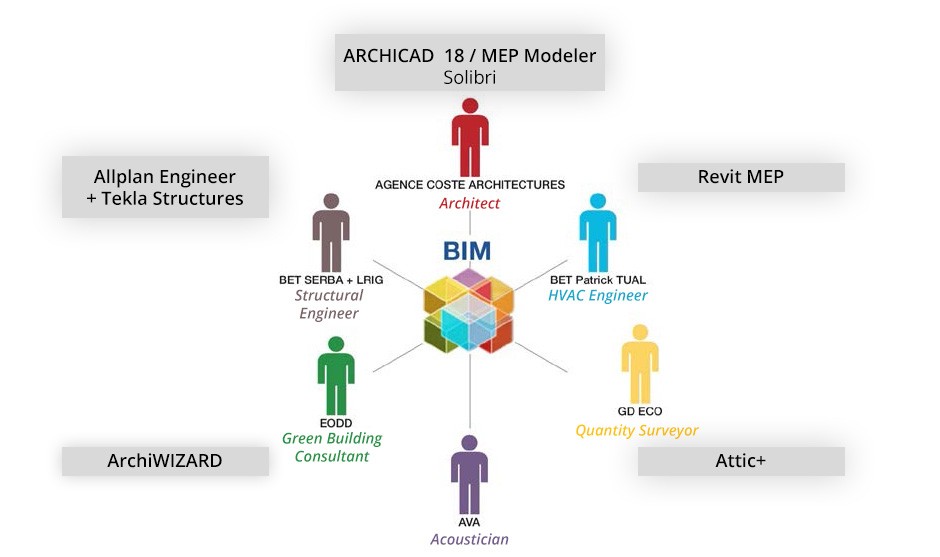
Ecco gli scambi tra i software dei diversi stakeholder:

  • Archicad ⇄ AllPlan Engineering (Ingegneri dell’infrastruttura)
  • Archicad MEP Modeler ⇄ Revit MEP (impianti HVAC / MEP)
  • Archicad ⇄ Tekla Structures (Ingegneri di strutture metalliche)
  • Archicad ⇄ ATTIC + (computo quantitativo per Geometra)
  • Visualizzazione e controllo del modello: Solibri Model Checker
  • Visualizzazione e controllo del modello: Tekla BIM Sight
Saint-Nazaire Aquatic Center - Coste Architectures
Flusso di lavoro utilizzato nelle fasi di progettazione e studio del Centro acquatico Saint-Nazaire

“La parte strutturale era la più semplice da gestire. Come architetti generali, non abbiamo fornito altro che la forma del tetto in IFC. Serba, gli ingegneri strutturali, hanno lavorato su questo modello in Tekla Structure, anch’esso un software OPEN BIM certificato, e ce lo hanno inviato automaticamente con tutti gli elementi del telaio.

“Abbiamo avuto diverse iterazioni, poiché si tratta di un processo collaborativo. È uno scambio e, se abbiamo un problema, ne parliamo e cerchiamo una soluzione basata sull’esperienza e la disciplina di tutti”.

“Per quanto riguarda gli elaborati MEP, ho innescato la pompa – per così dire – rassicurando l’ingegnere MEP, perché non era abituato a questo metodo di lavoro. Così ho iniziato a costruire il sistema MEP usando l’add-on MEP Modeler di Archicad. Questo modulo non consente calcoli, ma non sono un ingegnere; questo è davvero il lavoro dell’ufficio tecnico. MEP Modeler mi ha permesso di modellare gli elementi di rete, identificarli come tali utilizzando le classi IFC e, quindi, essere riconosciuto dal software MEP dell’ingegnere come elementi MEP. Quindi, dopo aver introdotto gli elementi nel modello Archicad, Tual, l’ingegnere potrebbe rivendicarli in Revit MEP. Ha usato il suo software per lavorare ulteriormente sul progetto, che potremmo quindi facilmente reinserire nel modello Archicad.

Saint-Nazaire Aquatic Center - Coste Architectures
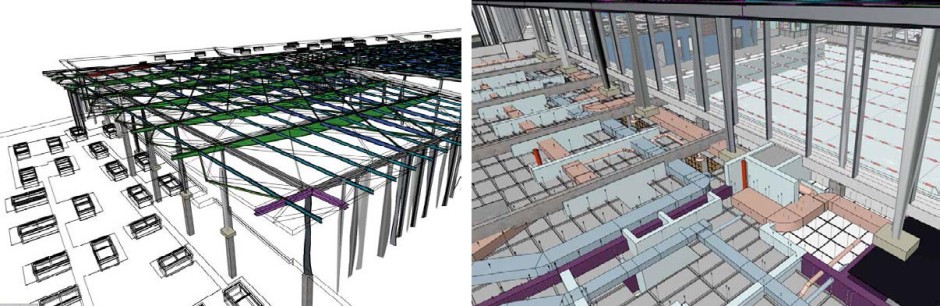
Centro acquatico Saint-Nazaire – Modello MEP strutturale e Revit reinserito in Archicad

Ulteriore applicazione del BIM

Convinto dalla riuscita integrazione del BIM nelle prime fasi del Centro acquatico di Saint-Nazaire, lo sviluppatore intende continuare a utilizzarlo per le fasi successive del progetto: consulenza aziendale, sintesi e localizzazione dei lavori, manutenzione e funzionamento … così tante “attività”. Ne conseguiranno benefici, man mano che il progetto avanza.

Intervistato da Abvent, partner GRAPHISOFT dal 1985 e distributore esclusivo Archicad per Francia, Svizzera e Africa francofona..

Saint-Nazaire Aquatic Center - Coste Architectures

Informazioni su Coste Architectures

Emmanuel Coste dirige Coste Architectures dal 1997, una società fondata negli anni ottanta da suo padre, l’architetto François Coste a Montpellier.

In associazione con Renaud Delplanque e André Ariotti, Emmanuel Coste e il suo team (16 architetti e una rete di 25 specialisti integrati nell’azienda e partner indipendenti: scenografi, paesaggisti, ergonomi, direttori artistici, studi di progettazione e ingegneria ecc …) assicurare l’affidabilità e le capacità creative di un’azienda arricchita dai suoi 30 anni di esperienza.

Oltre alla sua pratica principale nella regione di Parigi e all’ufficio di Montpellier, Coste Architectures ha aperto due nuove filiali in Cina e Algeri.

Graphisoft - a Nemetschek Company

Informazioni su GRAPHISOFT

Graphisoft® ha dato il via alla rivoluzione BIM nel 1984 con Archicad®, il primo software BIM per architetti del settore. GRAPHISOFT continua a guidare il settore con soluzioni innovative come il suo rivoluzionario BIMcloud®, il primo ambiente di collaborazione BIM in tempo reale al mondo; e BIMx®, l’app mobile leader a livello mondiale per un accesso leggero al BIM per i non professionisti. GRAPHISOFT fa parte di Nemetschek Group.

Tweet

Saint-Nazaire Aquatic Center
Coste Architectures – Winning competitions with OPEN BIM – the Saint-Nazaire Aquatic Center

Saint-Nazaire Aquatic Center

“If you want to go fast, go alone. If you want to go far, go together” is an African proverb that Emmanuel Coste likes to cite to describe his collaborative and proactive approach to architecture and project management. Convinced from the start by the advantages of “craft” tools like CAD, Emmanuel Coste directs an architecture firm which became the standard-bearer for design of complex projects brought to life by innovative technologies; a reference for high environmental quality that unites a broad multidisciplinary team.

Saint-Nazaire Aquatic Center

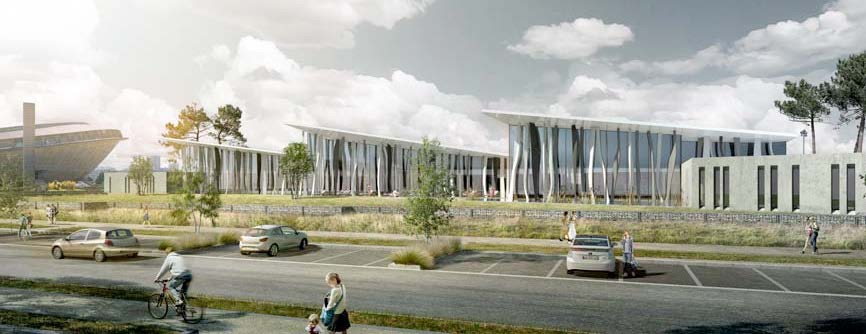
In July 2013, CARENE, a Saint-Nazaire developer, chose Coste Architecture’s design of their Aquatic Center. Apart from their thorough compliance with the program, their energy and environmental proposals, and their architectural proposal – 3 wavy roofs supported by poles – the Coste Agency demonstrated innovations: technical innovations, first of all, with their structural columns in seismic zones, as well as innovations in their project management with the use of BIM.

The following year, Coste Architectures won the first BIM d’Or award, a French competition rewarding exemplary uses of BIM in a collaborative process gathering Architects, Engineers, Contractors and Project clients. Emmanuel Coste received this award from the hands of the 2014 jury led by Bertrand Delcambre, the head of the French national Building Digital Transition Plan (PTNB). This year, Coste was appointed as the president of the jury of the 2015 competition.

At the end of 2014, after the design development phase, Coste Agency prepared the construction documentation and sent queries to contractor companies (start of work in June 2015 for delivery in March 2017). In early 2015, Emmanuel Coste, director architect of the agency, and Sam Cordier, their BIM Manager, summed up their use of BIM with Archicad in the study and design phase with a realistic and practical point of view.
Saint-Nazaire Aquatic Center - Coste Architectures
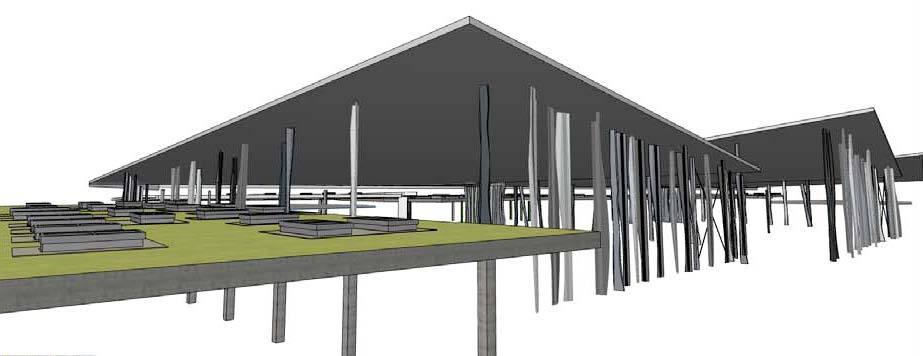
Saint-Nazaire Aquatic Center – Structure in Archicad

Use of BIM
in the competition

Since the competition, the developer represented a virtuous approach by asking for, apart from an overall construction budget, an additional budget for clean energy initiatives from each of the candidates. In addition to their architectural and energy proposal, the use of BIM proposed by the Coste Agency was quickly perceived as “the icing on the cake.” The developer instantly saw the benefits of such an approach:

  • Short-term: 3D Visualization and Virtual Tour – particularly useful for both consultation and communication.
  • Mid-term: Minimizing error risks and extra costs during construction.
  • Long-term: Building operation and maintenance; Carene decided to train its teams internally on BIM.

“Not only does BIM assure seamless coordination between all stakeholders, but it also leads to positive results of this collaborative work”

Emmanuel Coste, Architect

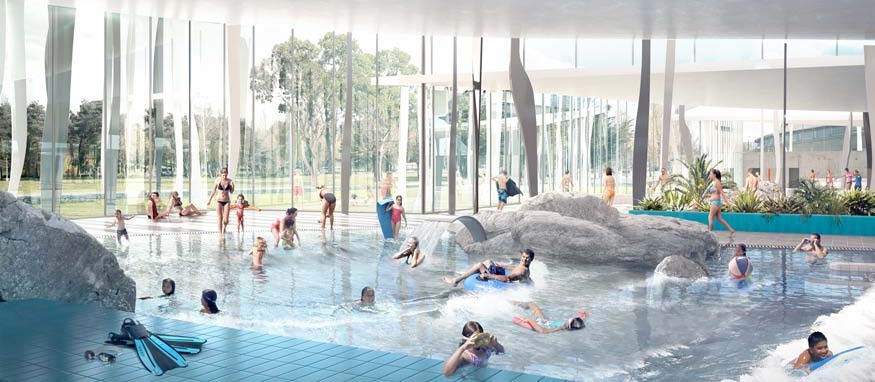
For Coste Architectures, a pioneer in the use of CAD tools, BIM is the obvious choice: a proven working method. BIM is primarily a way to meet all the challenges that their architectural proposal presented. An aquatic center – let alone with 1200m2 of pools and high environmental quality energy requirements – requires close collaboration with water and energy experts. An architectural proposal of three roofs in the form of waves, supported by structural laminaria shaped columns in a seismic zone calls for true collaboration with structural engineers specializing in Ultra High Performance Fiber Concrete.

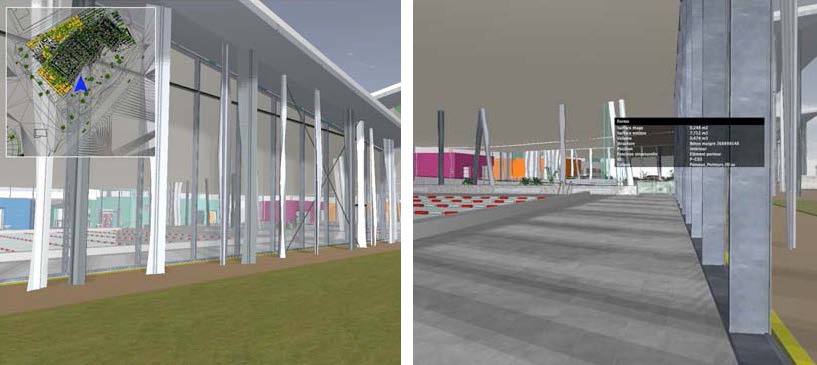
Presenting this 3D model developed in Archicad reveals further assets: immersive virtual presentations with BIMx; internal animations made simple and fast with Artlantis; and easy export of the model for the CGI artist, whatever his software might be. Working closely with real partners, detecting problems as early as possible in the project, thus avoiding most risks of error and surprises: these are the benefits of BIM used in the design phase. “Not only does BIM assure seamless coordination between all stakeholders, but it also leads to positive results of this collaborative work,” explains Emmanuel Coste. “From now on, decisions can be made from as early as the preliminary design phase – a valuable time saver for the future course of the project.”

“IFC Management in Archicad is truly successful – quite frankly — the best. ”

Emmanuel Coste, Architect
Saint-Nazaire Aquatic Center - Coste Architectures
Saint-Nazaire Aquatic Center – Images from BIMx

IFC – OPEN BIM

But more specifically, how is this little acronym after so many challenges? Sam Cordier, BIM Manager at Coste Architectures sums up the basics: “BIM is a 3D model of a building where each entity is described in a common language – IFC– understandable by all stakeholders. The advantage is that when we communicate with partners, we always talk about the same thing without ambiguity, without additional semantics.

“IFC Management in Archicad is truly successful – quite frankly – the best. It follows the product philosophy: Archicad has, from the beginning, been object-oriented and open to all formats. When we model with Archicad, the created entity is not simple form, it is an object “that has the intelligence – so to speak – to not be just a single entity in the database, but have a justified place in the context. For example, if you model 4 walls and you tilt one, the other walls will automatically follow.” Archicad has always attributed parameters and information to modeled objects; IFC also adds to these attributes, in the same automatic manner.

“If we create a wall, BIM information is automatically assigned to it: a GUID and an IFC category: Wall / standard. This may at first seem “barbaric,” but that just means that the created object has a unique identity for the entire life cycle of the building and it is an object belonging to the category “wall.” Many people think IFC is complicated and one must constantly adjust settings. But in Archicad, many procedures are pre-wired and seamless to the user.”

For more specific procedures, “such as the creation of a Column with the Slab Tool, simply disengage the IFC class, and replace the IFC:slab with IFC:column. In Archicad, it’s very easy to do.
Saint-Nazaire Aquatic Center - Coste Architectures

Automation does not impair flexibility. You are never forced to use one modeling tool to attain a certain IFC architectural category.” If IFC Management in Archicad is flexible and transparent for the architect, this flexibility is also reflected in the exchange with partners. Archicad is committed to OPEN BIM and, therefore, requires no additional software in order to exchange Archicad models with engineers through IFC.

For the specific example of the Aquatic Center of Saint-Nazaire, the agency and their BIM Manager chose to deal with three batches of IFC in Archicad: the main structure, the frame, and the MEP network. According to the partners, the exchange of the digital model created in Archicad worked equally well with Revit MEP, Tekla Structures, AllPlan, and Solibri.

Here are the exchanges between the software of different stakeholders:

  • Archicad ⇄ AllPlan Engineering (Infrastructure Engineers)
  • Archicad MEP Modeler ⇄ Revit MEP (HVAC / MEP Engineers)
  • Archicad ⇄ Tekla Structures (Metal Structure Engineers)
  • Archicad ⇄ ATTIC + (Quantity take-off for Quantity surveyor)
  • Visualization & Model Checking: Solibri Model Checker
  • Visualization & Model Checking: Tekla BIM Sight
Saint-Nazaire Aquatic Center - Coste Architectures
 Workflow used in the design and study phases of Saint-Nazaire Aquatic Center

“The structural part was the easiest to handle. As general architects, we supplied nothing but the shape of the roof in IFC. Serba, the structural engineers, worked on this model in Tekla Structure – also a certified OPEN BIM software – and sent it back to us with all the frame elements automatically in place.

“We had several iterations, since this is a collaborative process. It’s an exchange, and if we have a problem, we talk about it and look for a solution based on everyone’s expertise and discipline.”

“Regarding the MEP deliverables, I primed the pump – so to speak – reassuring the MEP engineer, because he was not used to this method of work. So I started building the MEP system in Archicad’s MEP Modeler add-on. This module does not allow calculations, but I am not an engineer; this is indeed the work of the engineering office. But MEP Modeler allowed me to model the network elements, identify them as such using IFC classes, and, therefore, be recognized by the engineer’s MEP software as MEP elements. So after introducing the elements in the Archicad model, Tual, the engineer could claim them in Revit MEP. He used his software to further work on the project, which we could then easily reinsert in the Archicad model.
Saint-Nazaire Aquatic Center - Coste Architectures
Saint-Nazaire Aquatic Center – Structural and Revit MEP model reinserted to Archicad

Further application of BIM

Convinced by the successful integration of BIM in the early stages of the Aquatic Centre in Saint-Nazaire, the developer intends to continue its use for subsequent phases of the project: Business Consulting, Synthesis and job tracking, Maintenance and operation … so many “craft” benefits will follow, as and when the project progresses.

Interviewed by Abvent, Graphisoft Partner since 1985 and exclusive Archicad distributor for France, Switzerland and Frenchspeaking Africa.

Saint-Nazaire Aquatic Center - Coste Architectures

About Coste Architectures

Emmanuel Coste directs Coste Architectures since 1997, a company founded in the eighties by his father, the architect François Coste in Montpellier.

In association with Renaud Delplanque and André Ariotti, Emmanuel Coste and his team (16 architects and a network of 25 specialists integrated to the company as well as independent partners: set designers, landscapers, ergonomists, artistic directors, design and engineering offices etc…) ensure the reliability and creative capacities of a company enriched by its 30 years of experience.

In addition to its main practice in Paris region and the office in Montpellier, Coste Architectures has opened two new subsidiairies in China and Algiers.

Graphisoft - a Nemetschek Company

About Graphisoft

Graphisoft® ignited the BIM revolution in 1984 with Archicad®, the industry first BIM software for architects. Graphisoft continues to lead the industry with innovative solutions such as its revolutionary BIMcloud®, the world’s first real-time BIM collaboration environment; and BIMx®, the world’s leading mobile app for lightweight access to BIM for non-professionals. Graphisoft is part of the Nemetschek Group.

Tweet